


Women’s rights activists demanded sweeping corrections and an apology from China Central Television (CCTV) for alleged “deceptive editing” in a documentary on “comfort women” that they said instead played to false narratives and attacked the governments of Taiwan and Japan.
Taipei Women’s Rescue Foundation in a statement on Sunday filed a protest against CCTV, saying that prior to granting permission for filming and interviewing at the Ama Museum (阿嬤家和平與女性人權館), the Chinese state broadcaster’s documentary team had promised the footage would not be used for political purposes.
The museum, opened in Taipei in 2016, was the first institution in Taiwan dedicated to preserving the memory and honoring the hardship of the wartime comfort women and the movement to restore their rights, becoming an icon in the movement for women’s safety and equality.
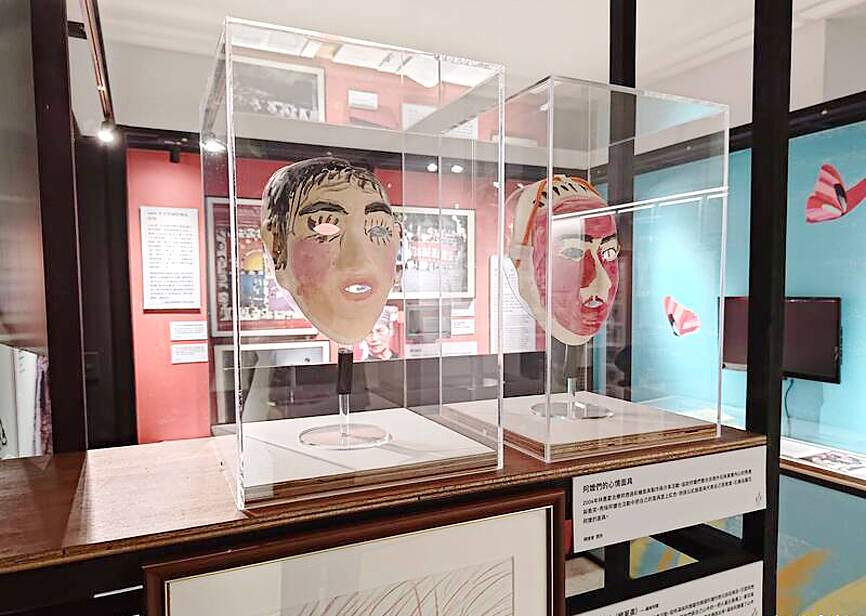
Photo: Taipei Times
The CCTV documentary team had said the project was focused on marking the 80th anniversary of the end of World War II, according to the statement.
“Our foundation granted permission for their filming, based on our charter for public education, while the CCTV team promised their work would serve no political purpose and not denounce the governments of Taiwan and Japan,” it said.
Foundation members said they were appalled when the documentary aired on Friday, showing purported “anti-war” sentiment in Taiwan, public denunciation of President William Lai’s (賴清德) “warmongering” stance, and castigating the Democratic Progressive Party government’s “fawning” attitude toward Japan.
The film included quotes from people claiming to represent broad sectors of Taiwanese society who spoke against Lai, Taiwanese independence and Japan.
“Our foundation is lodging a protest that CCTV has distorted history, manipulated and created false narratives, misled the audience on the comfort women issue, and attacked the governments of Taiwan and Japan,” the statement said. “It filmed false content and harmed the reputation of our foundation and those of the comfort women.”
The release said the foundation supports peace, stands against any military conflict or any country starting a war to invade another country, including China’s hostile actions of intimidation and intrusion against Taiwan.
“Our members continue to advocate for the memory of the comfort women, to seek historic truth, but not to continue in hatred,” it said.

FUKUOKA SITUATION: Japanese media reported that the pathogen is expected to be identified by the summer, while the CDC downplayed the idea that it was hMPV A “mysterious cold-like illness” reported in Japan’s Fukuoka Prefecture does not seem to be a new disease, but Japanese authorities have been asked about the situation, the Centers for Disease Control (CDC) said yesterday. The Fukuoka Prefectural Medical Association on Wednesday told a news conference that a “mystery cold” that has become a hot topic on social media is “highly likely to be caused by some kind of viral infection,” Japan’s KBC News reported. “Many people are experiencing symptoms starting with a sore throat, followed by a runny nose, phlegm and a severe cough,” KBC News reported, citing association officials. Health authorities are

Nvidia Corp CEO Jensen Huang (黃仁勳) arrived in Taiwan yesterday ahead of upcoming AI and technology events, saying he plans to meet with clients and Taiwan Semiconductor Manufacturing Co Chairman C.C. Wei (魏哲家) during his visit. After landing at Taipei Songshan Airport, Huang posed for photos with fans and handed out Yakult drinks to reporters and supporters waiting at the scene, saying he has “a lot to do” during the trip. Asked about reports that Nvidia’s planned headquarters site in Taipei’s Beitou Shilin Technology Park could break ground on May 27, Huang said that if the company holds an event, he would

The Ministry of Finance this afternoon announced the winning numbers for the March-April uniform invoice lottery. The winning number for the NT$10 million (US$318,060) special prize is 19531471, and the winning number for the NT$2 million grand prize is 85941329. Three numbers were drawn for the NT$200,000 first prize: 07225810, 20231230 and 83518781. Those with receipts matching the last seven digits of any of the first-prize numbers will win the NT$40,000 second prize, while those matching the last six digits will win the NT$10,000 third prize. Those whose receipts match the last five digits of the first-prize numbers can claim the NT$4,000 fourth prize,

SIX SUBSIDIES: The monthly allowance for older farmers is to increase to NT$10,000, and NT$5,000 is to be given to homemakers under the national pension system, Lai said The government is to implement major welfare policies for disadvantaged groups, including raising the monthly allowance for older farmers to NT$10,000 and providing homemakers with NT$5,000 per month, President William Lai (賴清德) said yesterday. Lai made the remarks during a visit to Wangling Temple in Chiayi County, saying that the planned increases were being introduced amid economic growth and an increase in tax revenue. Touting a policy, in which the government plans to provide a monthly allowance of NT$5,000 for every child under the age of 18 in a bid to address Taiwan’s low birthrate, Lai said that if received for the


 RSS
RSS