


A new version of the US’ National Defense Authorization Act (NDAA) released yesterday is to authorize up to US$1 billion in military aid to Taiwan next year, launch an uncrewed systems development program with Taiwan and increase US-Taiwan joint coast guard training.
The reconciled bill also removed an invitation for Taiwan to participate in the Rim of the Pacific Exercise from its more than 3,000 pages of content.
The NDAA is an annual piece of legislation that stipulates spending by the US Department of Defense.
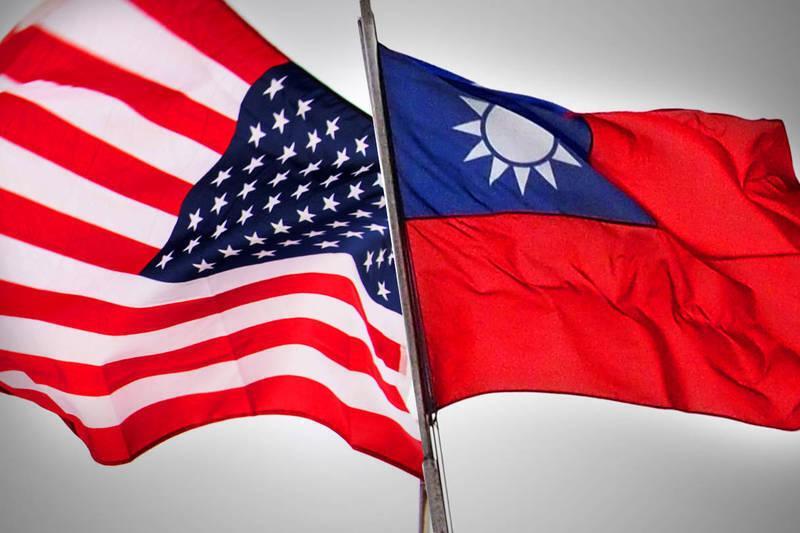
Photo: AFP
The US House of Representative and Senate must agree on a version of the bill and pass it, then it must be signed by the US president before it goes into effect.
US House of Representatives Speaker Mike Johnson last night released a new, compromised version of the bill.
The compromise version was produced after the US Senate and House reconciled their separate versions into a unified bill.
The new version authorizes the US Department of Defense to use up to US$1 billion next fiscal year to advance the Taiwan security cooperation initiative and expand Taiwan’s capabilities in medical equipment, supplies and combat casualty care.
It also specifies that the secretary of defense must launch a joint program with Taiwan to develop uncrewed systems and counter-uncrewed systems for both sides’ military forces before March 1 next year.
It further stipulates that the secretary must report progress to US Congress annually until 2029, covering procurements, secure supply agreements and military information security agreements.
It authorizes a joint US-Taiwan coast guard operations and leadership training program from next year to 2030, including funding to send US coast guard training teams to Taiwan to strengthen its maritime security, law enforcement and deterrence capabilities.
The secretary of defense must report a multi-year plan to fulfill the defense requirements of Taiwan’s military forces, known as the Taiwan Security Assistance Roadmap, and on the feasibility of establishing a regional contingency stockpile for Taiwan, otherwise the department can only use up to 75 percent of its funds, the bill says.
Within one year of the bill’s promulgation, the secretary must cooperate with the chairman of the Joint Chiefs of Staff and commander of the US Indo-Pacific Command to assess the armed forces’ capacity to respond to a high-intensity contingency in the Indo-Pacific region, it says.
The assessment must consider the ability to rapidly mobilize, deploy and sustain forces to respond to a conflict in the Indo-Pacific, as well as joint and allied interoperability, with particular attention paid to coordination between Taiwan, Japan, Australia and the Philippines, it adds.
The bill also includes the Taiwan Non-Discrimination Act, which supports Taiwan’s inclusion in the IMF.
While the NDAA grants the US executive branch the authority to determine how money would be used, the actual amounts depend on appropriations legislation agreed upon by the US Congress.
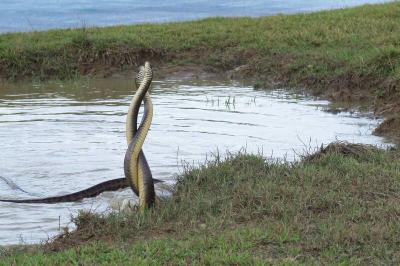
Kenting National Park service technician Yang Jien-fon (楊政峰) won a silver award in World Grand Prix Photography Awards Spring Season for his photograph of two male rat snakes intertwined in combat. Yang’s colleagues at Kenting National Park said he is a master of nature photography who has been held back by his job in civil service. The awards accept entries in all four seasons across six categories: architectural and urban photography, black-and-white and fine art photography, commercial and fashion photography, documentary and people photography, nature and experimental photography, and mobile photography. Awards are ranked according to scores and divided into platinum, gold and
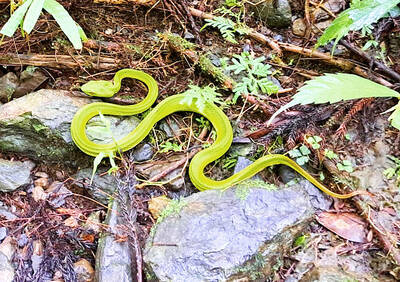
More than half of the bamboo vipers captured in Tainan in the past few years were found in the city’s Sinhua District (新化), while other districts had smaller catches or none at all. Every year, Tainan captures about 6,000 snakes which have made their way into people’s homes. Of the six major venomous snakes in Taiwan, the cobra, the many-banded krait, the brown-spotted pit viper and the bamboo viper are the most frequently captured. The high concentration of bamboo vipers captured in Sinhua District is puzzling. Tainan Agriculture Bureau Forestry and Nature Conservation Division head Chu Chien-ming (朱健明) earlier this week said that the
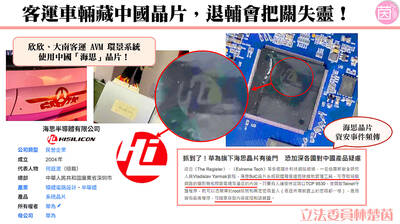
BREACH OF CONTRACT: The bus operators would seek compensation and have demanded that the manufacturer replace the chips with ones that meet regulations Two bus operators found to be using buses with China-made chips are to demand that the original manufacturers replace the systems and provide compensation for breach of contract, the Veterans Affairs Council said yesterday. Democratic Progressive Party Legislator Michelle Lin (林楚茵) yesterday said that Da Nan Bus Co and Shin-Shin Bus Co Ltd have fielded a total of 82 buses that are using Chinese chips. The bus models were made by Tron-E, while the systems provider was CYE Electronics, Lin said. Lin alleged that the buses were using chips manufactured by Huawei subsidiary HiSilicon Co, which presents a national security risk if the

The National Immigration Agency has banned two Chinese from returning to Taiwan, after they published social media content it described as disrespectful to national sovereignty. The agency imposed a two-month ban on a Chinese man surnamed Liang (梁) and a permanent ban on a woman surnamed Yang (楊), an influencer with 23 million followers, in October last year and last week respectively. Minister of the Interior Liu Shyh-fang (劉世芳) yesterday said on the sidelines of a legislative meeting that Chinese visitors to Taiwan are required to comply with the rules and regulations governing their entry permits. The government has handled the ban and


 RSS
RSS