


Japan’s representative at the UN issued a rebuttal against the latest Chinese letter to the UN, as a spat between the two nations over Japanese Prime Minister Sanae Takaichi’s comments on Taiwan continues to simmer.
“The assertions contained therein are inconsistent with the facts, unsubstantiated and are categorically unacceptable,” Japanese Ambassador to the UN Kazuyuki Yamazaki wrote, referring to a letter submitted by China on Monday that accused Japan of violating UN values and provoking China.
“Japan has consistently respected and adhered to international law, including the UN Charter, and has actively contributed to maintaining and strengthening a free and open international order underpinned by the rule of law,” Yamazaki wrote in the letter addressed to UN Secretary-General Antonio Guterres.
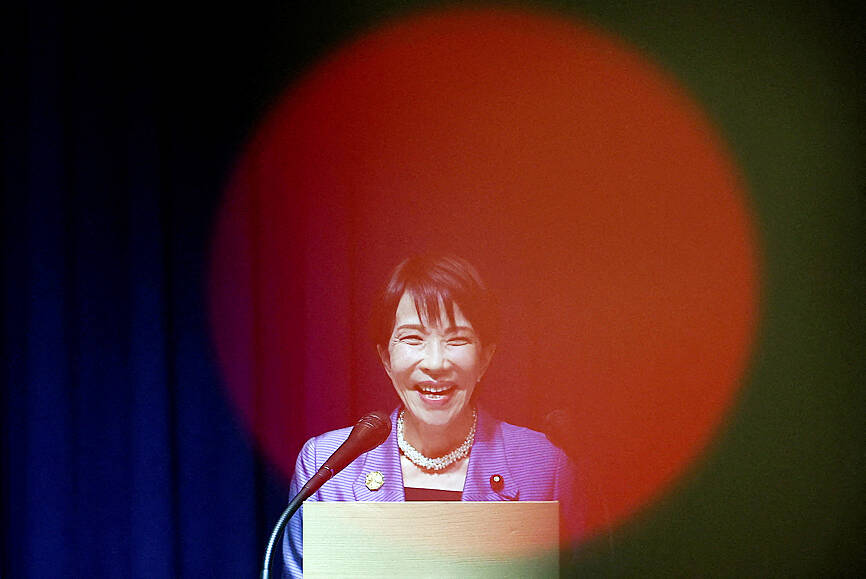
Photo: Reuters
The letter follows on from China’s second missive to the UN complaining about Japan after Takaichi last month said that a Chinese attack on Taiwan could mean a “survival-threatening situation” for Japan, implying that Tokyo could deploy its military with other nations in that scenario.
In its most recent letter to the UN, China said Takaichi’s remarks “openly challenge the victorious outcomes of World War II and the postwar international order, and constitute a serious violation of the purposes and principles of the Charter of the United Nations.”
The letter accused Japan of harboring ambitions to “expand its military capabilities and revive militarism.”
Japan has denied such accusations and said that its position on Taiwan has remained consistent.
Beijing has sought a retraction of the comments, but Takaichi has refused to do so.
Japanese Chief Cabinet Secretary Minoru Kihara reiterated that there was no change to Japan’s position on the matter when asked for comment yesterday morning.
“Japan’s stance, including the recent exchanges in parliament, has been consistent and we have repeatedly conveyed this to China,” he said, adding that Japan would continue to “respond appropriately.”
As ties remain strained, the Japanese embassy in Beijing yesterday urged Japanese residents to be cautious ahead of China’s annual memorial for the Nanjing Massacre on Saturday next week.
The notice warned that anti-Japanese sentiment often rises around sensitive historical dates, and advised residents to keep a low profile and respect local customs.
Premier Cho Jung-tai (卓榮泰) yesterday told Japan-Taiwan Exchange Association Chairman Sumi Shuzo that Taiwan is “moved” and grateful for Takaichi’s support for cross-strait peace, calling her remarks a reflection of justice despite external pressure.
“Japan believes that differences of views should be addressed through dialogue, for that is at the core of the spirit of the UN Charter,” the Japanese letter to the UN said. “Japan will continue to respond calmly through dialogue.”
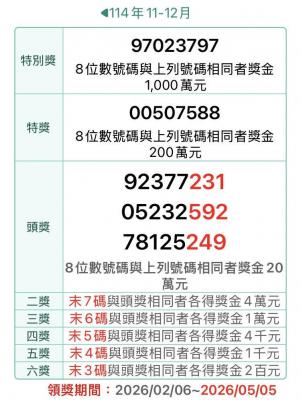
Seven of the 17 NT$10 million (US$311,604) winning receipts from the November-December uniform invoice lottery remain unclaimed as of today, the Ministry of Finance said, urging winners to redeem their prizes by May 5. The reminder comes ahead of the release of the winning numbers for the January-February lottery tomorrow. Among the unclaimed receipts was one for a NT$173 phone bill in Keelung, while others were for a NT$5,913 purchase at Costco in Taipei's Neihu District (內湖), a NT$49 purchase at a FamilyMart in New Taipei City's Tamsui District (淡水), and a NT$500 purchase at a tea shop in New Taipei City's
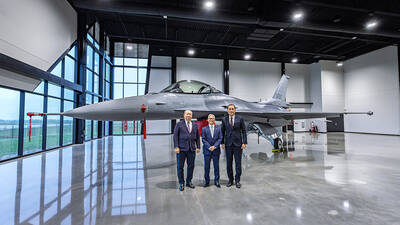
Taiwanese officials were shown the first of 66 F-16V fighter jets purchased by Taiwan from the United States, the Ministry of National Defense said yesterday, adding the aircraft has completed an initial flight test and is expected to be delivered later this year. A delegation led by Deputy Minister of National Defense Hsu Szu-chien (徐斯儉) visited Lockheed Martin’s F-16 C/D Block 70 (also known as F-16V) assembly line in South Carolina on March 16 to view the aircraft. The jet will undergo a final acceptance flight in the US before being delivered to Taiwan, the
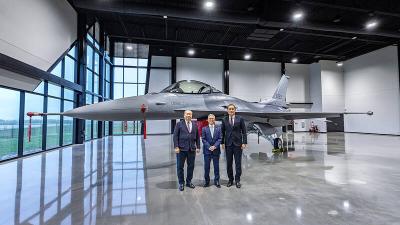
Deliveries of delayed F-16V jets are expected to begin in September, Minister of National Defense Wellington Koo (顧立雄) said today, after senior defense officials visited the US last week. The US in 2019 approved a US$8 billion sale of Lockheed Martin F-16 jets to Taiwan, a deal that would take the nation’s F-16 fleet to more than 200 jets, but the project has been hit by issues including software problems. Koo appeared today before a meeting of the legislature’s Foreign Affairs and National Defense Committee, which is discussing different versions of the special defense budget this week. The committee is questioning officials today,
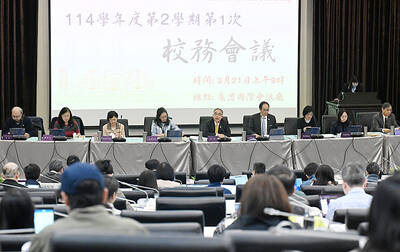
TALENT SCOUTING: The university is investing substantial funds in its future to bring in the kind of researchers that would keep the college internationally competitive National Taiwan University (NTU) plans to invest NT$2 billion (US$62.6 million) to launch two programs aimed at attracting and retaining top research talent, university president Chen Wen-chang (陳文章) said yesterday. The funding would support the “Palm Grove Scholars Project,” which targets academics aged 40 to 55. Up to 20 scholars would be selected, each receiving as much as NT$10 million annually, Chen said. The initiative is designed to attract leading researchers to Taiwan and strengthen NTU’s global competitiveness by fostering a more research-friendly environment and expanding international collaboration, he said. NTU is also introducing a “Hong Hu” chair grant, which would provide Palm


 RSS
RSS