


Two of the nation’s three decommissioned nuclear power plants may feasibly be recommissioned, according to a Taiwan Power Co (Taipower) report approved by the Ministry of Economic Affairs (MOEA) yesterday.
Taipower is expected to propose restart plans to the Nuclear Safety Commission by March next year after conducting voluntary safety inspections, the ministry said in a news release today.
The Guosheng Nuclear Power Plant in New Taipei City’s Wanli District (萬里) and Ma-anshan Nuclear Power Plant in Pingtung County's Hengchun Township (恆春) may both feasibly be restarted, the report said.
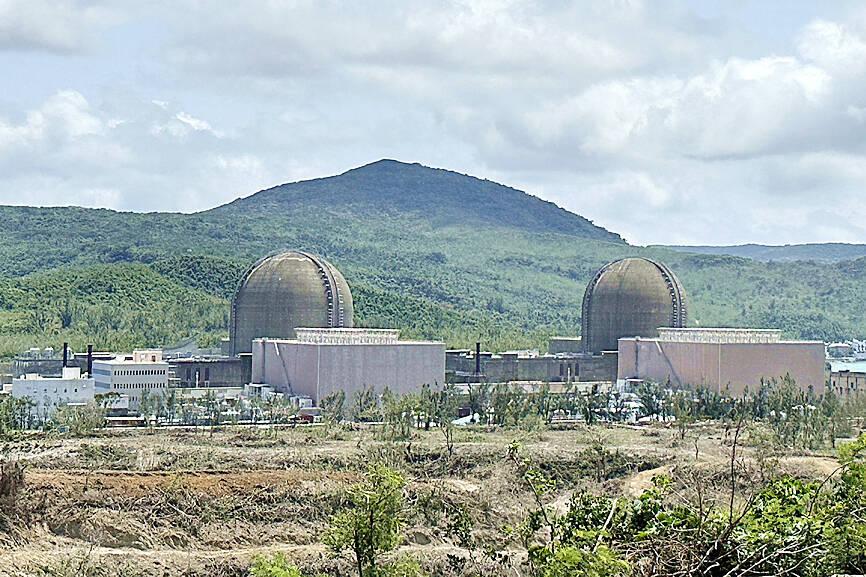
Photo: Tsai Tsung-hsien, Taipei Times
The Ma-anshan plant’s voluntary safety inspection has to undergo peer review and requires assistance from the original manufacturer, a process estimated to take one-and-a-half to two years, the ministry said.
The Kuosheng plant still has spent nuclear fuel that must first be removed, it said, adding that it would take a longer time than the Ma-anshan plant due to nearly a decade of delays in completing its dry-storage facility.
Taipower conducted status assessments for the three nuclear power plants in accordance with the newly amended Nuclear Reactor Facilities Regulation Act (核子反應器設施管制法) and relevant regulations, it said.
The assessment covered seven major areas: unit equipment, labor allocation, dry cask storage for spent fuel, operating-life extensions of similar reactor types, seismic resistance, safety inspection readiness and power-supply efficiency.
Results showed that the Jinshan Nuclear Power Plant in New Taipei City’s Shihmen District (石門) is not suitable for recommissioning, it said.
The plant’s two units have been offline for more than 11 and eight years respectively, leading to severe equipment aging, it said.
Most major power-generation components have already been dismantled, and the majority of instrumentation and electrical parts would need replacement or upgrading, it said.
It also uses the same reactor design as those involved in the 2011 Fukushima Dai-ichi Nuclear Power Plant disaster in Japan, where all similar units have entered decommissioning, it added.
However, preliminary findings showed that the Kuosheng plant possesses the conditions for restart, it said.
The plant’s safety and support systems have continued to receive periodic overhaul and maintenance as if it were still operating, it said.
However, its power-generation systems have been idle for more than two years, requiring long-term overhaul and implementation of a restoration control plan, with functions needing reverification, it said.
Preliminary findings also showed that the Ma-anshan plant meets the conditions for recommissioning, it said.
The plant’s equipment has not been dismantled and all units have undergone regular overhaul and maintenance to operational standards, it said.
The reactors have been cleared, with room still available in the spent-fuel pools, it added.
However, certain components that involve original manufacturer patents would require their assistance, it said.
Following approval of the status assessment report, Taipower is expected to prepare restart plans and initiate voluntary safety inspections, including aging and seismic safety evaluations, it said.
The ministry said that the voluntary safety inspections would assess whether various facilities and equipment at the plants can have their operating lives extended and determine necessary reinforcements.

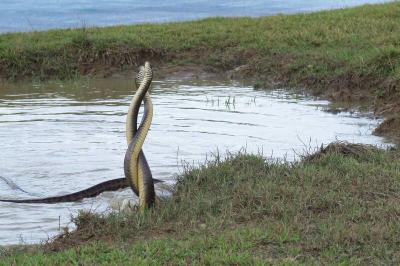
Kenting National Park service technician Yang Jien-fon (楊政峰) won a silver award in World Grand Prix Photography Awards Spring Season for his photograph of two male rat snakes intertwined in combat. Yang’s colleagues at Kenting National Park said he is a master of nature photography who has been held back by his job in civil service. The awards accept entries in all four seasons across six categories: architectural and urban photography, black-and-white and fine art photography, commercial and fashion photography, documentary and people photography, nature and experimental photography, and mobile photography. Awards are ranked according to scores and divided into platinum, gold and
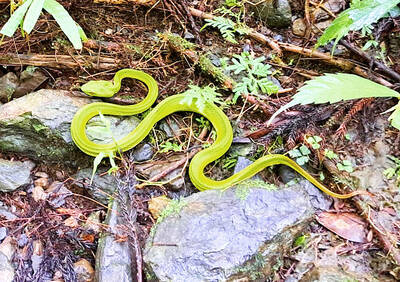
More than half of the bamboo vipers captured in Tainan in the past few years were found in the city’s Sinhua District (新化), while other districts had smaller catches or none at all. Every year, Tainan captures about 6,000 snakes which have made their way into people’s homes. Of the six major venomous snakes in Taiwan, the cobra, the many-banded krait, the brown-spotted pit viper and the bamboo viper are the most frequently captured. The high concentration of bamboo vipers captured in Sinhua District is puzzling. Tainan Agriculture Bureau Forestry and Nature Conservation Division head Chu Chien-ming (朱健明) earlier this week said that the
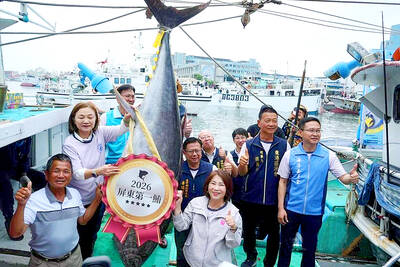
The first bluefin tuna of the season, brought to shore in Pingtung County and weighing 190kg, was yesterday auctioned for NT$10,600 (US$333.5) per kilogram, setting a record high for the local market. The auction was held at the fish market in Donggang Fishing Harbor, where the Siaoliouciou Island-registered fishing vessel Fu Yu Ching No. 2 delivered the “Pingtung First Tuna” it had caught for bidding. Bidding was intense, and the tuna was ultimately jointly purchased by a local restaurant and a local company for NT$10,600 per kilogram — NT$300 ,more than last year — for a total of NT$2.014 million. The 67-year-old skipper
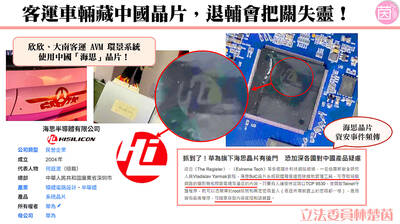
BREACH OF CONTRACT: The bus operators would seek compensation and have demanded that the manufacturer replace the chips with ones that meet regulations Two bus operators found to be using buses with China-made chips are to demand that the original manufacturers replace the systems and provide compensation for breach of contract, the Veterans Affairs Council said yesterday. Democratic Progressive Party Legislator Michelle Lin (林楚茵) yesterday said that Da Nan Bus Co and Shin-Shin Bus Co Ltd have fielded a total of 82 buses that are using Chinese chips. The bus models were made by Tron-E, while the systems provider was CYE Electronics, Lin said. Lin alleged that the buses were using chips manufactured by Huawei subsidiary HiSilicon Co, which presents a national security risk if the


 RSS
RSS