


Cramped living conditions for hens likely contributed to a batch of pesticide-contaminated eggs being released earlier this month, a livestock expert said on Monday.
The Food and Drug Administration on Monday last week issued an emergency recall of more than 150,000 eggs from a Changhua County farm after they were found to have high residues of the pesticide fipronil sulfone.
Wang Chien-kai (王建鎧), an assistant professor of animal sciences and head of the Livestock Research Institute at National Chung Hsing University, said the contamination was likely related to the traditional battery cages used for about 90 percent of egg-laying hens in Taiwan.

Photo courtesy of the Keelung City Government
Traditional battery-style cages contain two to four hens in a space about the size of an A4 sheet of paper, the Environment and Animal Society of Taiwan said.
In such cramped conditions, parasites are able to easily breed and spread, necessitating the use of large quantities of pesticides, Wang said.
In less crowded enclosures, hens frequently take dust baths to control parasites, allowing farmers to use less pesticides, he said.
To produce safer, healthier and more environmentally friendly eggs, consumers need to accept paying higher prices to help the industry make the necessary upgrades, Wang said.
Minister of Health and Welfare Shih Chung-liang (石崇良) over the weekend said that regulators would increase random sampling for pesticides in eggs based on their “risk level,” with eggs stamped with a “C” — meaning cage eggs — receiving top priority.
Taiwan’s eggs are stamped with a two-line traceability code, with the top line denoting a specific farm or egg washing facility, according to the Environmental Information Center Web site.
The second line indicates packaging date — ordered year-month-day — and includes an English letter, such as a “C” for cage eggs or an “E” for enriched cage eggs.
Cage-free eggs are labeled either “O” for organic, “F” for free-range or “B” for barn-raised, each with its own regulatory definition.
Three organizations provide five types of humane certification for eggs in Taiwan, the logos of which are typically featured on the eggs’ packaging, the site said.
Of those, the two certifications offered by the Taiwan Society of Agricultural Standards and the one from the National Animal Industry Foundation are less strict, because they allow certification for eggs raised in so-called enriched cages.
The two certifications offered by the Environment and Animal Society of Taiwan are considered to have higher standards, because they do not certify eggs from enriched cages, the site said.
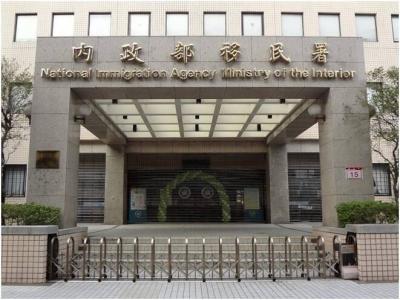
A small number of Taiwanese this year lost their citizenship rights after traveling in China and obtaining a one-time Chinese passport to cross the border into Russia, a source said today. The people signed up through Chinese travel agencies for tours of neighboring Russia with companies claiming they could obtain Russian visas and fast-track border clearance, the source said on condition of anonymity. The travelers were actually issued one-time-use Chinese passports, they said. Taiwanese are prohibited from holding a Chinese passport or household registration. If found to have a Chinese ID, they may lose their resident status under Article 9-1

Taiwanese were praised for their composure after a video filmed by Taiwanese tourists capturing the moment a magnitude 7.5 earthquake struck Japan’s Aomori Prefecture went viral on social media. The video shows a hotel room shaking violently amid Monday’s quake, with objects falling to the ground. Two Taiwanese began filming with their mobile phones, while two others held the sides of a TV to prevent it from falling. When the shaking stopped, the pair calmly took down the TV and laid it flat on a tatami mat, the video shows. The video also captured the group talking about the safety of their companions bathing

PROBLEMATIC APP: Citing more than 1,000 fraud cases, the government is taking the app down for a year, but opposition voices are calling it censorship Chinese Nationalist Party (KMT) Chairwoman Cheng Li-wun (鄭麗文) yesterday decried a government plan to suspend access to Chinese social media platform Xiaohongshu (小紅書) for one year as censorship, while the Presidential Office backed the plan. The Ministry of the Interior on Thursday cited security risks and accusations that the Instagram-like app, known as Rednote in English, had figured in more than 1,700 fraud cases since last year. The company, which has about 3 million users in Taiwan, has not yet responded to requests for comment. “Many people online are already asking ‘How to climb over the firewall to access Xiaohongshu,’” Cheng posted on

A classified Pentagon-produced, multiyear assessment — the Overmatch brief — highlighted unreported Chinese capabilities to destroy US military assets and identified US supply chain choke points, painting a disturbing picture of waning US military might, a New York Times editorial published on Monday said. US Secretary of Defense Pete Hegseth’s comments in November last year that “we lose every time” in Pentagon-conducted war games pitting the US against China further highlighted the uncertainty about the US’ capability to intervene in the event of a Chinese invasion of Taiwan. “It shows the Pentagon’s overreliance on expensive, vulnerable weapons as adversaries field cheap, technologically


 RSS
RSS