


Chinese Nationalist Party (KMT) caucus secretary-general Lo Chih-chiang (羅智強) yesterday said he is opposed to the legislature passing a resolution in support of Democratic Progressive Party (DPP) Legislator Puma Shen (沈伯洋) following threats against Shen by Beijing.
Accusing Shen of “sedition,” Beijing has threatened to pursue Shen’s arrest through Interpol, prompting the DPP caucus on Friday to propose that the legislature pass a resolution to condemn China’s attempts at “transnational repression.” Although the KMT and Taiwan People’s Party (TPP) caucuses initially opposed placing the motion on the agenda, the legislature later agreed to send it directly to a second reading and to cross-caucus negotiations.
Lo yesterday announced his stance opposing the proposed resolution, accusing Shen of “bullying Chinese spouses,” and saying he had no right to expect others to protect him.
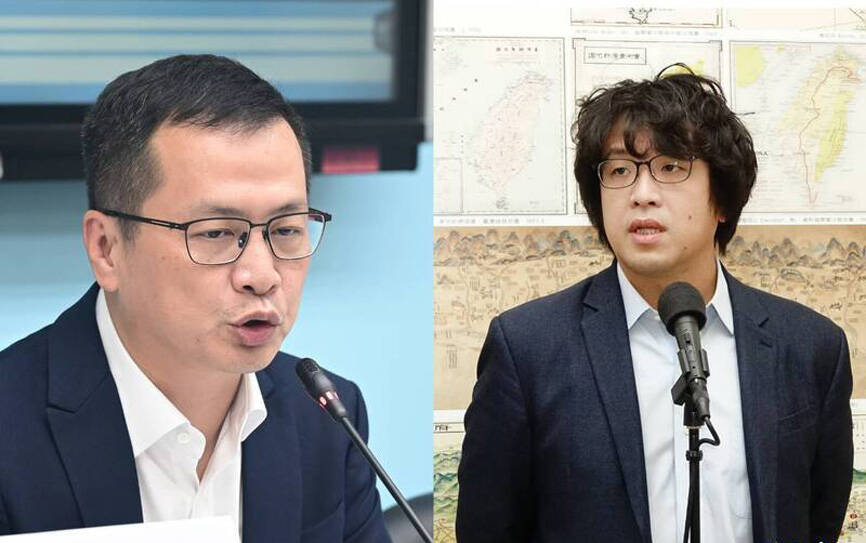
Photo: Taipei Times
“Over the past two years Shen has been the DPP lawmaker most aggressively suppressing Chinese spouses,” he said, adding that Shen’s long-held view is that “all cross-strait exchanges are forms of ‘united front’ work.”
Seeing Shen placed on China’s wanted list “elicits no sympathy at all,” he said.
Shen previously proposed amendments to the Act Governing Relations Between the People of the Taiwan Area and the Mainland Area (臺灣地區與大陸地區人民關係條例) to require Chinese spouses seeking public office in Taiwan to first renounce their People’s Republic of China nationality, Lo said, adding that such a demand was impossible due to the constitutional framework under which both sides claim to be part of “one China,” as well as the political reality of mutual nonrecognition of sovereignty.
Previous administrations under former presidents Chen Shui-bian (陳水扁), Ma Ying-jeou (馬英九) and Tsai Ing-wen (蔡英文) all regulated Chinese spouses’ rights through the act and never required them to renounce their nationality as a condition for political participation, he said.
Shen’s proposed amendment to the act, which Lo called “draconian,” failed to pass due to the KMT and TPP holding a majority in the legislature.
However, President Willian Lai (賴清德) adopted Shen’s position which resulted in a “sweeping purge” of Chinese spouses who had won various elected offices across Taiwan, including Nantou County councilor positions, and those of village and borough wardens in Hualien County, New Taipei City, Taipei and Taoyuan, Lo said.
“Many of those spouses had lived in Taiwan for decades and won offices one vote at a time,” Lo said, adding the DPP had “cost them their jobs and livelihoods.”
In response, Shen yesterday said that Taiwanese civil servants are already barred by law from holding any nationality other than that of the Republic of China, calling this a fundamental national security requirement.
Lo, despite being a lawmaker, “does not even understand such basic common sense,” he said, calling him “the least qualified legislator in Taiwan.”
Soochow University political science assistant professor Chen Fang-yu (陳方隅) yesterday said that the opposition’s “confusion over national identity and inability to distinguish between allies and adversaries” represent one of the biggest vulnerabilities in Taiwan’s democracy.
At a time when China is acting so aggressively, the opposition’s refusal to make even the “lowest-cost” verbal statement of support sends a dangerous signal, suggesting that some in Taiwan believe Beijing’s actions are justified, Chen said, posing significant risks to Taiwan’s security.
Additional reporting by Hsieh Chun-lin and Huang Ching-hsuan
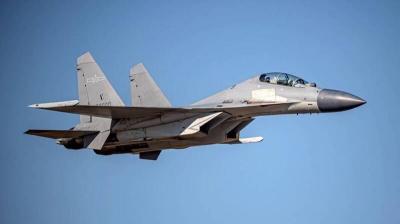
Eight Chinese naval vessels and 24 military aircraft were detected crossing the median line of the Taiwan Strait between 6am yesterday and 6am today, the Ministry of National Defense said this morning. The aircraft entered Taiwan’s northern, central, southwestern and eastern air defense identification zones, the ministry said. The armed forces responded with mission aircraft, naval vessels and shore-based missile systems to closely monitor the situation, it added. Eight naval vessels, one official ship and 36 aircraft sorties were spotted in total, the ministry said.
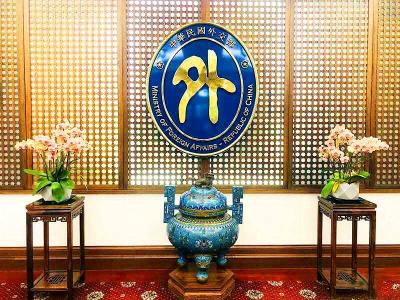
The Ministry of Foreign Affairs (MOFA) today said that if South Korea does not reply appropriately to its request to correct Taiwan’s name on its e-Arrival card system before March 31, it would take corresponding measures to alter how South Korea is labeled on the online Taiwan Arrival Card system. South Korea’s e-Arrival card system lists Taiwan as “China (Taiwan)” in the “point of departure” and “next destination” fields. The ministry said that it changed the nationality for South Koreans on Taiwan’s Alien Resident Certificates from “Korea” to “South Korea” on March 1, in a gesture of goodwill and based on the

Taiwanese officials were shown the first of 66 F-16V fighter jets purchased by Taiwan from the United States, the Ministry of National Defense said yesterday, adding the aircraft has completed an initial flight test and is expected to be delivered later this year. A delegation led by Deputy Minister of National Defense Hsu Szu-chien (徐斯儉) visited Lockheed Martin’s F-16 C/D Block 70 (also known as F-16V) assembly line in South Carolina on March 16 to view the aircraft. The jet will undergo a final acceptance flight in the US before being delivered to Taiwan, the
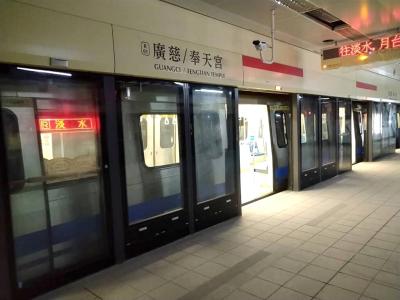
The New Taipei Metro's Sanyin Line and the eastern extension of the Taipei Metro's Tamsui-Xinyi Line (Red Line) are scheduled to begin operations in June, the National Development Council said today. The Red Line, which terminates at Xiangshan Station, would be connected by the 1.4km extension to a new eastern terminal, Guangci/Fengtian Temple Station, while the Sanyin Line would link New Taipei City's Tucheng and Yingge stations via Sanxia District (三峽). The council gave the updates at a council meeting reviewing progress on public construction projects for this year. Taiwan's annual public infrastructure budget would remain at NT$800 billion (US$25.08 billion), with NT$97.3


 RSS
RSS