

The central bank on Friday rejected an allegation by The Economist that it has kept the New Taiwan dollar undervalued to bolster exports and created “hidden risks” for the economy, saying the currency’s value is determined by market supply and demand.
In a statement, the central bank said that an article in The Economist — “The hidden risks in Taiwan’s boom” — mistakenly used the Big Mac Index to assess the NT dollar and that the conclusion was distorted.
According to The Economist, the NT dollar is undervalued by 55 percent against the US dollar based on the Big Mac Index, which the magazine used as a measure to show how far a currency has departed from its underlying value.
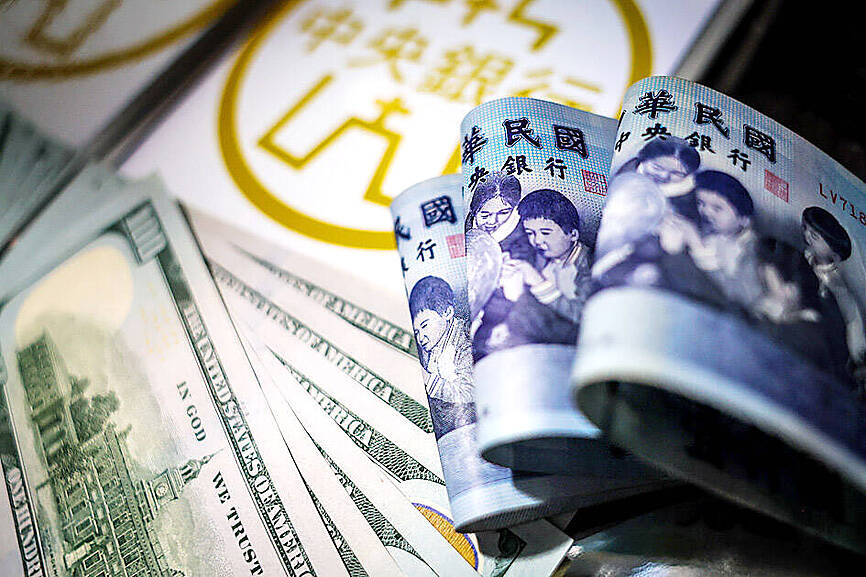
Photo: CNA
The magazine said while an undervalued NT dollar boosted Taiwanese exporters’ global competitiveness, ordinary Taiwanese consumers have been deprived of the fruits of growth, with financial risks building up.
The weakness of the NT dollar is hurting many Taiwanese people’s purchasing power and inflating local home prices, The Economist said.
The central bank said the Big Mac Index was flawed, a fact The Economist recognized as early as 2003. In addition, The Economist had said in 2006 that the Big Mac Index has been misused to assess a currency’s value, the central bank said.
Therefore, the Big Mac Index was an inappropriate measurement to gauge whether a currency is overvalued or undervalued, it said.
Citing the iPhone Index, developed by Nomura Securities in 2016 to assess a currency’s value based on iPhone prices in the currency’s market, the central bank said the NT dollar was 17.1 percent overvalued against the US dollar, a significantly different conclusion than that of the Big Mac Index.
The central bank said a currency’s value would be influenced by many factors, and the NT dollar’s value has been decided by a supply-and-demand market mechanism, adding that in a free financial market, cross-border capital flows have become one of the most important factors to decide a currency’s value.
Supply and demand in the currency market is correlated with transactions of financial products, it said.
The combined value in fund flows of foreign and local capital last year was 19.3 times the value of commodity transactions, the central bank said.
It is not appropriate to use Purchasing Power Parity to gauge consumer spending power to value a currency, because it is calculated by using only a basket of commodities and services, it said.
Despite a widening trade surplus with the US so far this year, the central bank said it has consulted with the US Department of the Treasury on the foreign exchange rate and macroeconomics matters, and Washington has never requested the central bank to boost the NT dollar against the US dollar.
The central bank said it exercises market intervention from time to time to smooth volatility in the market.
It said it would continue to communicate with the US Treasury to keep its market intervention transparent.
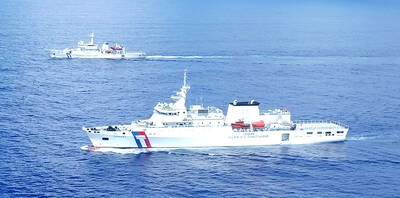
‘FRIENDSHIP FLEET’: A CGA official is scheduled to meet with the president of the Pacific nation, while one of the ships is to host a banquet and National Day event Two Coast Guard Administration (CGA) patrol vessels have docked at Malakal Harbor in Palau as part of an expedition exercise and diplomatic visit, during which a senior official is expected to meet with Palauan President Surangel Whipps Jr, the agency said yesterday. The two vessels, the 4,000-tonne-class Chiayi and the 1,000-tonne-class Penghu, set sail for Palau from Taiwan last week and arrived on Tuesday at Malakal Harbor, the CGA’s Fleet Branch said in a statement. The journey marks the second time the CGA has dispatched a “friendship fleet” to another country, after it sent its first-ever goodwill fleet, comprising the Hualien and
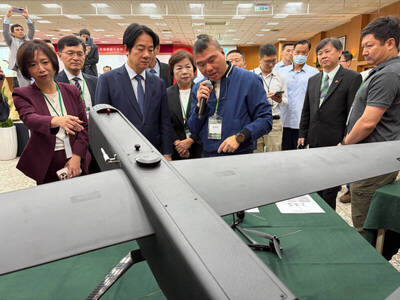
Two executives of drone supplier Jiin Ming Industry Co (錦明實業) have been detained and held incommunicado over the company's alleged use of prohibited China-made chips and camera lenses in drones supplied under recent military contracts, the Taoyuan District Prosecutors' Office said today. In a statement, prosecutors said they raided the offices of Jiin Ming — headquartered in Taoyuan — as well as those of its subsidiaries and its suppliers on Thursday last week. The raids followed a report that the company had breached its procurement contracts by putting the prohibited components into drones delivered to the military. During the raids, prosecutors summoned
The Coast Guard Administration (CGA) today said that two of its patrol vessels have docked at Palau's Malakal Harbor as part of an expedition exercise and diplomatic visit, during which a senior official is expected to meet with the Palauan president. The two vessels, the 4,000-tonne-class Chiayi (嘉義) and the 1,000-tonne-class Penghu (澎湖), set sail for Palau from Taiwan last week and arrived at Malakal Harbor yesterday, the CGA's Fleet Branch said in a statement. The journey marked the second time the CGA has dispatched a "Friendship Fleet" to another country, after it sent its first-ever goodwill fleet, comprising the Hualien (花蓮)
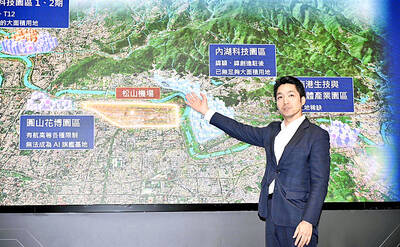
DETAILED PLAN NEEDED: Relocating the airport would affect not just travelers, but also undermine national defense and emergency medical services, a legislator said Taipei Mayor Chiang Wan-an (蔣萬安) yesterday proposed relocating Taipei International Airport (Songshan airport) and turning the site into an artificial intelligence (AI) park, drawing opposition from politicians across party lines. Chiang’s plan would turn the 300 hectares into an AI park featuring tech clusters, residential communities and green space. The industrial cluster would host 200 domestic enterprises, generate NT$12 trillion (US$376.47 billion) in output, and accommodate 65,000 jobs and 35,000 residents, he said. Cabinet spokeswoman Michelle Lee (李慧芝) said the Executive Yuan was surprised by the announcement, as the Taipei City Government did not discuss the proposal with the central government before making


 RSS
RSS