


Entry fees could be charged at the nation’s three alpine national parks to help fund ecological conservation and hiking trail maintenance, National Park Service Director Wang Cheng-chi (王成機) said yesterday.
Of the nine national parks in Taiwan, Yushan National Park, Shei-Pa National Park and Taroko National Park are home to 76 of the “100 Peaks of Taiwan” and more than 10 long-distance trekking routes, attracting more than 160,000 visitors to mountain trails last year.
Prior to entering these national parks to hike one of the “100 Peaks of Taiwan,” hikers must apply online for an entry permit — currently free of charge — from the park’s headquarters.
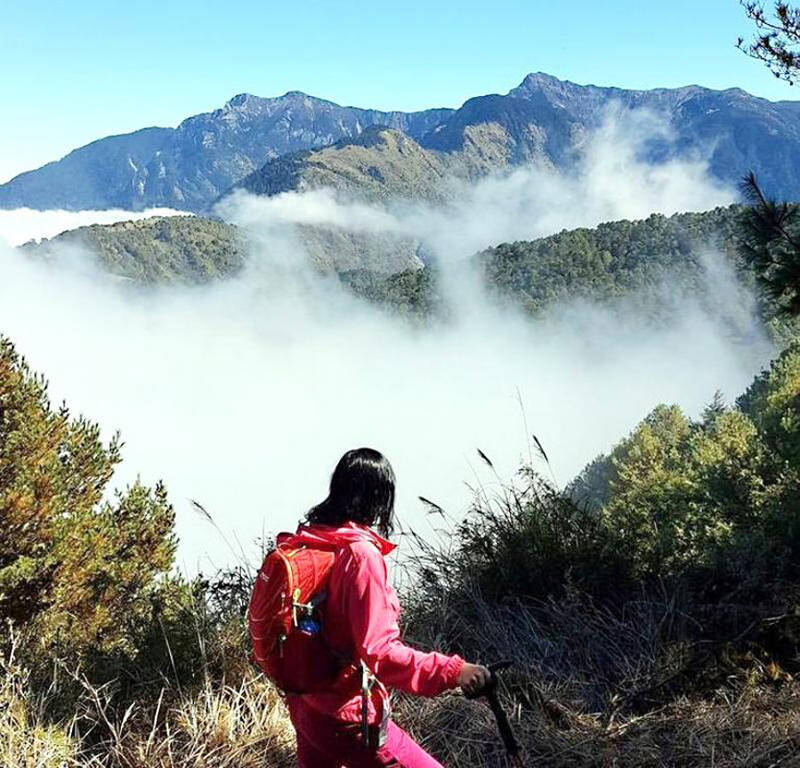
Photo: Yushan National Park Headquarters
Visitors to tourist centers or non-ecological conservation areas at national parks are not required to apply for the entry permit.
Of the cabins located across the “100 Peaks of Taiwan,” only Yushan National Park’s Paiyun Lodge (排雲山莊) charges a fee, and its newly built Guangao Lodge (觀高山屋) would charge a fee beginning next month.
Other cabins within Yushan National Park are free of charge, as they are designed as shelters.
Other national parks impose charges on certain tourist sites or facilities, such as Oluanpi Park (鵝鑾鼻公園), Yangming Shuwu (陽明書屋) and Zhuilu Old Road (錐麓古道).
Wang said the idea of entry fees was put forward by the National Park Service following suggestions made in a report on the management of national parks published by the Control Yuan’s Committee on Interior and Ethnic Affairs.
The report suggested that national parks impose “ecological compensation fees” and pool such income into a fund dedicated to ecological conservation and facility renovation, he said.
Such income would be unstable due to fluctuating numbers of entry permit applicants, while the maintenance costs of cabins and hiking trails at the three alpine national parks would be high, Wang said.
Pooling entry fees into a standalone fund might be insufficient, he said, adding that an alternative choice is to integrate the income into the national treasury and then allocate general budgets for national parks.
No consensus has been reached, as disagreements remain regarding the costs, the use of the fees and whether it should be charged based on entry times or entry days, Wang said.
Popular cabins would definitely have their fees increased, he said.
For example, Paiyun Lodge charges NT$480 per person per night, but the amount could be raised to higher than Guangao Lodge’s NT$1,200 after renovations are completed in the first quarter of next year, Wang said.
Tourism Administration Director-General Chen Yu-hsiu (陳玉秀) said that Taiwan’s mountain tours are internationally famous and lauded especially among tourists from Northern Europe.
Localization is the key to globalization, she said, adding that Yushan (玉山) would be promoted as “a must-go among Taiwanese” — similar to how Japan’s Mount Fuji is on the bucket list for many Japanese — to attract more foreign visitors to the mountain.
Tuomasih Tour Co chief executive officer Huang Jih-hung (黃日虹) said Taiwan has magnificent mountains that are as impressive as those in other countries.
Although Taiwan’s mountains have rougher terrain and more dangerous trails than some foreign mountains, they are more challenging and therefore more attractive, she said, adding that she agrees with charging entry fees to aid conservation and maintenance.
Well-maintained national parks can provide safe trails to sustain its popularity among hikers, thereby achieving sustainable operations, Huang said.
Malaysia’s Mount Kinabalu has an entry fee of about NT$500 and its cabin rooms charge up to NT$20,000 per night, she said, adding that hiking enthusiasts continue to visit Mount Kinabalu regardless of the cost.
For foreign tourists, Taiwan’s complicated permit application procedures for mountain access are the most troublesome, while most other countries do not have such procedures, she said, adding that limited transportation options to trailheads in Taiwan is also a problem.
A hiker, surnamed Ni (倪), said he would support the user-pays principle as long as fees charged by national parks are spent reasonably.
However, increasing accommodation fees of cabins is questionable, given that the accommodation quality would not be improved accordingly, he said, adding that food quality has long been a problem both at Paiyun Lodge and Jiaming Lake Cabin.
Such fees would need a good reason to be raised if they are to maintain credibility among hikers, Ni said.
Additional reporting by Tsai Yun-jung

FUKUOKA SITUATION: Japanese media reported that the pathogen is expected to be identified by the summer, while the CDC downplayed the idea that it was hMPV A “mysterious cold-like illness” reported in Japan’s Fukuoka Prefecture does not seem to be a new disease, but Japanese authorities have been asked about the situation, the Centers for Disease Control (CDC) said yesterday. The Fukuoka Prefectural Medical Association on Wednesday told a news conference that a “mystery cold” that has become a hot topic on social media is “highly likely to be caused by some kind of viral infection,” Japan’s KBC News reported. “Many people are experiencing symptoms starting with a sore throat, followed by a runny nose, phlegm and a severe cough,” KBC News reported, citing association officials. Health authorities are

Nvidia Corp CEO Jensen Huang (黃仁勳) arrived in Taiwan yesterday ahead of upcoming AI and technology events, saying he plans to meet with clients and Taiwan Semiconductor Manufacturing Co Chairman C.C. Wei (魏哲家) during his visit. After landing at Taipei Songshan Airport, Huang posed for photos with fans and handed out Yakult drinks to reporters and supporters waiting at the scene, saying he has “a lot to do” during the trip. Asked about reports that Nvidia’s planned headquarters site in Taipei’s Beitou Shilin Technology Park could break ground on May 27, Huang said that if the company holds an event, he would

The Ministry of Finance this afternoon announced the winning numbers for the March-April uniform invoice lottery. The winning number for the NT$10 million (US$318,060) special prize is 19531471, and the winning number for the NT$2 million grand prize is 85941329. Three numbers were drawn for the NT$200,000 first prize: 07225810, 20231230 and 83518781. Those with receipts matching the last seven digits of any of the first-prize numbers will win the NT$40,000 second prize, while those matching the last six digits will win the NT$10,000 third prize. Those whose receipts match the last five digits of the first-prize numbers can claim the NT$4,000 fourth prize,

SIX SUBSIDIES: The monthly allowance for older farmers is to increase to NT$10,000, and NT$5,000 is to be given to homemakers under the national pension system, Lai said The government is to implement major welfare policies for disadvantaged groups, including raising the monthly allowance for older farmers to NT$10,000 and providing homemakers with NT$5,000 per month, President William Lai (賴清德) said yesterday. Lai made the remarks during a visit to Wangling Temple in Chiayi County, saying that the planned increases were being introduced amid economic growth and an increase in tax revenue. Touting a policy, in which the government plans to provide a monthly allowance of NT$5,000 for every child under the age of 18 in a bid to address Taiwan’s low birthrate, Lai said that if received for the


 RSS
RSS