


Taiwanese author Yang Shuang-zi’s novel Taiwan Travelogue (臺灣漫遊錄) has resonated deeply with Indian readers since its release there last month, with many thinking its portrayal of identity under Japanese rule reflects their own colonial experience, Indian publishers said.
For many Indian readers, Yang’s book has offered a rare window into Taiwan — a place seldom featured in India’s cultural imagination, said publishing professionals who attended her book talk in New Delhi on Nov. 6.
“This book is a great introduction to Taiwan — the food, the culture, the history,” Divyanshi Dash said.
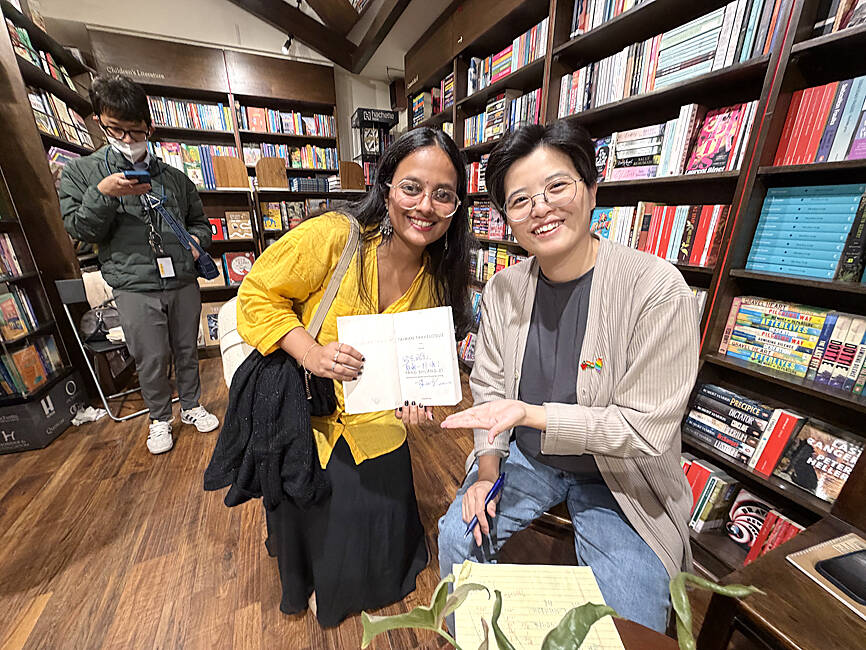
Photo: CNA
Set a century ago, the novel traces daily life and self-discovery under colonial rule.
“There are a lot of things that are different from the present Taiwan, but reading about Taiwan’s history has made me more interested in its present as well,” Dash said.
Editor and journalist Swati Daftuar said the book’s strength lies in how it allows Indian readers to view colonialism through a perspective beyond their own.
The book has “become a bridge” between Taiwan and India, she said, revealing how colonial structures seep into everyday life — from writing and food to travel.
Just as Japanese-era soups became part of Taiwan’s culinary identity, India’s enduring use of tea and sugar shows how colonial imports have woven themselves into local culture, she said.
Yang said such reflections are exactly what she hoped her work would evoke.
Colonial history is the heart of her novel, though wrapped in layers of storytelling, she said at the event, adding that she wanted to depict the complex emotions Taiwanese people still feel toward Japan.
Facing that history means acknowledging contradiction, and people cannot just embrace the parts they like and ignore the rest, she said.
“We need to recognize the wounds and the power structures that shaped who we are,” she added.
Yang also found the Taiwan-India parallels deeply meaningful, citing extensive railway systems built during their colonial periods by Japanese and British respectively.
Those railways connected people across regions, helping them feel, perhaps for the first time, that they belonged to the same land, she said.
“Despite differences in ethnicity, language or lifestyle, people began to recognize each other as part of the same nation,” she added.
Taiwan Travelogue won last year’s US National Book Award for Translated Literature — becoming the first Taiwanese work to do so.
In related news, Lin King (金翎), the English translator of Taiwan Travelogue, and the novel’s editor, Yuka Igarashi, have won a translation prize from the American Literary Translators Association (ALTA).
The association on Thursday announced this year’s ALTA First Translation Prize winners at an awards ceremony as part of its annual conference held in Tucson, Arizona.
As the translator, “King navigates the novel’s shifting linguistic and historical registers with precision and flair, preserving its layered complexity while bringing its sensuous prose and intellectual play into English,” ALTA said. “This is a rare and remarkable act of translation, one that reflects upon itself as a translation.”

SECURITY: Starlink owner Elon Musk has taken pro-Beijing positions, and allowing pro-China companies to control Taiwan’s critical infrastructure is risky, a legislator said Starlink was reluctant to offer services in Taiwan because of the nation’s extremely high penetration rates in 4G and 5G services, the Ministry of Digital Affairs said yesterday. The ministry made the comments at a meeting of the legislature’s Transportation Committee, which reviewed amendments to Article 36 of the Telecommunications Management Act (電信管理法). Article 36 bans foreigners from holding more than 49 percent of shares in public telecommunications networks, while shares foreigners directly and indirectly hold are also capped at 60 percent of the total, unless specified otherwise by law. The amendments, sponsored by Chinese Nationalist Party (KMT) Legislator Ko

The military has spotted two Chinese warships operating in waters near Penghu County in the Taiwan Strait and sent its own naval and air forces to monitor the vessels, the Ministry of National Defense (MND) said. Beijing sends warships and warplanes into the waters and skies around Taiwan on an almost daily basis, drawing condemnation from Taipei. While the ministry offers daily updates on the locations of Chinese military aircraft, it only rarely gives details of where Chinese warships are operating, generally only when it detects aircraft carriers, as happened last week. A Chinese destroyer and a frigate entered waters to the southwest
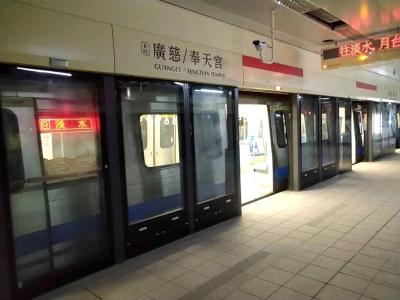
The eastern extension of the Taipei MRT Red Line could begin operations as early as late June, the Taipei Department of Rapid Transit Systems said yesterday. Taipei Rapid Transit Corp said it is considering offering one month of free rides on the new section to mark its opening. Construction progress on the 1.4km extension, which is to run from the current terminal Xiangshan Station to a new eastern terminal, Guangci/Fengtian Temple Station, was 90.6 percent complete by the end of last month, the department said in a report to the Taipei City Council's Transportation Committee. While construction began in October 2016 with an
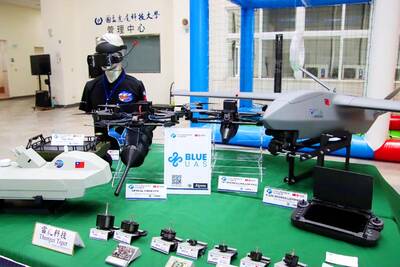
NON-RED SUPPLY: Boosting the nation’s drone industry is becoming increasingly urgent as China’s UAV dominance could become an issue in a crisis, an analyst said Taiwan’s drone exports to Europe grew 41.7-fold from 2024 to last year, with demand from Ukraine’s fight against Russian aggression the most likely driver of growth, a study showed. The Institute for Democracy, Society and Emerging Technology (DSET) in a statement on Wednesday said it found that many of Taiwan’s uncrewed aerial vehicle (UAV) sales were from Poland and the Czech Republic. These countries likely transferred the drones to Ukraine to aid it in its fight against the Russian invasion that started in 2022, it said. Despite the gains, Taiwan is not the dominant drone exporter to these markets, ranking second and fourth


 RSS
RSS