


The hospitality sector and ports could soon apply to hire migrant workers, provided they increase the monthly salary of their lowest-paid domestic workers by NT$2,000 (US$65.46) for every foreign worker hired, according to new migrant worker policies to be finalized at tomorrow’s Cabinet meeting.
The current 50-percent cap on the proportion of migrant workers hired is to remain in place.
The policies are expected to be implemented next year, and are designed to protect the jobs and livelihoods of domestic workers.
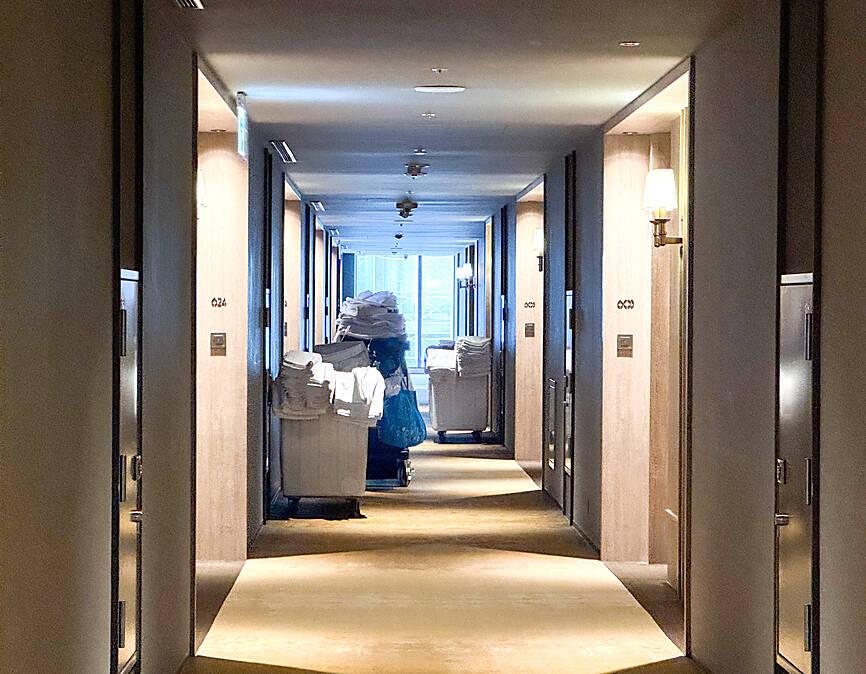
Photo: Tsai Yun-jung, Taipei Times
Premier Cho Jung-tai (卓榮泰) on Oct. 16 in a meeting with a manufacturers’ association said the government would shortly be releasing a comprehensive national workforce review.
The new policies would increase the speed and number of migrant workers entering Taiwan to support the needs of businesses and families, he said.
No further information has been given regarding foreign domestic workers, after President William Lai (賴清德) last month pledged to allow families with at least one child up to age 12 to apply for a foreign domestic helper.
Currently, the policy is limited to families with two children under six.
The proposal is reportedly still under consultation and would not be included in the new policy plan.
As of the end of August, Taiwan has 854,000 migrant workers, which may increase by 10,000 to 20,000 once hiring regulations are relaxed for hotels and ports.
Moreover, the Ministry of Labor is to allocate more than NT$80 million next year to establish a foreign worker recruitment center, which would send personnel abroad to recruit and train foreign technical workers.
The program would begin in the Philippines before expanding to Vietnam, Indonesia and Thailand, the ministry said.
It aims to ensure direct recruitment to prevent the exploitation of migrant workers, it added.
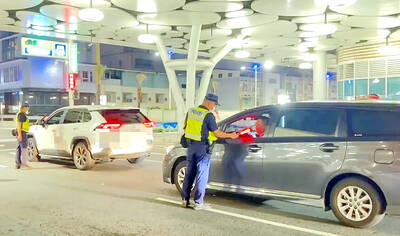
TRAFFIC SAFETY RULES: A positive result in a drug test would result in a two-year license suspension for the driver and vehicle, and a fine of up to NT$180,000 The Ministry of Transportation and Communications is to authorize police to conduct roadside saliva tests by the end of the year to deter people from driving while under the influence of narcotics, it said yesterday. The ministry last month unveiled a draft of amended regulations governing traffic safety rules and penalties, which included provisions empowering police to conduct mandatory saliva tests on drivers. While currently rules authorize police to use oral fluid testing kits for signs of drug use, they do not establish penalties for noncompliance or operating procedures for officers to follow, the ministry said. The proposed changes to the regulations require
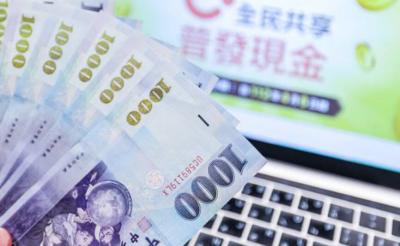
The Executive Yuan yesterday announced that registration for a one-time universal NT$10,000 cash handout to help people in Taiwan survive US tariffs and inflation would start on Nov. 5, with payouts available as early as Nov. 12. Who is eligible for the handout? Registered Taiwanese nationals are eligible, including those born in Taiwan before April 30 next year with a birth certificate. Non-registered nationals with residence permits, foreign permanent residents and foreign spouses of Taiwanese citizens with residence permits also qualify for the handouts. For people who meet the eligibility requirements, but passed away between yesterday and April 30 next year, surviving family members
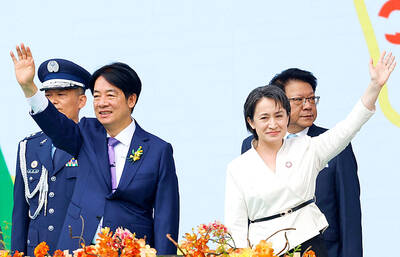
Taiwanese officials are courting podcasters and influencers aligned with US President Donald Trump as they grow more worried the US leader could undermine Taiwanese interests in talks with China, people familiar with the matter said. Trump has said Taiwan would likely be on the agenda when he is expected to meet Chinese President Xi Jinping (習近平) next week in a bid to resolve persistent trade tensions. China has asked the White House to officially declare it “opposes” Taiwanese independence, Bloomberg reported last month, a concession that would mark a major diplomatic win for Beijing. President William Lai (賴清德) and his top officials
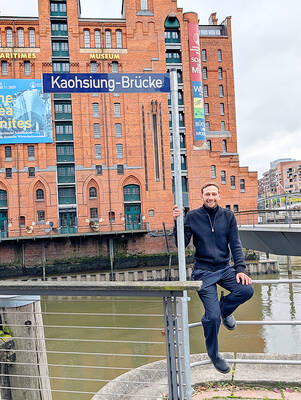
The German city of Hamburg on Oct. 14 named a bridge “Kaohsiung-Brucke” after the Taiwanese city of Kaohsiung. The footbridge, formerly known as F566, is to the east of the Speicherstadt, the world’s largest warehouse district, and connects the Dar-es-Salaam-Platz to the Brooktorpromenade near the Port of Hamburg on the Elbe River. Timo Fischer, a Free Democratic Party member of the Hamburg-Mitte District Assembly, in May last year proposed the name change with support from members of the Social Democratic Party and the Christian Democratic Union. Kaohsiung and Hamburg in 1999 inked a sister city agreement, but despite more than a quarter-century of


 RSS
RSS