


A ban on transporting and slaughtering pigs would continue until Thursday next week, Premier Cho Jung-tai (卓榮泰) said yesterday, adding that border checks would be tightened and that authorities would clamp down on smuggling.
The ban was extended for another 10 days to ensure tight control of the situation during the 15-day incubation period of the African swine fever (ASF) virus, he said.
Hog farms must report any abnormality and cooperate with inspections, Cho said.
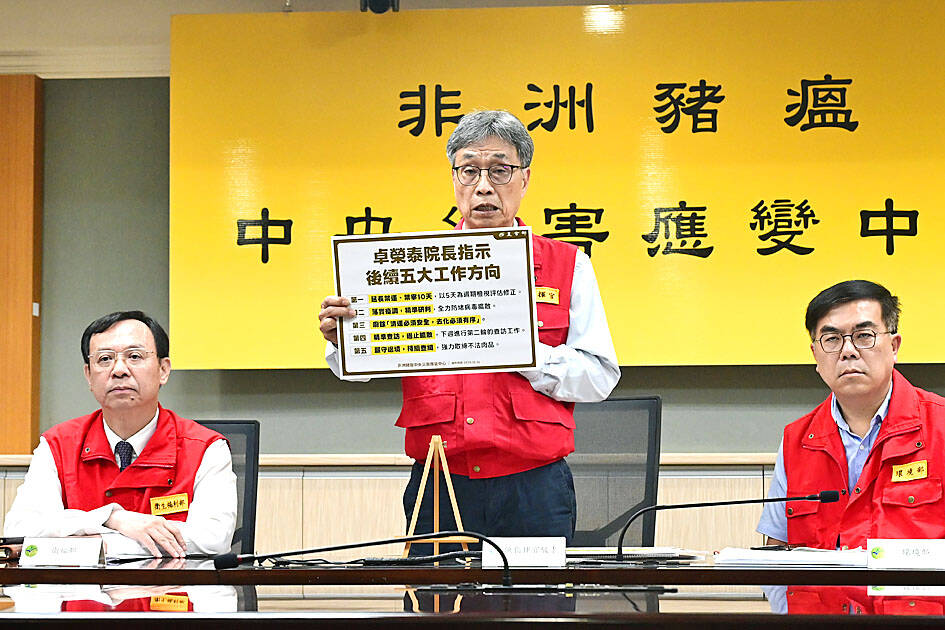
Photo: Wang Yi-song, Taipei Times
The government would also strictly inspect inbound travelers, parcels and packages, and clamp down on smuggling, he said, adding that he has asked the Customs Administration to deploy its full workforce.
According to the Act on the Prevention and Control of Infectious Animal Disease (動物傳染病防治條例), people who import packages containing pork products would be fined NT$200,000 (US$6,490) for the first offense and NT$1 million for every incident thereafter.
Minister of Agriculture Chen Junne-jih (陳駿季) said Taiwan produced about 808,000 tonnes of pork last year, accounting for about 90 percent of domestic demand.
Taiwan’s pork exports reached 2,821 tonnes last year, accounting for only 0.3 percent of total production, so the pork export suspension would not greatly affect the pork industry, he added.
Deputy Minister of Agriculture and director of the Taichung ASF response unit Tu Wen-jane (杜文珍) said that of the 168 hog farms in Taichung, 152 reported no abnormalities and 16 were suspended as of yesterday.
Chen said no abnormalities were found in the 5,441 hog farms nationwide, adding that samples taken from the farms tested negative for ASF.
There was a discrepancy between the number of dead pigs reported by the ASF-affected farm, which was 117, and the number of carcasses the rendering plant received (106), he said.
These issues would be clarified in the next round of investigations, he added.
A subsidy scheme for pig farmers and business operators would be announced by the end of this week, Chen said, adding that the scheme would be retroactive from the first day of the ban period.
Minister of the Environment Peng Chi-ming (彭?明) said Taiwan produces more than 2 tonnes of kitchen waste per day, of which about 1.3 tonnes are used to feed pigs.
The amount of kitchen waste being produced during the ban period is straining processing capacity, he said, urging people to reduce kitchen waste.
Asked why many pork stalls or eateries temporarily closed, despite there being enough frozen pork supply, Chen said that most vendors use freshly slaughtered pork.
As for a truck spotted transporting pigs in Tainan’s Houbi District (後壁), Chen expressed strong disapproval and said: “All transportation of pigs are prohibited, including transporting pigs between different farms of the same owner.”
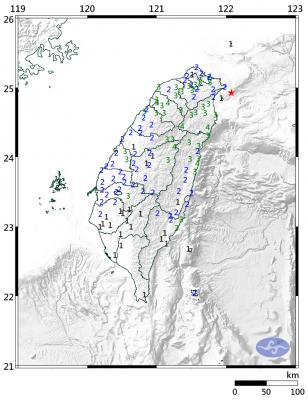
A magnitude 6.1 earthquake struck off the coast of Yilan County at 8:39pm tonight, the Central Weather Administration (CWA) said, with no immediate reports of damage or injuries. The epicenter was 38.7km east-northeast of Yilan County Hall at a focal depth of 98.3km, the CWA’s Seismological Center said. The quake’s maximum intensity, which gauges the actual physical effect of a seismic event, was a level 4 on Taiwan’s 7-tier intensity scale, the center said. That intensity level was recorded in Yilan County’s Nanao Township (南澳), Hsinchu County’s Guansi Township (關西), Nantou County’s Hehuanshan (合歡山) and Hualien County’s Yanliao (鹽寮). An intensity of 3 was
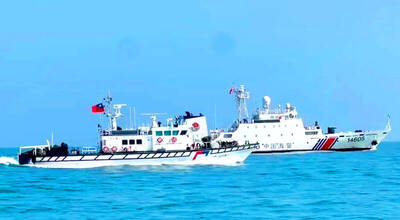
Instead of focusing solely on the threat of a full-scale military invasion, the US and its allies must prepare for a potential Chinese “quarantine” of Taiwan enforced through customs inspections, Stanford University Hoover fellow Eyck Freymann said in a Foreign Affairs article published on Wednesday. China could use various “gray zone” tactics in “reconfiguring the regional and ultimately the global economic order without a war,” said Freymann, who is also a nonresident research fellow at the US Naval War College. China might seize control of Taiwan’s links to the outside world by requiring all flights and ships entering or leaving Taiwan
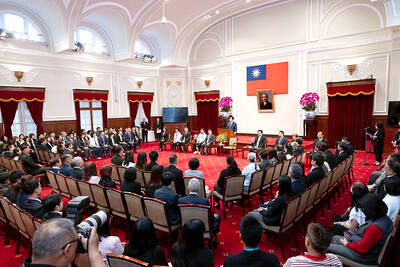
The next minimum wage hike is expected to exceed NT$30,000, President William Lai (賴清德) said yesterday during an award ceremony honoring “model workers,” including migrant workers, at the Presidential Office ahead of Workers’ Day today. Lai said he wished to thank the awardees on behalf of the nation and extend his most sincere respect for their hard work, on which Taiwan’s prosperity has been built. Lai specifically thanked 10 migrant workers selected for the award, saying that although they left their home countries to further their own goals, their efforts have benefited Taiwan as well. The nation’s industrial sector and small businesses lay
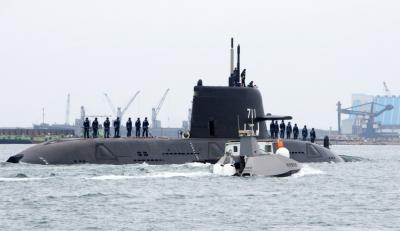
Taiwan's first indigenous defense submarine, the SS-711 Hai Kun (海鯤, or Narwhal), departed for its 13th sea trial at 7am today, marking its seventh submerged test, with delivery to the navy scheduled for July. The outing also marked its first sea deployment since President William Lai (賴清德) boarded the submarine for an inspection on March 19, drawing a crowd of military enthusiasts who gathered to show support. The submarine this morning departed port accompanied by CSBC Corp’s Endeavor Manta (奮進魔鬼魚號) uncrewed surface vessel and a navy M109 assault boat. Amid public interest in key milestones such as torpedo-launching operations and overnight submerged trials,


 RSS
RSS