


The parents of a two-year-old adopted boy who died in March after being burned with cigarettes and beaten by his father pleaded guilty yesterday at the New Taipei District Court.
At yesterday's hearing, both parents admitted to the charges against them, but disputed their sentences.
The father confessed to burning the boy's chest nine times and his left arm once, saying: "The child was adopted, not biological."
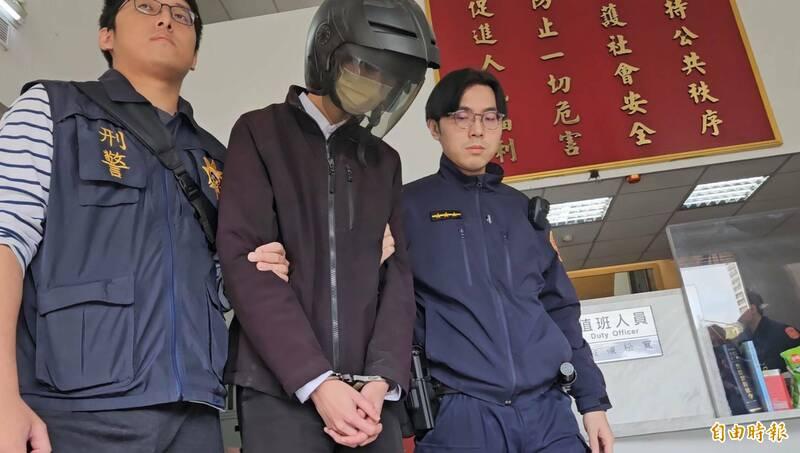
Photo: Hsu Sheng-lun, Taipei Times
The mother's attorney requested a sentencing evaluation, but the panel of judges ruled it unnecessary.
Prosecutors said that between Jan. 28 and Feb. 16, the father repeatedly burned the boy's chest and left arm with cigarettes.
On Feb. 17, he allegedly slapped and kicked the toddler, then shook and threw him onto a bed, causing severe brain and eye hemorrhages and seizures.
Despite the injuries, the father did not seek medical help, and the mother failed to intervene, prosecutors said.
On Feb. 18, the couple left the boy home alone.
When they returned that evening, they found him pale, convulsing and unresponsive.
He was rushed to a hospital, but died on March 24.
In June, prosecutors charged the father with causing bodily harm and grievous injury resulting in death, and the mother with neglect leading to death for failing to protect a child unable to care for himself.
As both committed intentional crimes against a minor, prosecutors recommended that their sentences be increased by half under the Child and Juvenile Welfare and Rights Protection Act (兒童及少年福利與權益保障法).
The case, which is to be tried with citizen judges, is scheduled for March next year.
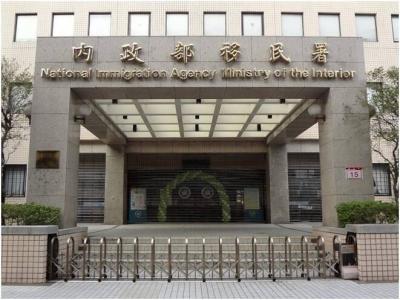
A small number of Taiwanese this year lost their citizenship rights after traveling in China and obtaining a one-time Chinese passport to cross the border into Russia, a source said today. The people signed up through Chinese travel agencies for tours of neighboring Russia with companies claiming they could obtain Russian visas and fast-track border clearance, the source said on condition of anonymity. The travelers were actually issued one-time-use Chinese passports, they said. Taiwanese are prohibited from holding a Chinese passport or household registration. If found to have a Chinese ID, they may lose their resident status under Article 9-1

Taiwanese were praised for their composure after a video filmed by Taiwanese tourists capturing the moment a magnitude 7.5 earthquake struck Japan’s Aomori Prefecture went viral on social media. The video shows a hotel room shaking violently amid Monday’s quake, with objects falling to the ground. Two Taiwanese began filming with their mobile phones, while two others held the sides of a TV to prevent it from falling. When the shaking stopped, the pair calmly took down the TV and laid it flat on a tatami mat, the video shows. The video also captured the group talking about the safety of their companions bathing

PROBLEMATIC APP: Citing more than 1,000 fraud cases, the government is taking the app down for a year, but opposition voices are calling it censorship Chinese Nationalist Party (KMT) Chairwoman Cheng Li-wun (鄭麗文) yesterday decried a government plan to suspend access to Chinese social media platform Xiaohongshu (小紅書) for one year as censorship, while the Presidential Office backed the plan. The Ministry of the Interior on Thursday cited security risks and accusations that the Instagram-like app, known as Rednote in English, had figured in more than 1,700 fraud cases since last year. The company, which has about 3 million users in Taiwan, has not yet responded to requests for comment. “Many people online are already asking ‘How to climb over the firewall to access Xiaohongshu,’” Cheng posted on

A classified Pentagon-produced, multiyear assessment — the Overmatch brief — highlighted unreported Chinese capabilities to destroy US military assets and identified US supply chain choke points, painting a disturbing picture of waning US military might, a New York Times editorial published on Monday said. US Secretary of Defense Pete Hegseth’s comments in November last year that “we lose every time” in Pentagon-conducted war games pitting the US against China further highlighted the uncertainty about the US’ capability to intervene in the event of a Chinese invasion of Taiwan. “It shows the Pentagon’s overreliance on expensive, vulnerable weapons as adversaries field cheap, technologically


 RSS
RSS