

US President Donald Trump “will surely win the Nobel Peace Prize” if he is able to convince Chinese President Xi Jinping (習近平) to permanently renounce the use of force against Taiwan, President William Lai (賴清德) said in an exclusive interview on a US podcast aired today.
Buck Sexton of the Clay Travis and Buck Sexton Show is on a weeklong “fact-finding mission to Taiwan,” where he discussed rising cross-strait tensions, China’s expanding military presence in the Indo-Pacific region and Taiwan’s growing importance in the global artificial intelligence (AI) race with the president.
Lai used a translator to give the interview, in which he gave a direct message to Trump.
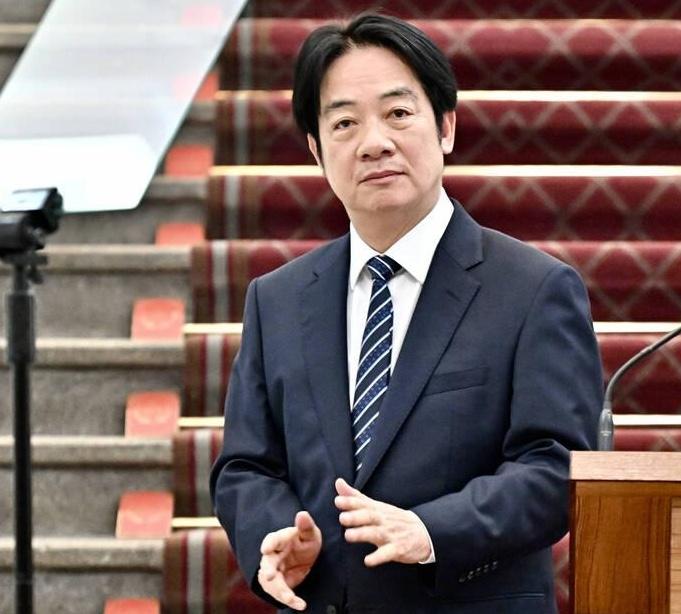
Photo: Tu Chien-jung, Taipei Times
He first clarified a number of points to a US audience.
First, the Republic of China and the People’s Republic of China (PRC) are “not subordinate to each other. Taiwan is not a part of the PRC. China does not have the right to invade Taiwan,” he said.
Second, “China has been holding military exercises in the Taiwan Strait, undermining peace and stability in the region. So it is China, not Taiwan, that is disrupting the cross-strait ‘status quo,’” he said.
“The fact that the Taiwanese people seek to protect their sovereignty and pursue a way of life based on democracy, freedom and human rights should not be seen as a provocation against China,” he added.
In addition, despite increasing threats from China, “Taiwan has not given up on seeking peace and mutual prosperity across the Strait. We understand that peace is priceless and that there are no winners in war,” he said, as it is essential to global security and prosperity.
“Our pursuit of peace is an ideal, not a fantasy,” he added, referencing his “Four Pillars of Peace and Action Plan” to strengthen national defense, build economic security, strengthen democratic partnerships and engage in stable and principled cross-strait leadership.
He spoke of his key policies as president, including continuing to increase national defense spending to reach 3.32 percent of GDP next year and 5 percent by 2030.
The goal is five years earlier than that set by NATO, as Taiwan procures arms from the US and other allies while bolstering indigenous defense capabilities, focusing on drones, uncrewed submarines and robotics, Lai said.
The US is now Taiwan’s largest destination for outbound investment, overtaking China, as Taiwan secures economic resilience, he said.
“We hope that Taiwan’s industries will be rooted in Taiwan, deployed globally and marketed across the world,” he added.
Moreover, Taiwan would stand with the US and other free and democracies to prevent war, he said.
Finally, “Taiwan is willing to engage in dialogue with China based on parity and dignity,” he said.
Speaking directly to Trump, Lai said he should pay attention to the military and geographical expansion of China’s “gray zone” exercises across the Indo-Pacific region.
If China annexes Taiwan, it would be in a “stronger position to compete with the [US] and alter the rules-based international order,” ultimately impacting US interests, he said.
Despite Taiwan’s achievements in the global semiconductor industry, particularly in semiconductor manufacturing, the US is the “leader in this ecosystem,” Lai said, adding that Taiwan is willing to help the US “industrialize and become a global AI hub,” and “make America great again.”

A total of 400 foreign “high- level” professionals have been naturalized as Republic of China (Taiwan) citizens over the past decade as the government has eased nationality rules to attract talent from a wider range of fields, the Ministry of the Interior said yesterday. The 400th high-level professional, who works in the electronics industry, was approved for ROC citizenship on Aug. 26, the MOI said. The MOI quoted the newly naturalized citizen as saying that Taiwan is a leader in fields such as semiconductors, electronics manufacturing, artificial intelligence development and energy technology. He also said
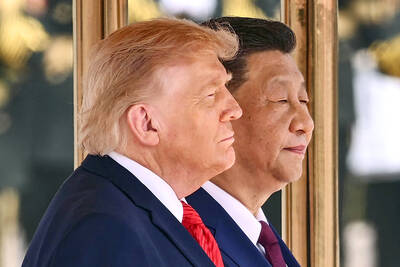
China has warned that it could cancel a planned US-China leaders’ summit if Washington approves new arms sales to Taiwan, a Japanese media outlet quoted sources as saying yesterday. US President Donald Trump, “apparently eager to showcase some diplomatic achievements ahead of November’s midterm congressional elections, places great importance on holding the summit with Chinese President Xi Jinping (習近平),” Japan’s Kyodo News reported. “While preparing for Xi’s upcoming trip, China has restated its position that the Taiwan issue is a ‘red line’ in bilateral relations,” the report said. The report said that when Xi met with Trump in Beijing in May, Xi said
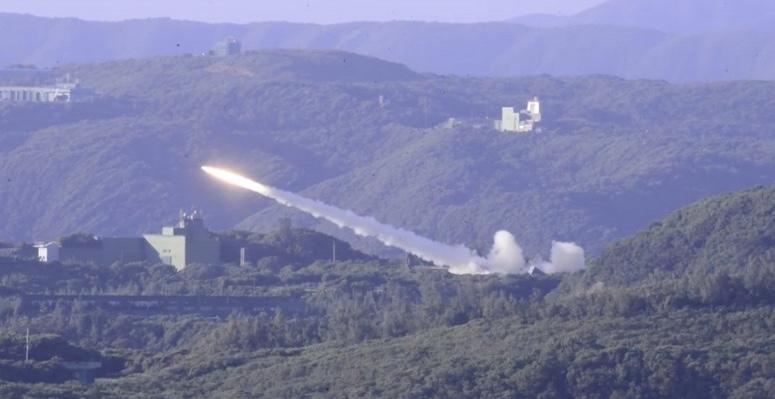
A Chinese military drone was spotted conducting reconnaissance off Taitung County as President William Lai (賴清德) visited Pingtung County this morning to inspect a drill of the armed forces’ precision-strike capabilities, prompting the military to closely monitor its actions. Today was the final day of a three-day military exercise at Jioupeng Base (九鵬基地) to test the joint combat capabilities of the armed forces and coast guard. The exercise began on Wednesday simulating air defense interception and yesterday tested long-range strike capabilities and new air defense weapons. This morning, the military conducted a final exercise involving air defense, anti-ship and drone operations. Military sources said
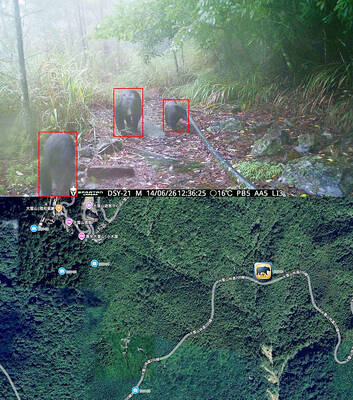
RARE PEEK: The footage released showed one of the bears staying in a cave for as long as 70 days, providing the first record of Formosan black bear’s overwintering The Forestry and Nature Conservation Agency yesterday released tracking records of released Formosan black bears for the first time, showing that they get much closer to human settlements than previously thought. The agency said it had captured two bears, Da Qu-ali (達古阿里) and Aziman (阿里曼), in indigenous villages in Hualien County and began to track them with a camera-mounted satellite collar after releasing them back into the wild. The results confirmed that the bears have moved from deep mountain areas into lowland hills closer to human communities, leading to an increase in human-bear conflicts, it said. The agency has introduced artificial intelligence-assisted early


 RSS
RSS