

People aged 50 and older are advised to undergo stomach cancer screening, with physicians saying that risk factors include a family history of the disease, long-term smoking, frequent consumption of preserved or smoked foods such as sausages and cured meats, and infection with Helicobacter pylori — a common cause of stomach inflammation.
Kaohsiung Medical University Chung-Ho Memorial Hospital gastroenterologist Wu Teng-chiang (吳登強) made the remarks after Deputy Minister of Health and Welfare Chuang Jen-hsiang (莊人祥) confirmed that he had been diagnosed with stomach cancer early last year.
Chuang wrote on Facebook on Thursday that the cancer was discovered early last year while he was serving as director-general of the Centers for Disease Control. He thanked the public for their concern, and expressed gratitude to his medical team at Taipei Veterans General Hospital and to his family for their support, saying he had “recovered well” and joked that “my ancestors must have been watching over me.”

Photo: Tsai Yun-jung, Taipei Times
According to the Ministry of Health and Welfare’s 2022 Cancer Registry Report, stomach cancer ranked eighth among all cancers in Taiwan, with 4,377 new cases recorded last year.
The age-standardized incidence rate was 9.8 per 100,000 people, up slightly from 2021, and the median age at diagnosis was 69. The mortality rate stood at 4.9 per 100,000.
The report also highlighted a gender gap: the incidence rate among men was 12.6 per 100,000, ranking seventh, compared with 7.4 per 100,000 for women, ranking 10th.
Data from the WHO showed that among 800,000 people with stomach cancer worldwide, 335,000 were infected with H pylori, suggesting the bacterium is associated with an eightfold higher risk of developing the disease.
Early-stage stomach cancer often shows no obvious symptoms, so detection relies heavily on screening and regular health checkups, Wu said.
About 80 percent of stomach cancer cases in Taiwan are linked to H pylori infection, Wu said, adding that from next year, the government plans to offer free lifetime stomach cancer screening for people aged 45 to 74 to help lower incidence rates.
Estrogen provides some protection for women before menopause, making the incidence rate among men about twice as high before age 50, he said.
After menopause, the gender gap narrows significantly, he added.
Other bacteria and imbalances in gut microbiota have also been found to contribute to stomach cancer, along with heavy smoking, he said.
Stomach cancer is among the most common malignancies in Asia, particularly for adults aged 50 and older.
Because early symptoms such as indigestion, heartburn, persistent upper abdominal pain and unexplained weight loss resemble those of stomach ulcers, the disease is often detected late, Wu said.
Early detection significantly improves survival outcomes, with five-year survival rates of up to 90 percent, compared with about 3 percent for late-stage cases, he said.
Excessive intake of salt and nitrates, common in preserved or processed foods, can damage the stomach lining and increase the risk of cancer, Wu said.
High salt concentrations might cause atrophic gastritis and cell mutations in early stages, while promoting cancer cell growth later on, he said.
Nitrates can also form nitrosamines, compounds linked to stomach cancer, especially in diets high in preserved or pickled foods, he added.
Nutritional deficiencies — particularly lower consumption of protein, fats, and vitamins A and C — as well as a history of gastric surgery or chronic gastritis, also increase risk, Wu said.
Although the incidence of stomach cancer in Taiwan has declined as people consume fewer smoked and preserved foods, other risk factors, including poor nutrition, alcohol and tobacco use, and a family history of cancer, remain significant, he said.
People without significant risk factors or abnormal findings can undergo endoscopic examinations every five to six years, while those with risk factors or precancerous conditions such as atrophic gastritis or intestinal metaplasia should be screened every two to three years, he added.
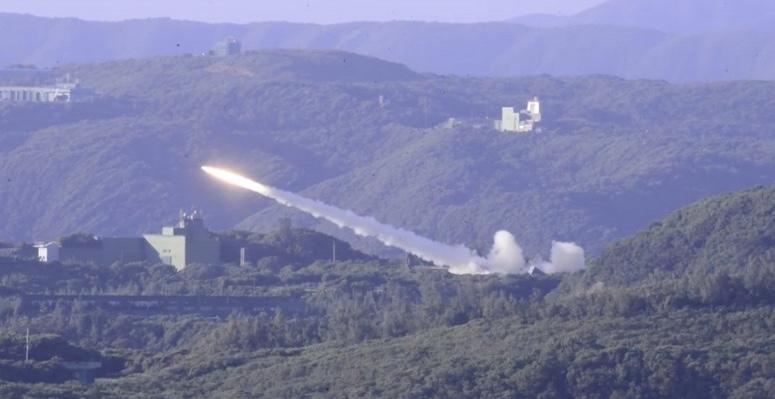
A Chinese military drone was spotted conducting reconnaissance off Taitung County as President William Lai (賴清德) visited Pingtung County this morning to inspect a drill of the armed forces’ precision-strike capabilities, prompting the military to closely monitor its actions. Today was the final day of a three-day military exercise at Jioupeng Base (九鵬基地) to test the joint combat capabilities of the armed forces and coast guard. The exercise began on Wednesday simulating air defense interception and yesterday tested long-range strike capabilities and new air defense weapons. This morning, the military conducted a final exercise involving air defense, anti-ship and drone operations. Military sources said

OCT. 31: The antiviral drugs Tamiflu and Eraflu have been distributed to about 4,000 medical facilities nationwide for people in seven groups who develop flu-like symptoms As the domestic influenza epidemic enters its peak season and continues to escalate, the Centers for Disease Control (CDC) yesterday announced that publicly funded influenza antiviral drugs for seven eligible groups have been extended to Oct. 31, allowing those who develop flu-like symptoms to receive the medication without undergoing a rapid influenza test. The CDC has extended the expanded use of flu antiviral drugs to seven groups: healthcare and influenza-prevention personnel; residents and staff at nursing homes, long-term care facilities and similar institutions; kindergarten and daycare workers and home-based caregivers; students from kindergarten through high school, vocational high school and the
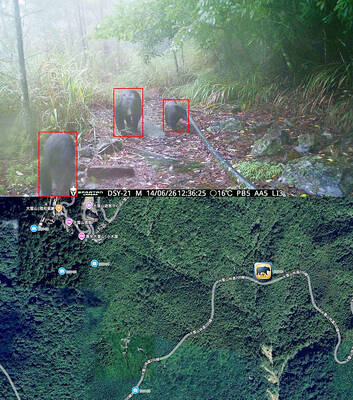
RARE PEEK: The footage released showed one of the bears staying in a cave for as long as 70 days, providing the first record of Formosan black bear’s overwintering The Forestry and Nature Conservation Agency yesterday released tracking records of released Formosan black bears for the first time, showing that they get much closer to human settlements than previously thought. The agency said it had captured two bears, Da Qu-ali (達古阿里) and Aziman (阿里曼), in indigenous villages in Hualien County and began to track them with a camera-mounted satellite collar after releasing them back into the wild. The results confirmed that the bears have moved from deep mountain areas into lowland hills closer to human communities, leading to an increase in human-bear conflicts, it said. The agency has introduced artificial intelligence-assisted early

DIPLOMATIC TOUR: Chinese President Xi Jinping began a series of overseas visits last month to Kyrgyzstan, Egypt and India, aimed at securing leverage, an official said Recent Chinese diplomatic and military moves are aimed at creating pressure ahead of a planned meeting between Chinese President Xi Jinping (習近平) and US President Donald Trump, National Security Council adviser Huang Chung-yen (黃重諺) said. Trump when visiting China in May extended an invitation to Xi to visit Washington on Sept. 24. China is yet to officially announce plans for Xi’s visit to the US. In an interview with the Liberty Times (sister paper of the Taipei Times) on Thursday, Huang said Xi’s overseas visits, China’s “gray zone” activities along the First Island Chain and efforts to expand its trade surplus with the


 RSS
RSS