


The environmental impact assessment (EIA) system should be improved by boosting public participation and communication, as well as stipulating proper responses by developers when concerns are raised, environmental groups said yesterday amid a public-initiated investigation of the process.
The Ministry of Environment must enhance the transparency and supervision of the system, the groups said during a public hearing, which was attended by Taiwan People’s Party Legislator Chen Gau-tzu (陳昭姿).
Government Watch Alliance convener Chen Jiau-hua (陳椒華) said that two-way communication between civic participants and developers were in place until former Environmental Protection Administration minister Chang Tzi-chin (張子敬) changed the approach during his time in the role.
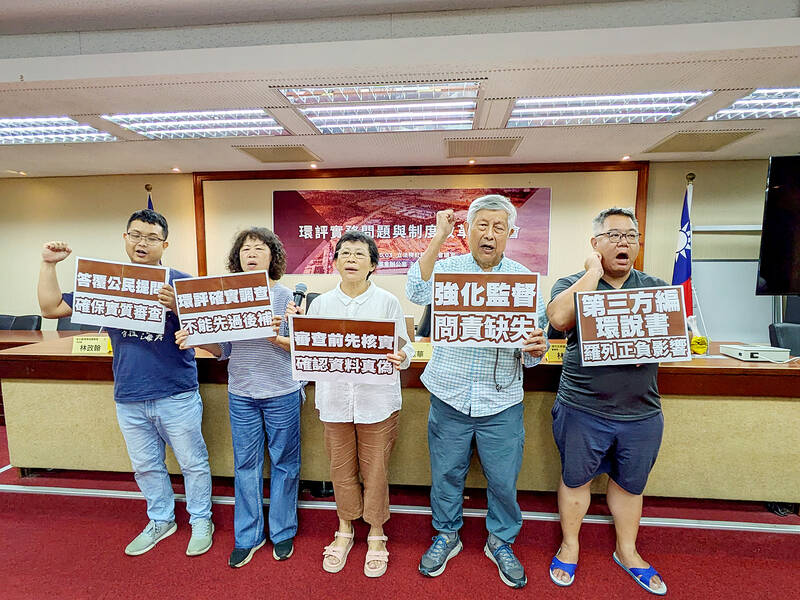
Photo courtesy of the environmental groups
The chairperson of the EIA review meetings used to ask developers to answer questions raised by civic participants, but now the speaking time of civic participants is limited to three minutes each and developers are not obligated to answer their questions, Chang said.
“The two-way communication approach should be restored immediately,” she said.
Changhua Environmental Protection Union researcher Lin Cheng-han (林政翰) said that notifications of EIA public hearings are typically only given to borough wardens and township or city offices.
A wider approach to announcements, such as text messaging, should be adopted to notify local residents who would be affected by planned developments, Lin said, adding that a minimum participation rate of local residents should be set.
Regulations protecting civic engagement should be established by the ministry and local environmental protection authorities, while the speaking time for each civic participant should be at least 10 minutes, he said.
Taiwan Hsinchu Foundation chairman Sam Lin (林聖崇) called for a funding to set up a think tank dedicated to examining the validity of the EIA process, and facilitating understanding of EIA reports among stakeholders and the public.
Taiwan Ecological Engineering Development Foundation chairman Hochen Tan (賀陳旦) said that artificial intelligence technology should be introduced to help assess meeting minutes and identify whether concerns raised during meetings are properly addressed by developers.
Environmental Jurists’ Association executive director Chang Yu-yin (張譽尹), who is the principal investigator of the EIA system checkup, said that selecting locations for development projects and evaluating project necessity involve value judgements.
However, the judgement process often lacks public participation and is left to the EIA committee to resolve, meaning accountability is sometimes lacking, he said.
“The purpose of the EIA is to understand environmental conditions, assess potential impacts and propose effective solutions,” he said.
Public participation is crucial, as the knowledge and experience of local residents is indispensable to understanding environmental conditions, he said, adding that public participation can mitigate some of the shortcomings in the EIA process.
However, substantive public participation is not involved until the second phase of the EIA, he added.
The public is given too little time to participate in the EIA process and the issues they raise are often not discussed, he said.
Department of Environmental Protection Deputy Director-General Hsu Su-chih (徐淑芷) said that the ministry has improved public participation by allowing up to 20 civic participants attend EIA meetings since July 1.
On Sept. 11, the ministry asked EIA committee members to address concerns raised by civic participants, Hsu said.
It also has released an online platform to boost public participation in EIA meetings and require developers to reply to questions, she said.

Taiwan has received more than US$70 million in royalties as of the end of last year from developing the F-16V jet as countries worldwide purchase or upgrade to this popular model, government and military officials said on Saturday. Taiwan funded the development of the F-16V jet and ended up the sole investor as other countries withdrew from the program. Now the F-16V is increasingly popular and countries must pay Taiwan a percentage in royalties when they purchase new F-16V aircraft or upgrade older F-16 models. The next five years are expected to be the peak for these royalties, with Taiwan potentially earning
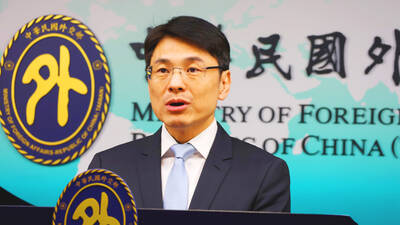
STAY IN YOUR LANE: As the US and Israel attack Iran, the ministry has warned China not to overstep by including Taiwanese citizens in its evacuation orders The Ministry of Foreign Affairs (MOFA) yesterday rebuked a statement by China’s embassy in Israel that it would evacuate Taiwanese holders of Chinese travel documents from Israel amid the latter’s escalating conflict with Iran. Tensions have risen across the Middle East in the wake of US and Israeli airstrikes on Iran beginning Saturday. China subsequently issued an evacuation notice for its citizens. In a news release, the Chinese embassy in Israel said holders of “Taiwan compatriot permits (台胞證)” issued to Taiwanese nationals by Chinese authorities for travel to China — could register for evacuation to Egypt. In Taipei, the ministry yesterday said Taiwan

‘LIKE-MINDED PARTNER’: Tako van Popta said it would be inappropriate to delay signing the deal with Taiwan because of China, adding he would promote the issue Canadian senators have stressed Taiwan’s importance for international trade and expressed enthusiasm for ensuring the Taiwan-Canada trade cooperation framework agreement is implemented this year. Representative to Canada Harry Tseng (曾厚仁) in an interview with the Central News Agency (CNA) said he was increasingly uneasy about Ottawa’s delays in signing the agreement, especially as Ottawa has warmed toward Beijing. There are “no negotiations left. Not only [is it] initialed, we have three versions of the text ready: English, French and Mandarin,” Tseng said. “That tells you how close we are to the final signature.” Tseng said that he hoped Canadian Prime Minister Mark Carney
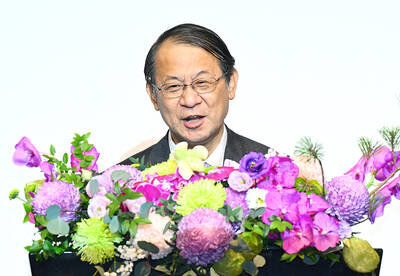
POSITIVE DEVELOPMENT: Japan and the US are expected to hold in-depth discussions on Taiwan-related issues during the meeting next month, Japanese sources said The holding of a Japan-US leaders’ meeting ahead of US President Donald Trump’s visit to China is positive news for Taiwan, former Japan-Taiwan Exchange Association representative Hiroyasu Izumi said yesterday. After the Liberal Democratic Party’s landslide victory in Japan’s House of Representatives election, Japanese Prime Minister Sanae Takaichi is scheduled to visit the US next month, where she is to meet with Trump ahead of the US president’s planned visit to China from March 31 to April 2 for a meeting with Chinese President Xi Jinping (習近平). Japan and the US are expected to hold in-depth discussions on Taiwan-related issues during the


 RSS
RSS