


National Chengchi University (NCCU) today confirmed that it has referred a complaint about a lecturer’s comments on menstrual leave to its Gender Equity Education Committee, saying it firmly stands against discriminatory speech and behavior.
Chu Li-shi (朱立熙), a part-time lecturer at the university's Department of Korean Language and Culture, today apologized after saying on Facebook on Wednesday that receiving eight menstrual leave requests from students in one day was like having "eight blood-stained sanitary pads thrown at my face. Disgusting."
He planned to issue midterm warnings to students who took menstrual leave three times in the first half of the semester, Chu said in his original post.
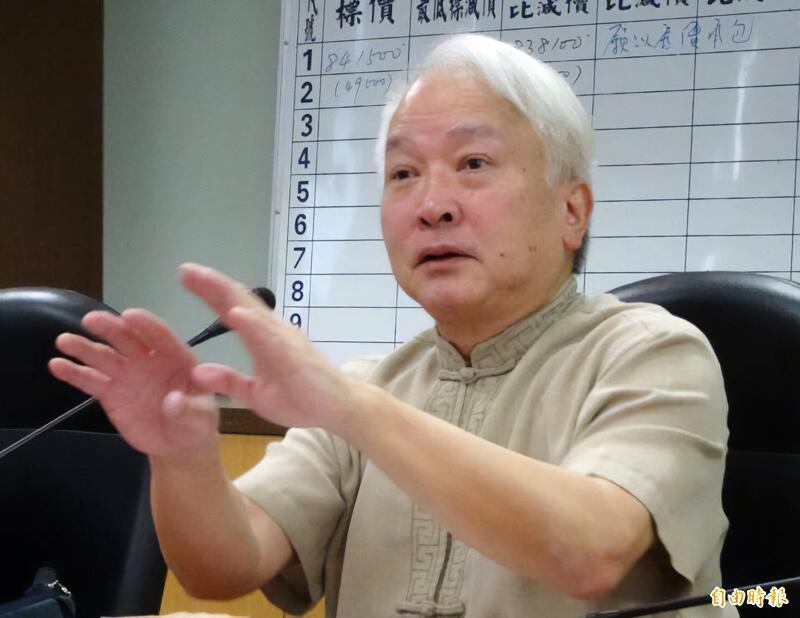
Photo: Taipei Times file
He also accused students of exploiting what he called a loophole, as grades are not affected by menstrual leave.
Chu's comments sparked outrage online, with people accusing him of misogyny and a lack of respect for human rights.
The NCCU Student Association last night said that Chu's remarks might make students feel humiliated and discourage them from taking menstrual leave, a school policy that allows female students to take one day off per month without providing supporting documentation.
It reported the incident to the department and university, the association added.
The department director has spoken with Chu, stressing the need for mutual respect between teachers and students, NCCU said.
Chu today wrote in an apology on Facebook, saying that his previous comments were made “out of anger” and were “clearly inappropriate.”
He said he would comply with the committee’s investigation and would not “run away,” although he hopes the matter will “end here.”
Procedures regarding “campus gender issues” have been initiated, NCCU said.
The case has been handed over to the committee and is to be handled in accordance with regulations, the university said, adding that it maintains its firm stance on gender equality, diversity and inclusiveness on campus.
Additional reporting by Yang Mien-chieh and Fion Khan

LOUD AND PROUD Taiwan might have taken a drubbing against Australia and Japan, but you might not know it from the enthusiasm and numbers of the fans Taiwan might not be expected to win the World Baseball Classic (WBC) but their fans are making their presence felt in Tokyo, with tens of thousands decked out in the team’s blue, blowing horns and singing songs. Taiwanese fans have packed out the Tokyo Dome for all three of their games so far and even threatened to drown out home team supporters when their team played Japan on Friday. They blew trumpets, chanted for their favorite players and had their own cheerleading squad who dance on a stage during the game. The team struggled to match that exuberance on the field, with
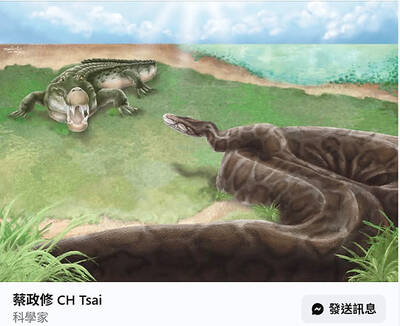
Taiwanese paleontologists have discovered fossil evidence that pythons up to 4m long inhabited Taiwan during the Pleistocene epoch, reporting their findings in the international scientific journal Historical Biology. National Taiwan University (NTU) Institute of Ecology and Evolutionary Biology associate professor Tsai Cheng-hsiu (蔡政修) led the team that discovered the largest snake fossil ever found in Taiwan. The single trunk vertebra was discovered in Tainan at the Chiting Formation, dated to between 400,000 and 800,000 years ago in the Middle Pleistocene, the paper said. The area also produced Taiwan’s first avian fossil, as well as crocodile, mammoth, saber-toothed cat and rhinoceros fossils, it said. Discoveries

Taiwanese paleontologists have discovered fossil evidence that pythons up to 4m long inhabited Taiwan during the Pleistocene epoch, reporting their findings in the international scientific journal Historical Biology. National Taiwan University (NTU) Institute of Ecology and Evolutionary Biology associate professor Tsai Cheng-hsiu (蔡政修) led the team that discovered the largest snake fossil ever found in Taiwan. A single trunk vertebra was discovered in Tainan at the Chiting Formation, dated to between 800,000 to 400,000 years ago in the Middle Pleistocene, the paper said. The area also produced Taiwan’s first avian fossil, as well as crocodile, mammoth, sabre-toothed cat and rhinoceros fossils, it said. Discoveries
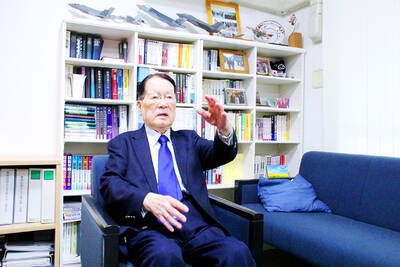
Whether Japan would help defend Taiwan in case of a cross-strait conflict would depend on the US and the extent to which Japan would be allowed to act under the US-Japan Security Treaty, former Japanese minister of defense Satoshi Morimoto said. As China has not given up on the idea of invading Taiwan by force, to what extent Japan could support US military action would hinge on Washington’s intention and its negotiation with Tokyo, Morimoto said in an interview with the Liberty Times (sister paper of the Taipei Times) yesterday. There has to be sufficient mutual recognition of how Japan could provide


 RSS
RSS