


Taiwan’s first batch of 38 M1A2T Abrams tanks procured from the US is to be commissioned late next month after training was completed and they struck all of the targets in a live-fire exercise, a military source familiar with the matter said yesterday.
Taiwan in 2019 inked a deal for 108 M1A2T tanks from the US during US President Donald Trump’s first administration, with the Ministry of National Defense allocating NT$40.524 billion (US$1.34 billion) from 2019 to 2027 for the procurement.
The M1A2Ts, called the “world’s strongest tank,” would be stationed with the 6th Army Corps to defend northern Taiwan.
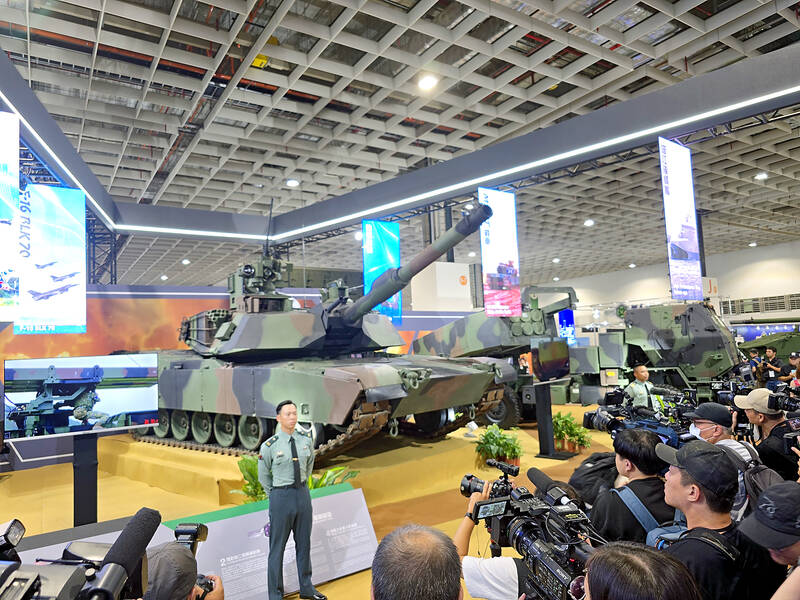
Photo: Fang Wei-li, Taipei Times
The first shipment of 38 tanks arrived at the Port of Taipei in December last year.
Instructors returned from training in the US in November last year and began training on the new vehicles in February.
On July 10, the military conducted the first live-fire exercises with the tanks at the Kengzikou Range (坑子口訓練場) in Hsinchu County, with four tanks firing a combined 19 rounds from their 120mm cannons at targets modeled after Chinese tanks.
They logged a perfect hit rate using the hunter-killer system.
The second shipment of 42 units arrived in July and a final shipment of 28 tanks is expected to be delivered at the beginning of next year, the source said.
Both shipments are to undergo the same training as the first batch before commissioning, they said.
With military personnel responsible for operating the tanks having completed training, a commissioning ceremony would be held before the end of next month at the Hsinchu County-based 584th Armored Brigade in Hukou Township (湖口), the source said.
A commissioning ceremony for the first batch is to be held late next month at the Armored Training Command in Hukou, they said.
The armed forces operates about 1,000 tanks, including the CM-11 Brave Tiger and M60A3 models, both of which have been in service for more than two decades.
Aside from buying the more advanced M1A2T tanks, the military has also invested in new engines for the M60A3s, as well as upgrading the firing systems for their main guns to give them “hunter-killer capability,” meaning a tank can engage one target while tracking another.
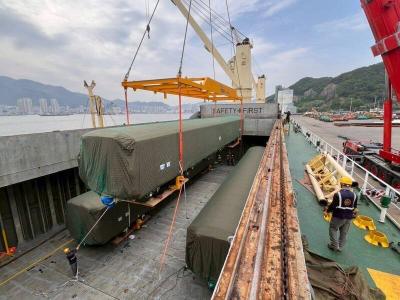
The first of 10 new high-capacity trains purchased from South Korea’s Hyundai Rotem arrived at the Port of Taipei yesterday to meet the demands of an expanding metro network, Taipei Rapid Transit Corp (TRTC) said yesterday. The train completed a three-day, 1,200km voyage from the Port of Masan in South Korea, the company said. Costing NT$590 million (US$18.79 million) each, the new six-carriage trains feature a redesigned interior based on "human-centric" transportation concepts, TRTC said. The design utilizes continuous longitudinal seating to widen the aisles and optimize passenger flow, while also upgrading passenger information displays and driving control systems for a more comfortable
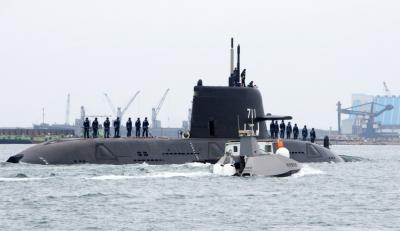
Taiwan's first indigenous defense submarine, the SS-711 Hai Kun (海鯤, or Narwhal), departed for its 13th sea trial at 7am today, marking its seventh submerged test, with delivery to the navy scheduled for July. The outing also marked its first sea deployment since President William Lai (賴清德) boarded the submarine for an inspection on March 19, drawing a crowd of military enthusiasts who gathered to show support. The submarine this morning departed port accompanied by CSBC Corp’s Endeavor Manta (奮進魔鬼魚號) uncrewed surface vessel and a navy M109 assault boat. Amid public interest in key milestones such as torpedo-launching operations and overnight submerged trials,
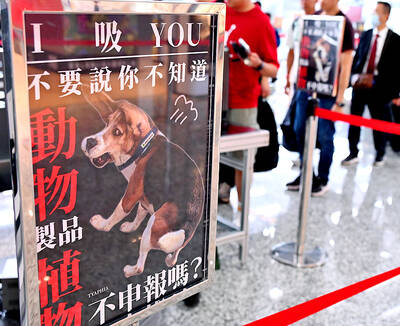
Quarantine awareness posters at Taiwan Taoyuan International Airport have gone viral for their use of wordplay. Issued by the airport branch of the Animal and Plant Health Inspection Agency, the posters feature sniffer dogs making a range of facial expressions, paired with advisory messages built around homophones. “We update the messages for holidays and campaign needs, periodically refreshing materials to attract people’s attention,” quarantine officials said. “The aim is to use the dogs’ appeal to draw focus to quarantine regulations.” A Japanese traveler visiting Taiwan has posted a photo on X of a poster showing a quarantine dog with a
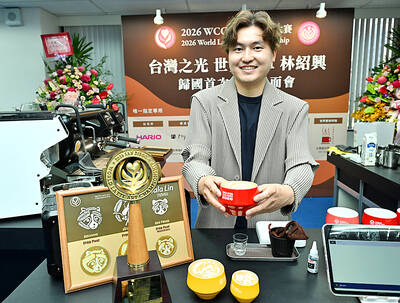
Taiwan’s coffee community has launched a “one-person-one-e-mail” campaign, calling for people to send a protest-e-mail to the World Coffee Championships (WCC) urging it to redesignate Taiwanese competitors as from “Taiwan,” rather than “Chinese Taipei.” The call followed sudden action last week after the WCC changed all references to Taiwanese competitors from “Taiwan” to “Chinese Taipei,” including recent World Latte Art champion Bala (林紹興), who won the World Latte Art Championship in San Diego earlier this month. When Bala received the trophy, he was referred to as representing Taiwan, as well as in the announcement on the WCC’s Web site, until it


 RSS
RSS