


Ocean Affairs Council Minister Kuan Bi-ling (管碧玲) today condemned Chinese fishers for using cyanide and urged them to respect the UN Convention on the Law of the Sea (UNCLOS).
Speaking to reporters after the International Conference on Marine Environmental Management in Taipei, Kuan made the remarks following the recent seizure of a Chinese vessel by the Coast Guard Administration for illegally operating near Pratas Island (Dongsha Island, 東沙島) in the South China Sea carrying cyanide on board.
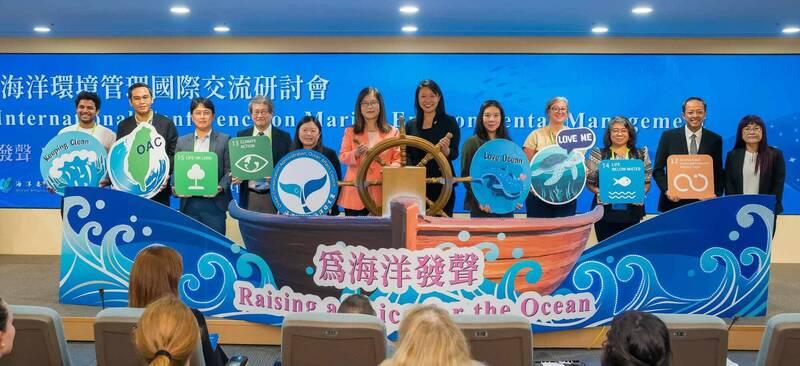
Photo courtesy of the Ocean Affairs Council
Cyanide fishing involves spraying a sodium cyanide mixture into a habitat to stun fish for capture.
The practice harms not only the target species, but also other marine organisms, including coral reefs.
All countries must respect UNCLOS, she said, condemning China's violations of international law and vowing that Taiwan would firmly defend its waters.
Kuan said Taiwan would work to enhance its maritime surveillance capabilities, starting with the development of drones before progressively expanding to manned aircraft.
She also disclosed that the council's latest National Ocean Policy White Paper is to be released at the end of this month.
The white paper is released annually in accordance with the Ocean Basic Act (海洋基本法).
It serves as the blueprint for the government's ocean policy, outlining Taiwan's vision for marine development and its policy objectives.
The conference brought together 27 experts from the US, France, Japan, South Korea, the Philippines, Malaysia, Indonesia and India, as well as various Taiwanese academics, focusing on key issues such as marine environmental protection, pollution prevention, waste management, water and sediment quality management, and international cooperation.
During the event, a memorandum of agreement was signed between Taiwan and Indonesia that aims to deepen the two countries' partnership in marine debris management and lay a solid foundation for sustainable development in the Indo-Pacific region.
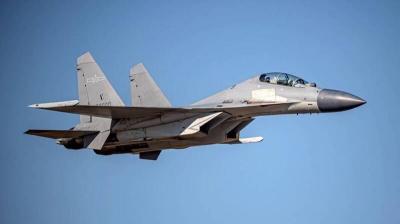
Eight Chinese naval vessels and 24 military aircraft were detected crossing the median line of the Taiwan Strait between 6am yesterday and 6am today, the Ministry of National Defense said this morning. The aircraft entered Taiwan’s northern, central, southwestern and eastern air defense identification zones, the ministry said. The armed forces responded with mission aircraft, naval vessels and shore-based missile systems to closely monitor the situation, it added. Eight naval vessels, one official ship and 36 aircraft sorties were spotted in total, the ministry said.
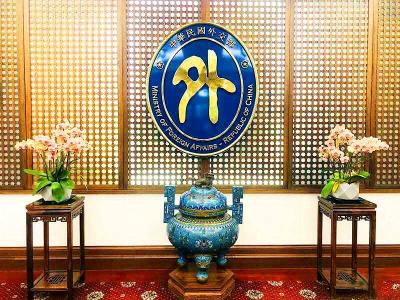
The Ministry of Foreign Affairs (MOFA) today said that if South Korea does not reply appropriately to its request to correct Taiwan’s name on its e-Arrival card system before March 31, it would take corresponding measures to alter how South Korea is labeled on the online Taiwan Arrival Card system. South Korea’s e-Arrival card system lists Taiwan as “China (Taiwan)” in the “point of departure” and “next destination” fields. The ministry said that it changed the nationality for South Koreans on Taiwan’s Alien Resident Certificates from “Korea” to “South Korea” on March 1, in a gesture of goodwill and based on the
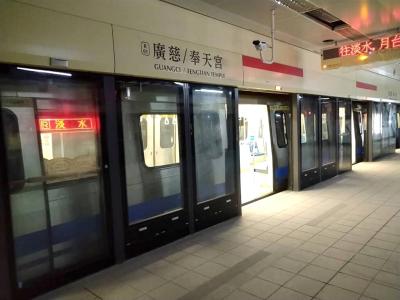
The New Taipei Metro's Sanyin Line and the eastern extension of the Taipei Metro's Tamsui-Xinyi Line (Red Line) are scheduled to begin operations in June, the National Development Council said today. The Red Line, which terminates at Xiangshan Station, would be connected by the 1.4km extension to a new eastern terminal, Guangci/Fengtian Temple Station, while the Sanyin Line would link New Taipei City's Tucheng and Yingge stations via Sanxia District (三峽). The council gave the updates at a council meeting reviewing progress on public construction projects for this year. Taiwan's annual public infrastructure budget would remain at NT$800 billion (US$25.08 billion), with NT$97.3

Taiwanese officials were shown the first of 66 F-16V fighter jets purchased by Taiwan from the United States, the Ministry of National Defense said yesterday, adding the aircraft has completed an initial flight test and is expected to be delivered later this year. A delegation led by Deputy Minister of National Defense Hsu Szu-chien (徐斯儉) visited Lockheed Martin’s F-16 C/D Block 70 (also known as F-16V) assembly line in South Carolina on March 16 to view the aircraft. The jet will undergo a final acceptance flight in the US before being delivered to Taiwan, the


 RSS
RSS