

The government yesterday said that it hoped for a more favorable US tariff rate after talks achieved “certain progress,” and it was now awaiting a “concluding” meeting.
Taiwan’s exports to the US are currently subject to a 20 percent tariff.
Deputy Trade Representative Yen Huai-shing (顏慧欣) in a statement said that talks with the US continued to advance.

Photo: Reuters
“Both sides acknowledge that the current negotiations have achieved certain progress, and we are now awaiting the US side to schedule a concluding meeting,” Yen said. “Given the impact of the current 20 percent temporary reciprocal tariffs on our industries, we hope to secure more favorable and reasonable reciprocal tariff rates, and preferential treatment for Section 232 tariffs through this agreement.”
Rates on semiconductors — a major Taiwanese export — and other key technology goods have not yet been set, as they are the subject of a national security probe that is being conducted under Section 232 of the US Trade Expansion Act of 1962.
The US Trade Representative’s office did not immediately respond to a request for comment outside of office hours in Washington.
US Secretary of Commerce Howard Lutnick on Thursday said that “we have a big deal coming with Taiwan,” but he did not give details.
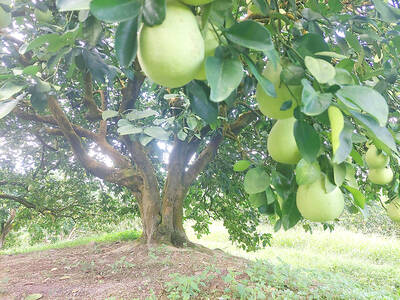
A Hualien pomelo farmer refused to sell to China after the country announced it would permit more Taiwanese pomelo imports, prompting widespread support from Taiwanese consumers, who rallied to buy his fruit. China’s Taiwan Affairs Office last month said that China’s General Administration of Customs registered an additional 79 Taiwanese pomelo orchards and packing facilities in Hualien County, allowing more Taiwanese producers to export pomelos to China. “I am a Hualien fruit farmer and I refuse to sell to China,” Liu Tzu-hao (劉子豪) from Ruisui Township (瑞穗) said in an online post. Liu is a well-known farmer in the community and has served
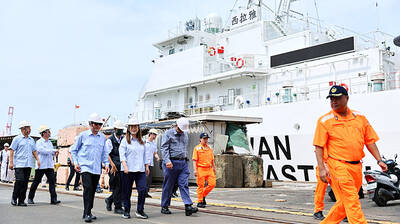
Ocean Affairs Council (OAC) Minister Kuan Bi-ling (管碧玲) on Wednesday said decommissioned coast guard vessels were given to the Philippines to enhance regional rescue capacity and would not affect Taiwanese fishers’ rights and benefits. Kuan made the remarks after confirmation on Tuesday that a 500-tonne Coast Guard Administration (CGA) patrol and rescue vessel would be given to the Philippine Coast Guard. The donation ceremony was reportedly done in Manila, but whether the vessel — previously numbered “CG123” and named Kinmen (金門) — has been handed over has yet to be confirmed. China’s Taiwan Affairs Office (TAO) on Wednesday criticized the donation for “taking
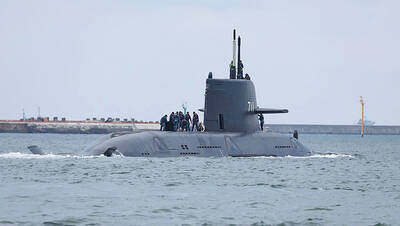
UPDATE: The submarine would need to undergo combined systems testing and crew training for navy personnel before it is ready for mission, an expert said Taiwan’s first domestically built submarine, the Hai Kun (Narwhal, 海鯤), could be delivered to the navy as early as next month, military expert and Taiwan Association for Security and Development chairman Chi Tung-yun (紀東昀) said yesterday. The submarine was yesterday morning observed departing for its 21st sea trial and its 15th submerged test. The vessel missed the initial delivery deadline of November last year due to “testing delays,” its primary contractor, shipbuilder CSBC Corp, Taiwan, said in June. The contractor also cited “political pressure from China” in procuring critical equipment. All testing operations are in the final stages, with the
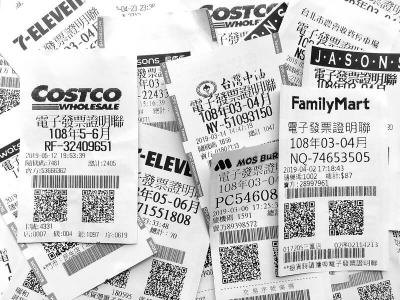
Six NT$10 million (US$315,527) special prizes and seven NT$2 million grand prizes in Taiwan's May-June uniform invoice lottery remained unclaimed as of today, including one NT$10 million winner who spent only NT$10 on an Uber Eats delivery order, the Ministry of Finance said. The ministry said the 13 winners need to claim their prizes by Nov. 5. The eight-digit serial number that won the NT$10 million special prize for May-June was 38548029, with 18 winning receipts in total. The NT$2 million grand prize number was 10138845, of which there were 22 winning receipts, the ministry said. In addition to the receipt issued for an


 RSS
RSS