


Japan is to deploy extended-range anti-ship missiles at a Ground Self-Defense Force base in Kumamoto to bolster its defenses, the Yomiuri Shimbun reported on Saturday.
The upgraded Type 12 surface-to-ship missile, with a range of more than 1,000km, would be capable of striking targets in the Taiwan Strait and along China’s coast.
Originally limited to a few hundred kilometers, the Type 12 was recently modernized ahead of schedule. Deployment, initially slated for next year, has been accelerated after the upgrade was completed sooner than expected, the newspaper said.
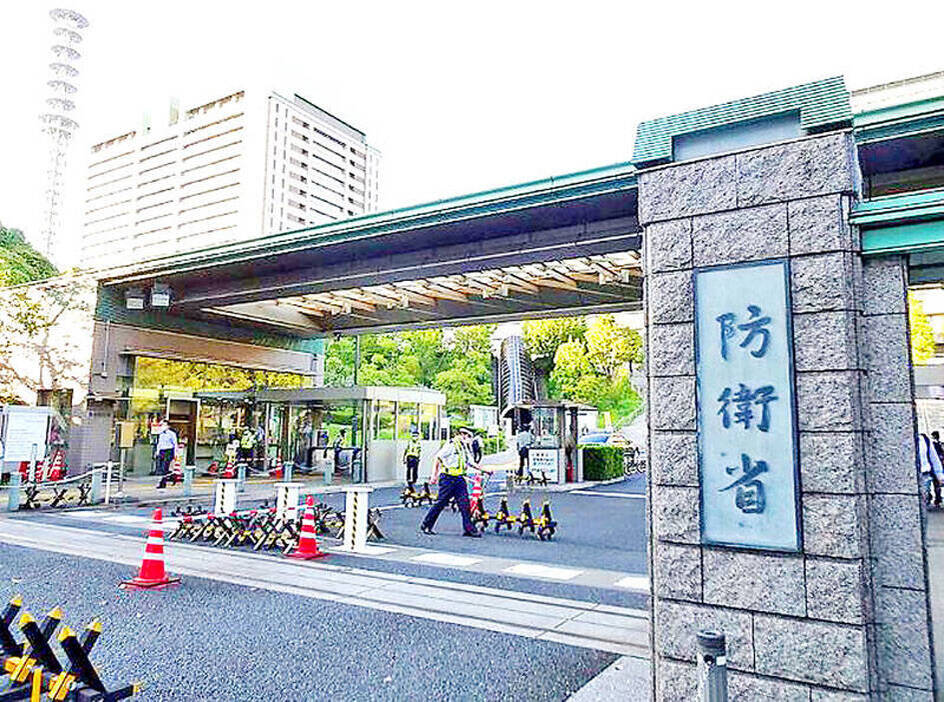
Photo: CNA
Stationing the missiles in Kyushu would allow Japan to cover waters near Taiwan and China’s coastal areas without any logistical difficulties. It would also place Japanese forces beyond the reach of adversary strikes, it said.
A Japanese Ministry of Defense official, speaking on condition of anonymity, said the move would “dramatically enhance deterrence.”
The Kumamoto deployment is part of a wider plan to station guided missiles and hypervelocity gliding projectiles at bases nationwide, including in Miyazaki, Ibaraki, Shizuoka, Kanagawa, Hokkaido and Okinawa, the report said.
The accelerated timeline also reflects a US intelligence assessment saying that China could be capable of annexing Taiwan as early as 2027, it said.
Kyushu Defense Bureau Director-General Kazuhiro Ito on Friday briefed Kumamoto Governor Takashi Kimura on the planned deployment at Kengun Garrison.
“National defense is the sole responsibility of the central government. This decision is the result of years of study,” Kimura said, urging the ministry to explain the plan to the public to ease concern that the prefecture could become a target in a Taiwan Strait conflict.
Separately, the US Department of Defense has completed a draft of its National Defense Strategy for this year, which would highlight Taiwan’s strategic importance, the Nihon Keizai Shimbun (Nikkei) reported.
The 80-page draft draws heavily on US Vice President J.D. Vance’s speeches and interviews, including remarks at the Munich Security Conference in February, the report said.
It is also shaped by US Undersecretary of Defense for Policy Elbridge Colby’s call to make China the central focus of US defense planning, the Nikkei said.
US officials said the new defense strategy rests on four pillars: homeland defense, deterring China, burden-sharing with allies and partners, and revitalizing the US defense industrial base.
While serving in the US Senate before he was picked by US President Donald Trump as US vice presidential candidate, Vance repeatedly advocated for a “restrained” US foreign policy and US allies assuming greater responsibility for their own security.
Colby, a leading figure in the “prioritization” foreign policy camp — the view that the US should focus its resources on denying Chinese hegemony in Asia — said that Chinese control of Taiwan would upend the regional balance of power and endanger US security.
Although Colby sparked controversy during his US Senate confirmation hearings by saying that Taiwan is not a US “vital interest,” the new National Security Strategy is expected to explicitly affirm Taiwan’s strategic importance.
A public summary of the strategy is due this fall, although most of the document is likely to remain classified.

The Ministry of Finance this afternoon announced the winning numbers for the March-April uniform invoice lottery. The winning number for the NT$10 million (US$318,060) special prize is 19531471, and the winning number for the NT$2 million grand prize is 85941329. Three numbers were drawn for the NT$200,000 first prize: 07225810, 20231230 and 83518781. Those with receipts matching the last seven digits of any of the first-prize numbers will win the NT$40,000 second prize, while those matching the last six digits will win the NT$10,000 third prize. Those whose receipts match the last five digits of the first-prize numbers can claim the NT$4,000 fourth prize,

SIX SUBSIDIES: The monthly allowance for older farmers is to increase to NT$10,000, and NT$5,000 is to be given to homemakers under the national pension system, Lai said The government is to implement major welfare policies for disadvantaged groups, including raising the monthly allowance for older farmers to NT$10,000 and providing homemakers with NT$5,000 per month, President William Lai (賴清德) said yesterday. Lai made the remarks during a visit to Wangling Temple in Chiayi County, saying that the planned increases were being introduced amid economic growth and an increase in tax revenue. Touting a policy, in which the government plans to provide a monthly allowance of NT$5,000 for every child under the age of 18 in a bid to address Taiwan’s low birthrate, Lai said that if received for the
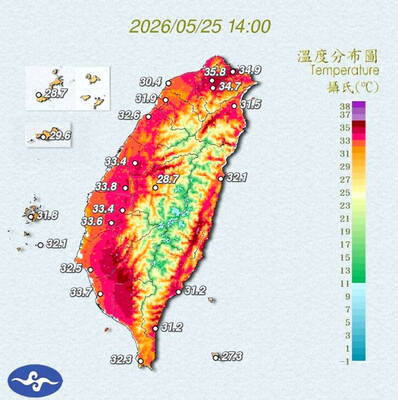
STAY COOL: The HPA recommended that people stay hydrated, use air-conditioning or fans while indoors, wear loose-fitting clothes and walk in the shade while outdoors Employers must implement measures such as installing cooling equipment, and providing drinking water and rest breaks for outdoor workers starting from Monday next week, the Taipei Department of Labor said on Sunday. Employers who fail to comply could face fines of NT$30,000 to NT$300,000 under the Occupational Safety and Health Act (職業安全衛生法), the department said. Businesses in Taipei employing fewer than 100 workers, as well as registered self-employed workers with labor insurance coverage, could receive on-site assessments and guidance from occupational safety consultants to help them apply for central government subsidies to implement or improve heat-protection measures, it said. Under the Ministry of

NATIONAL SECURITY: Authorities are working to confirm the identities of the military personnel involved and investigating possible illegal conduct and regulatory violations Authorities are probing possible national security implications after Kinmen police and immigration officers on Sunday found a Chinese woman allegedly posing as a tourist while engaging in prostitution involving more than 10 military personnel. The woman, surnamed Chen (陳), has since been deported, authorities said, adding that investigators are still working to confirm the identities of those implicated, as the records only listed code names and aliases. The case stemmed from a report received by the Kinmen District Prosecutors’ Office on Friday last week from the Jinhu Precinct of the Kinmen County Police Bureau. On Sunday, police, along with the National Immigration


 RSS
RSS