


The Legislative Yuan today passed revisions to the special resilience act, raising the funding ceiling from NT$545 billion to NT$570 billion (US$18.64 billion) and setting a timeline for distributing a universal cash handout to all citizens.
The legislature passed amendments to the Special Act for Strengthening Economic, Social and National Security Resilience in Response to International Circumstances (因應國際情勢強化經濟社會及民生國安韌性特別條例).
The Executive Yuan originally proposed a NT$410 billion special budget, which included NT$100 billion in subsidies for Taiwan Power Co (Taipower, 台電).
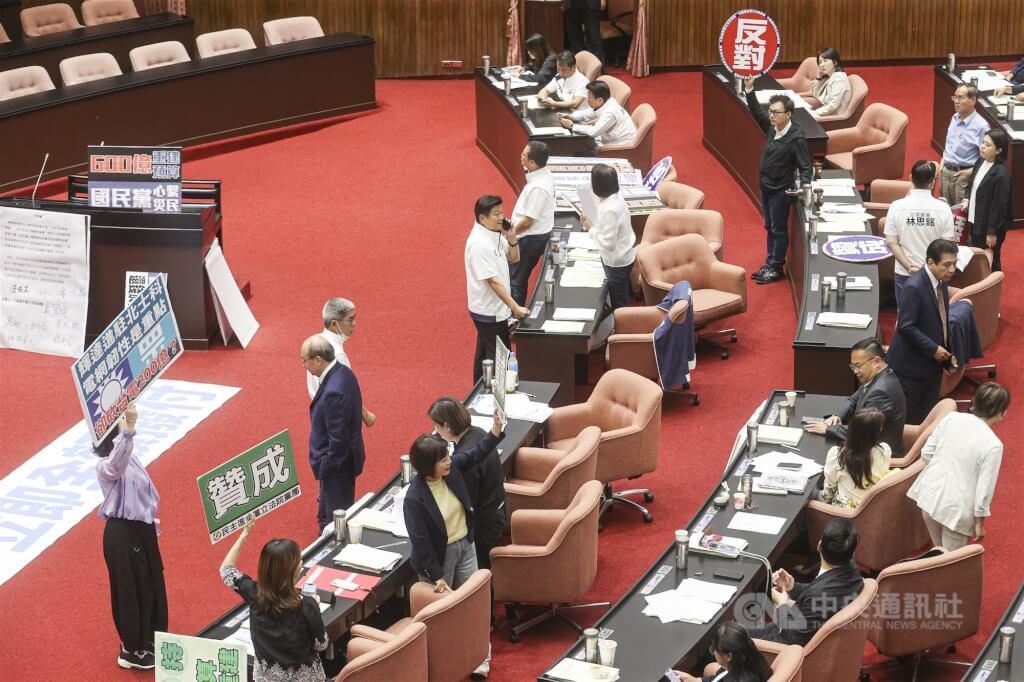
Photo: CNA
A proposed NT$10,000 cash handout, originally put forward by the Chinese Nationalist Party (KMT) and rejected by the Executive Yuan, increased the budget’s ceiling to NT$545 billion.
Further amendments passed by the Executive Yuan earlier this month raised the budget’s ceiling to NT$590 billion, accounting for an initial NT$570-billion special budget followed by an additional NT$20 billion based on industry needs.
This version of the budget also allocated NT$20 billion for Taipower to upgrade the power grid, but that was removed today by opposition lawmakers.
The universal cash payments would start within one month of the special budget’s promulgation and be complete within seven months.
During the legislature’s discussion today, KMT Legislator Wang Hung-wei (王鴻薇) said that her party had kept its promise to give money back to citizens.
The NT$20 billion for Taipower was cut as the government is already working on such a project, Taiwan People’s Party Legislator Chang Chi-kai (張啓楷) said.
Democratic Progressive Party caucus chief executive Rosalia Wu (吳思瑤) said that the Executive Yuan’s proposal sought to support industries, people’s livelihoods and the disadvantaged, but the cuts to Taipower show that the KMT and TPP would sacrifice Taiwan’s industrial growth.
The special budget would be in effect from March 12 of this year through Dec. 31, 2027.
The Executive Yuan is required to compile a budget in accordance with today’s legislation and submit it to the Legislative Yuan within one month.


Kenting National Park service technician Yang Jien-fon (楊政峰) won a silver award in World Grand Prix Photography Awards Spring Season for his photograph of two male rat snakes intertwined in combat. Yang’s colleagues at Kenting National Park said he is a master of nature photography who has been held back by his job in civil service. The awards accept entries in all four seasons across six categories: architectural and urban photography, black-and-white and fine art photography, commercial and fashion photography, documentary and people photography, nature and experimental photography, and mobile photography. Awards are ranked according to scores and divided into platinum, gold and

More than half of the bamboo vipers captured in Tainan in the past few years were found in the city’s Sinhua District (新化), while other districts had smaller catches or none at all. Every year, Tainan captures about 6,000 snakes which have made their way into people’s homes. Of the six major venomous snakes in Taiwan, the cobra, the many-banded krait, the brown-spotted pit viper and the bamboo viper are the most frequently captured. The high concentration of bamboo vipers captured in Sinhua District is puzzling. Tainan Agriculture Bureau Forestry and Nature Conservation Division head Chu Chien-ming (朱健明) earlier this week said that the
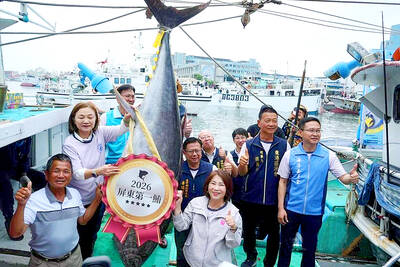
The first bluefin tuna of the season, brought to shore in Pingtung County and weighing 190kg, was yesterday auctioned for NT$10,600 (US$333.5) per kilogram, setting a record high for the local market. The auction was held at the fish market in Donggang Fishing Harbor, where the Siaoliouciou Island-registered fishing vessel Fu Yu Ching No. 2 delivered the “Pingtung First Tuna” it had caught for bidding. Bidding was intense, and the tuna was ultimately jointly purchased by a local restaurant and a local company for NT$10,600 per kilogram — NT$300 ,more than last year — for a total of NT$2.014 million. The 67-year-old skipper
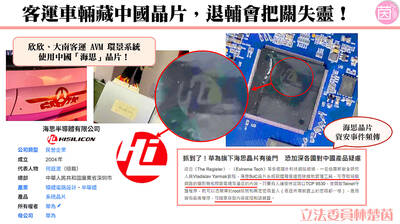
BREACH OF CONTRACT: The bus operators would seek compensation and have demanded that the manufacturer replace the chips with ones that meet regulations Two bus operators found to be using buses with China-made chips are to demand that the original manufacturers replace the systems and provide compensation for breach of contract, the Veterans Affairs Council said yesterday. Democratic Progressive Party Legislator Michelle Lin (林楚茵) yesterday said that Da Nan Bus Co and Shin-Shin Bus Co Ltd have fielded a total of 82 buses that are using Chinese chips. The bus models were made by Tron-E, while the systems provider was CYE Electronics, Lin said. Lin alleged that the buses were using chips manufactured by Huawei subsidiary HiSilicon Co, which presents a national security risk if the


 RSS
RSS