

Minister of Foreign Affairs Lin Chia-lung (林佳龍) yesterday confirmed that he visited Japan last month, adding that China’s “backlash” over the trip would not affect the cordial relations between Taipei and Tokyo.
It was the first time Lin had publicly acknowledged the trip. While it was not the first visit to Japan by a top Taiwanese diplomat, such trips are rarely disclosed due to the absence of official diplomatic relations between Taiwan and Japan.
Asked by reporters in Taipei yesterday about the visit, Lin said Taiwan is “making friends with countries around the world.”
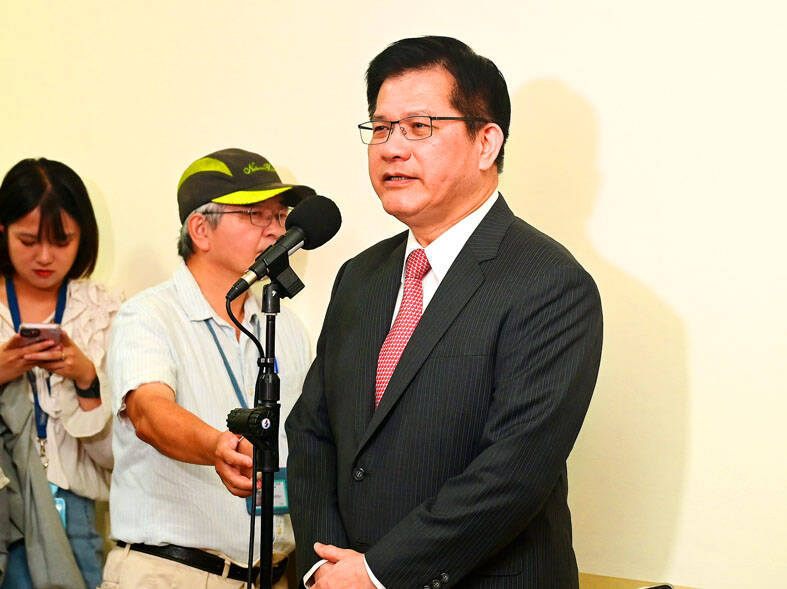
Photo: Wang Yi-sung, Taipei Times
“Given Taiwan and Japan’s cordial relations, it is only natural that while in Japan I visited Expo 2025 Osaka and met with Japanese friends,” he told reporters on the sidelines of a legislative session.
China’s response is not expected to affect Taiwan-Japan ties, Lin said.
The visit was first revealed last month by veteran Japanese lawmaker Keiji Furuya, a longtime supporter of Taiwan.
In a Facebook post on July 25, Furuya — a member of Japan’s ruling Liberal Democratic Party and chair of the Japan-ROC [Republic of China] Diet Members’ Consultative Council, which promotes bilateral ties in the Japanese Diet — said he had met with Lin and Sanae Takaichi, a former Japanese minister for economic security, among others.
Furuya also posted a group photograph taken with Lin and Representative to Japan Lee Yi-yang (李逸洋).
The Ministry of Foreign Affairs later said that Lin’s visit was made in a private capacity.
China reacted strongly to the trip, postponing a Japan-China agricultural ministers’ meeting originally set to take place in Tokyo on Monday.
Beijing also lodged a protest with Tokyo, accusing Japan of “providing a stage for anti-China separatist activities” and “sending the wrong message.”
Local media reported that, in addition to visiting the Osaka Expo site, Lin also visited the Taipei Economic and Cultural Representative Office in Japan in Tokyo, which serves as Taiwan’s de facto embassy in the absence of formal diplomatic ties.

A Straits Exchange Foundation official today warned that yielding to political pressure in exchange for access to China’s entertainment industry rarely ends well, amid rumors that China is seeking to lure Taiwanese K-pop star Chou Tzu-yu (周子瑜). Chou, more commonly known as Tzuyu, is the only Taiwanese member of the girl group Twice. Her contract with JYP Entertainment is set to expire at the end of this year, and there have been widespread reports that she would not renew it. She is reportedly planning to pursue solo activities under her parents’ agency, Yu Hai Entertainment (瑜海娛樂), although China has also reportedly offered
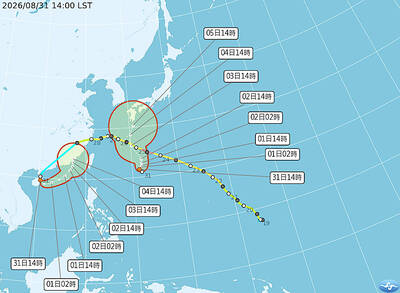
A tropical depression near Hainan that was once Typhoon Saudel may once again strengthen into a tropical storm, the Central Weather Administration (CWA) said yesterday, but a sea warning for waters around Taiwan is unlikely. CWA forecaster Huang En-hung (黃恩鴻) said that Saudel would return to being a weak tropical storm by late yesterday or early this morning. However, as the storm is to gradually weaken again and would head toward China’s Guangdong Province away from Taiwan, the chances that it would affect Taiwan enough for the CWA to issue a sea warning are relatively low,

Yielding to political pressure in exchange for access to China’s entertainment industry rarely ends well, a Straits Exchange Foundation official said yesterday amid rumors that China is seeking to lure Taiwanese K-pop star Chou Tzu-yu (周子瑜). Chou, who goes by Tzuyu, is the only Taiwanese member of the girl group Twice. Her contract with JYP Entertainment is set to expire at the end of this year, and there have been widespread rumors that she would not renew it. She is reportedly planning to pursue a solo career under her parents’ agency, Yu Hai Entertainment, although China has also reportedly offered to help Tzuyu
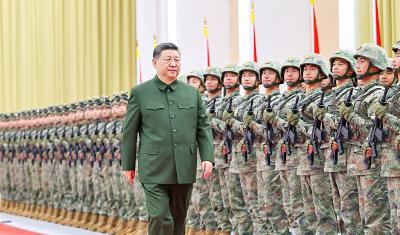
China has revised its National Defense Mobilization Law to prepare for a rapid transition to wartime, with an official today saying the measures are aimed at helping Chinese President Xi Jinping (習近平) fulfill his “historic mission of national unification.” The revised version of the mobilization law is to take effect on Oct. 1, marking the first major revision since the law was enacted in 2010. The amendments define national defense mobilization as measures taken in response to threats to national sovereignty, unification, territorial integrity, security and development interests, including efforts to ensure rapid transition between peacetime and wartime and convert economic and


 RSS
RSS