


Taiwan People’s Party (TPP) Chairman Huang Kuo-chang (黃國昌) confirmed yesterday he will run for New Taipei City mayor in 2026, setting the stage for a high-profile opposition battle in Taiwan’s most populous city.
Huang, also one of the TPP’s eight at-large lawmakers, answered “yes” yesterday during a livestream when asked by the host whether New Taipei City is his primary goal after Feb. 1, 2026, when he steps down as a lawmaker due to the party’s so-called “two-year clause.”
“I will not do things I have no confidence in,” he said. “I will make myself the best option.”
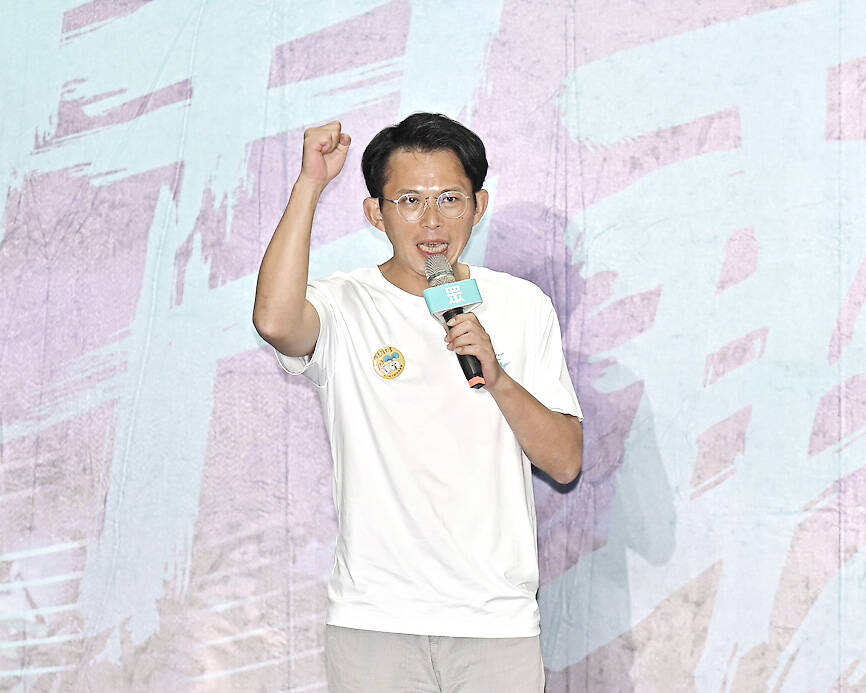
Photo: Tu Chien-jung, Taipei Times
Both at-large (elected based on a vote for political party) and directly elected lawmakers serve four-year terms, but the TPP has a rule that requires all at-large legislators to resign after two years on the job.
The rule, which party members voted to retain during the TPP’s national congress on Sunday, is intended to give more party members lawmaking experience and enable former lawmakers to serve in other public positions.
The decision to keep the clause came despite opposition from many TPP supporters, who worried it could hurt the party’s operations in the Legislature, given that most of its strongest public figures serve as at-large lawmakers.
The only TPP legislator who will remain in their post after February 2026 is Liu Shi-pin (劉書彬), who took office in mid-March this year.
“The TPP cannot hold on to its at-large seats forever, but must have many members scatter their seeds in many places,” Huang said, describing his mayoral bid as an attempt to “secure a better fighting position.”
Other TPP lawmakers, such as Chang Chi-kai, may follow suit, according to Huang, who argued that two strong opposition parties are needed for the Democratic Progressive Party to be defeated.
Huang emphasized that unseating President William Lai (賴清德) in 2028 has always been one of his primary goals, and he has never ruled out working with the Chinese Nationalist Party (KMT), Taiwan’s main opposition party.
“I’m always keeping the option open for friendly negotiations and am willing to talk to the KMT with sincerity, but I will respect the KMT’s ultimate decision,” he said.
Huang’s remarks signaled the TPP’s ambition to expand its presence in Taiwan’s municipalities in 2026, following the example set by former TPP member Kao Hung-an (高虹安) when she won the mayor’s race in Hsinchu City.
Kao, however, later withdrew from the party in July 2024 after being sentenced by the Taipei District Court to seven years and four months in prison and deprived of her civil rights for four years after being found guilty of corruption charges. She is currently suspended from her post while appealing the verdict.
The 2026 elections could serve as a test for the two opposition parties’ growing alliance, especially in New Taipei City if Huang does follow through on his pledge to run.
The city has been headed by KMT mayors over the past two decades, but the KMT will have to name a new candidate for 2026 as incumbent Mayor Hou You-yi (侯友 宜) completes his second term and cannot run again.

Taiwan has received more than US$70 million in royalties as of the end of last year from developing the F-16V jet as countries worldwide purchase or upgrade to this popular model, government and military officials said on Saturday. Taiwan funded the development of the F-16V jet and ended up the sole investor as other countries withdrew from the program. Now the F-16V is increasingly popular and countries must pay Taiwan a percentage in royalties when they purchase new F-16V aircraft or upgrade older F-16 models. The next five years are expected to be the peak for these royalties, with Taiwan potentially earning
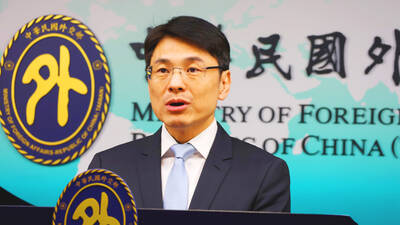
STAY IN YOUR LANE: As the US and Israel attack Iran, the ministry has warned China not to overstep by including Taiwanese citizens in its evacuation orders The Ministry of Foreign Affairs (MOFA) yesterday rebuked a statement by China’s embassy in Israel that it would evacuate Taiwanese holders of Chinese travel documents from Israel amid the latter’s escalating conflict with Iran. Tensions have risen across the Middle East in the wake of US and Israeli airstrikes on Iran beginning Saturday. China subsequently issued an evacuation notice for its citizens. In a news release, the Chinese embassy in Israel said holders of “Taiwan compatriot permits (台胞證)” issued to Taiwanese nationals by Chinese authorities for travel to China — could register for evacuation to Egypt. In Taipei, the ministry yesterday said Taiwan
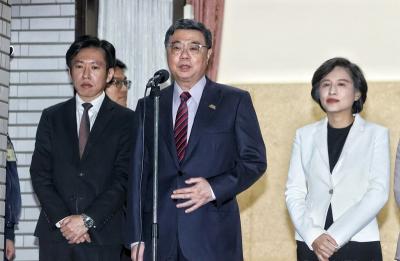
Taiwan is awaiting official notification from the US regarding the status of the Agreement on Reciprocal Trade (ART) after the US Supreme Court ruled US President Donald Trump's global tariffs unconstitutional. Speaking to reporters before a legislative hearing today, Premier Cho Jung-tai (卓榮泰) said that Taiwan's negotiation team remains focused on ensuring that the bilateral trade deal remains intact despite the legal challenge to Trump's tariff policy. "The US has pledged to notify its trade partners once the subsequent administrative and legal processes are finalized, and that certainly includes Taiwan," Cho said when asked about opposition parties’ doubts that the ART was
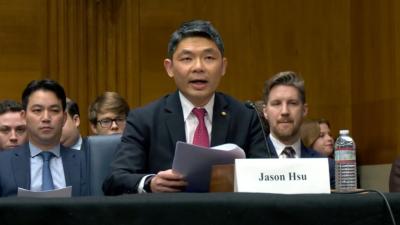
If China chose to invade Taiwan tomorrow, it would only have to sever three undersea fiber-optic cable clusters to cause a data blackout, Jason Hsu (許毓仁), a senior fellow at the Hudson Institute and former Chinese Nationalist Party (KMT) legislator, told a US security panel yesterday. In a Taiwan contingency, cable disruption would be one of the earliest preinvasion actions and the signal that escalation had begun, he said, adding that Taiwan’s current cable repair capabilities are insufficient. The US-China Economic and Security Review Commission (USCC) yesterday held a hearing on US-China Competition Under the Sea, with Hsu speaking on


 RSS
RSS