


Public health specialists yesterday warned that although sugar-free beverages have fewer calories, the long-term health benefits of sugar substitutes are disputed and warrant government monitoring.
The Legislative Yuan on Tuesday passed amendments that exempt sugar-free drinks from the Commodity Tax Act (貨物稅條例) to encourage people to avoid sugary beverages, which can increase the risk of cardiovascular diseases and cause other health problems.
The Taipei Public Health Specialists Association in statement that said that without price transparency and oversight, the bill would not benefit the public, as tax reductions could be absorbed by brands or distributors.
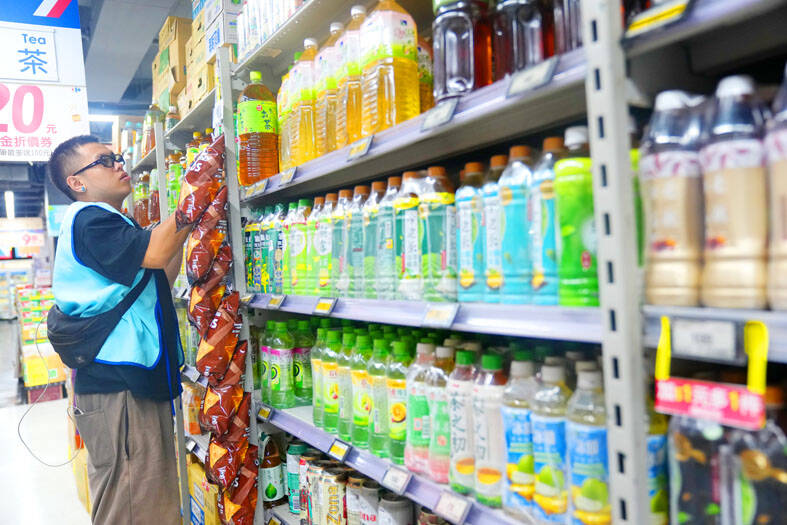
Photo: CNA
A more appropriate policy would establish sugar standards for major beverage producers and suppliers, with the goal of annually reducing the amount of sugar in drinks, the association said.
The government should encourage businesses to change their recipes to reduce overall sugar content, it said.
The government should monitor whether tax cuts are reflected in market prices to prevent businesses from internalizing policy benefits, it said.
Most sugar-free beverages on the market use artificial sweeteners such as aspartame and sucralose, and although they lower the amount of calories in drinks, their long-term health effects are uncertain, the association said.
The International Agency for Research on Cancer classified aspartame as “possibly carcinogenic to humans” and recommended its risks be carefully assessed, it said.
The government has an obligation to establish regulations for artificial sweeteners, communicate risks and promote long-term monitoring to protect consumer rights, it said.
“Health should not be a privilege, but a basic right for all people,” it said.
The bill is an opportunity to establish a systematic, nationwide sugar reduction strategy that is grounded in scientific evidence and drives institutional reform, it said.
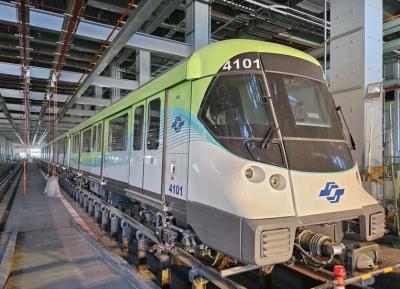
The Taipei Mass Rapid Transit (MRT) Wanda-Zhonghe Line is 81.7 percent complete, with public opening targeted for the end of 2027, New Taipei City Mayor Hou You-yi (侯友宜) said today. Surrounding roads are to be open to the public by the end of next year, Hou said during an inspection of construction progress. The 9.5km line, featuring nine underground stations and one depot, is expected to connect Chiang Kai-shek Memorial Hall Station to Chukuang Station in New Taipei City’s Jhonghe District (中和). All 18 tunnels for the line are complete, while the main structures of the stations and depot are mostly finished, he
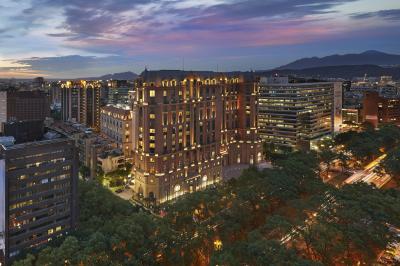
The first global hotel Keys Selection by the Michelin Guide includes four hotels in Taiwan, Michelin announced yesterday. All four received the “Michelin One Key,” indicating guests are to experience a “very special stay” at any of the locations as the establishments are “a true gem with personality. Service always goes the extra mile, and the hotel provides much more than others in its price range.” Of the four hotels, three are located in Taipei and one in Taichung. In Taipei, the One Key accolades were awarded to the Capella Taipei, Kimpton Da An Taipei and Mandarin Oriental Taipei. Capella Taipei was described by
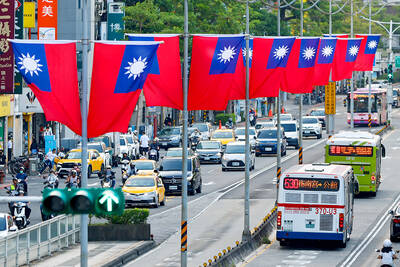
Taipei is to implement widespread road closures around Taipei 101 on Friday to make way for large crowds during the Double Ten National Day celebration, the Taipei Department of Transportation said. A four-minute fireworks display is to be launched from the skyscraper, along with a performance by 500 drones flying in formation above the nearby Nanshan A21 site, starting at 10pm. Vehicle restrictions would occur in phases, they said. From 5pm to 9pm, inner lanes of Songshou Road between Taipei City Hall and Taipei 101 are to be closed, with only the outer lanes remaining open. Between 9pm and 9:40pm, the section is
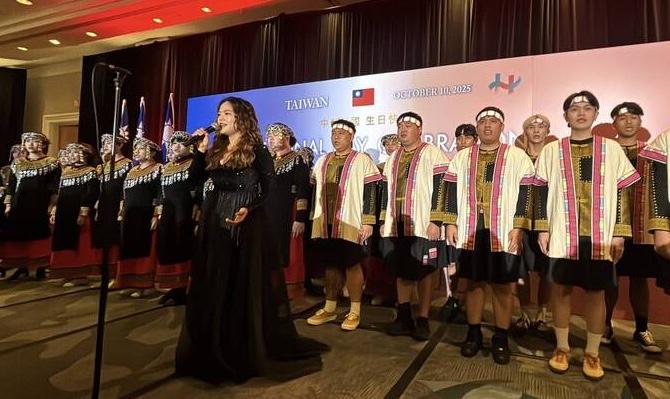
The Taipei Economic and Cultural Office in Vancouver, Canada, on Saturday hosted a reception to celebrate Double Ten National Day. Conservative Canadian lawmaker Marc Dalton called Taiwan a “beacon of courage and resilience in the face of rising authoritarianism,” according to a post on the Taiwan in Vancouver Facebook page. Also in attendance were fellow conservative caucus members Tako Van Popta and Chak Au, who said that Taiwan plays an “indispensable role” in ensuring global peace, prosperity and stability due to its strategic position in the Indo-Pacific region, it said. Canadian lawmaker Michael Cooper also recorded a message wishing Taiwan a


 RSS
RSS