


Drills conducted on the seventh day of this year’s Han Kuang exercises demonstrate that the military is expanding plans to destroy enemy forces on the beaches by incorporating strategic depth by drawing them into pre-positioned firing lines, Taipei-based Association of Strategic Foresight researcher Chieh Chung (揭仲) said yesterday.
The Second Combined Arms Battalion (CAB) of the army’s 269th Mechanized Infantry Brigade conducted a defensive exercise simulating an enemy amphibious landing at the Port of Taipei in New Taipei City’s Bali District (八里), aiming to secure key strategic positions.
The exercise was in line with military strategy for defensive infantry to pin invading forces on the beachhead, while CABs provide mobile fire support, Chieh said.
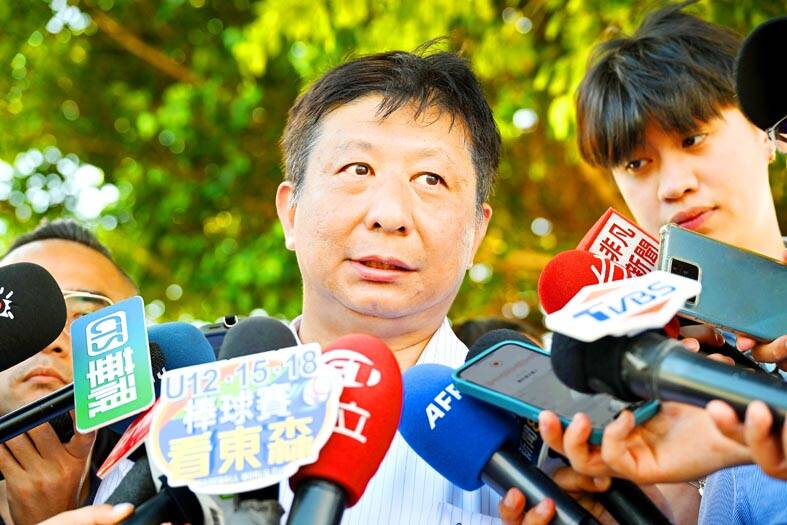
Photo: Chen Yi-kuan, Taipei Times
The use of drones for battlefield surveillance enabled CAB commanders to maintain situational awareness along the front line and coordinate a controlled fallback with supporting fire from friendly forces, he said.
This fallback maneuver should not be interpreted as a retreat, but as a tactical movement designed to draw enemy forces into pre-designated kill zones, where they would be exposed to concentrated artillery fire, Chen said.
Military affairs commentator Eric Shih (施孝瑋) said the high mobility of the BGM-71 TOW 2B missile system — mounted on M1167 high Mobility multipurpose wheeled vehicles (HMMWVs) — made it an effective and rapidly deployable asset to slow down enemy advances.
The missile’s top-attack capability was particularly effective against the simulated Chinese People’s Liberation Army (PLA) armored units attempting to gain a foothold, compensating for a lack of functionality and firepower of Taiwan’s domestically produced armored vehicles, Shih said.
Speaking yesterday with the Voice of Han Broadcasting Network, which is affiliated with the Ministry of National Defense (MND), retired major general Kuo Li-sheng (郭力升) said that one must be prepared to fight to the death and fiercely resist any attempts by invaders to occupy the country.
Such readiness is non-negotiable, he added.
All civilian actions should be carried out with support for military operations in mind, enabling the armed forces to fulfill their duties effectively and preventing enemy forces from gaining strength by seizing Taiwanese supplies and resources, Kuo said.
Commenting on this year’s Han Kuang exercises — which emphasize military-civilian cooperation and societal resilience — he said that civilians should prioritize their own safety to avoid forcing the military to divert forces for rescue operations.
Additional reporting by Lery Hiciano, staff writer

Actor Darren Wang (王大陸) was sentenced to six months in prison, commutable to a fine, by the New Taipei District Court today for contravening the Personal Data Protection Act (個人資料保護法) in a case linked to an alleged draft-dodging scheme. Wang allegedly paid NT$3.6 million (US$114,380) to an illegal group to help him evade mandatory military service through falsified medical documents, prosecutors said. He transferred the funds to Chen Chih-ming (陳志明), the alleged mastermind of a draft-evasion ring, although he lost contact with him as he was already in detention on fraud charges, they said. Chen is accused of helping a

SECURITY: Starlink owner Elon Musk has taken pro-Beijing positions, and allowing pro-China companies to control Taiwan’s critical infrastructure is risky, a legislator said Starlink was reluctant to offer services in Taiwan because of the nation’s extremely high penetration rates in 4G and 5G services, the Ministry of Digital Affairs said yesterday. The ministry made the comments at a meeting of the legislature’s Transportation Committee, which reviewed amendments to Article 36 of the Telecommunications Management Act (電信管理法). Article 36 bans foreigners from holding more than 49 percent of shares in public telecommunications networks, while shares foreigners directly and indirectly hold are also capped at 60 percent of the total, unless specified otherwise by law. The amendments, sponsored by Chinese Nationalist Party (KMT) Legislator Ko
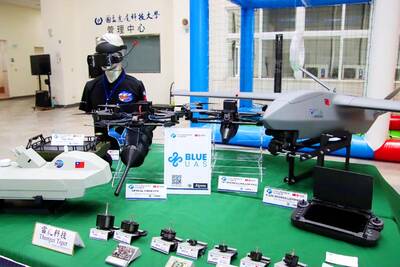
NON-RED SUPPLY: Boosting the nation’s drone industry is becoming increasingly urgent as China’s UAV dominance could become an issue in a crisis, an analyst said Taiwan’s drone exports to Europe grew 41.7-fold from 2024 to last year, with demand from Ukraine’s fight against Russian aggression the most likely driver of growth, a study showed. The Institute for Democracy, Society and Emerging Technology (DSET) in a statement on Wednesday said it found that many of Taiwan’s uncrewed aerial vehicle (UAV) sales were from Poland and the Czech Republic. These countries likely transferred the drones to Ukraine to aid it in its fight against the Russian invasion that started in 2022, it said. Despite the gains, Taiwan is not the dominant drone exporter to these markets, ranking second and fourth
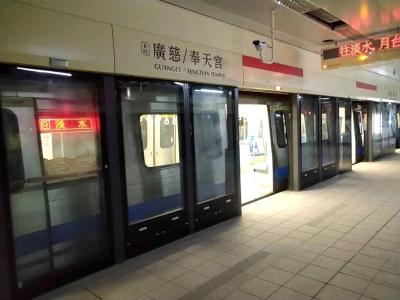
The eastern extension of the Taipei MRT Red Line could begin operations as early as late June, the Taipei Department of Rapid Transit Systems said yesterday. Taipei Rapid Transit Corp said it is considering offering one month of free rides on the new section to mark its opening. Construction progress on the 1.4km extension, which is to run from the current terminal Xiangshan Station to a new eastern terminal, Guangci/Fengtian Temple Station, was 90.6 percent complete by the end of last month, the department said in a report to the Taipei City Council's Transportation Committee. While construction began in October 2016 with an


 RSS
RSS