


Drug use among teens and young people has risen in the past few years, with the use of flavored cigarettes among high-school students hitting a record high, Chinese Nationalist Party (KMT) Legislator Lee Yen-hsiu (李彥秀) said today.
Lee was speaking at a news conference at the Legislative Yuan, alongside Taiwan People’s Party (TPP) Legislator Chang Chi-kai (張啓楷) and Taipei City Councilor Chen Yu-cheng (陳宥丞), calling on central government agencies to enhance drug and tobacco prevention measures.
According to Ministry of the Interior data, 607 suspects aged 12 to 17 were linked to drug-related crimes last year, an increase of 22.6 percent from the previous year, while there were 3,215 suspects aged 18 to 23, Lee said.
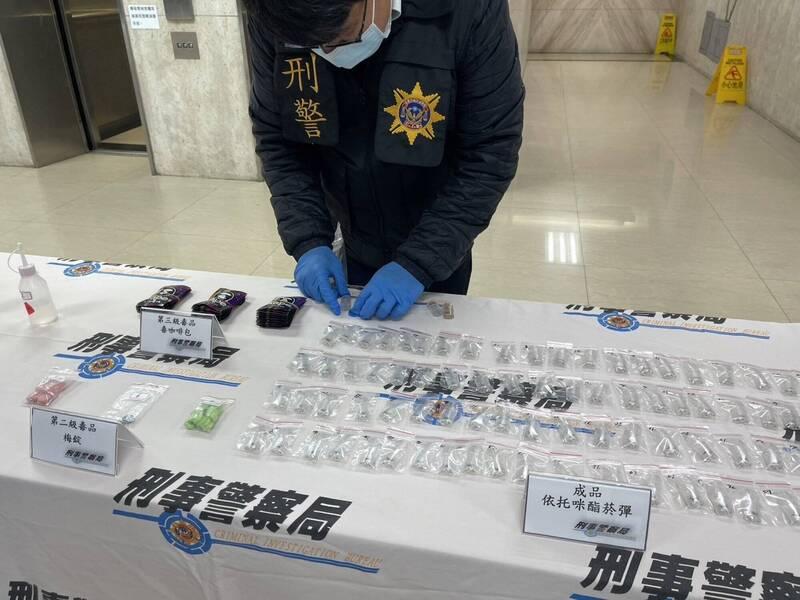
Photo: Taipei Times file photo
Among those aged 12 to 17, most crimes were connected to Category 3 drugs, while drug-related offenses among 18 to 23-year-olds concerned Category 2 drugs, she said.
Despite amendments to the Tobacco Hazards Prevention Act (菸害防制法) implemented in March 2023, the use of flavored cigarettes has hit a new high among junior and senior-high school students, she said.
There has also been no noticeable decline in the use of heated tobacco products, such as vapes and e-cigarettes, she added.
The 2023 amendments prohibited the manufacture, importation, sale, display, advertisement and use of e-cigarettes and unapproved heated tobacco products.
In 2021, the Executive Yuan implemented phase two of the New Generation Anti-Drug Strategy Guidelines, allocating NT$15 billion (US$516.9 million at the current exchange rate) over four years to drug enforcement efforts, particularly to prevent use among young people, Lee said.
She asked whether the funding had been wasted.
It is easy to find retailers selling vapes and e-cigarettes online or through hidden channels on platforms such as Instagram, Facebook and Line, she said.
Some platforms, including Threads, openly share information on how to smuggle heated tobacco products into Taiwan, she said, asking whether the authorities were aware of this activity and choosing to “turn a blind eye.”
Tobacco is incredibly addictive and difficult to quit, while drug use can negatively affect the life of the user and their family, she said.
Current drug prevention measures are inadequate, leaving parents and caregivers worried about school safety, she said.
Lee proposed three strategies: tightening border management and customs inspections, blocking these new distribution channels, and enhancing on-campus drug and tobacco prevention.
Meanwhile, the use of etomidate — an anesthetic used to make “zombie vapes” — has exploded in the past two years, with seizures of the drug more than doubling, Chang said.
The Executive Yuan added etomidate to its Category 2 drug list last year, with law enforcement agencies launching investigations and cracking down on its use, but enforcement of drug driving laws remains limited due to a lack of adequate equipment, Chen said.
About 1,600 non-urine drug testing kits were seized between January and April alone, higher than the total number for the whole of last year, Chang said.
In Tainan, it was found that more than 7,600 expired rapid drug testing kits were still being used by the police, while from January to May, 63 cases of drug driving were not prosecuted in due time, Chang added.
Research groups from National Cheng Kung University, National Taiwan University, China Medical University and Central Police University spent three years developing a portable, handheld drug testing machine that samples saliva in just 10 minutes, with an accuracy rate of more than 90 percent, Chen said.
Chen said he hoped police would incorporate the new technology into drug testing, citing Australia and Hong Kong as successful examples of countries that have recently implemented roadside saliva testing for drugs.
The National Police Agency should legally mandate the use of these rapid tests for widespread use, purchase and promotion by local police agencies, which would prompt manufacturers to provide more accurate tests with fewer false positives, Chen said.

FUKUOKA SITUATION: Japanese media reported that the pathogen is expected to be identified by the summer, while the CDC downplayed the idea that it was hMPV A “mysterious cold-like illness” reported in Japan’s Fukuoka Prefecture does not seem to be a new disease, but Japanese authorities have been asked about the situation, the Centers for Disease Control (CDC) said yesterday. The Fukuoka Prefectural Medical Association on Wednesday told a news conference that a “mystery cold” that has become a hot topic on social media is “highly likely to be caused by some kind of viral infection,” Japan’s KBC News reported. “Many people are experiencing symptoms starting with a sore throat, followed by a runny nose, phlegm and a severe cough,” KBC News reported, citing association officials. Health authorities are

Nvidia Corp CEO Jensen Huang (黃仁勳) arrived in Taiwan yesterday ahead of upcoming AI and technology events, saying he plans to meet with clients and Taiwan Semiconductor Manufacturing Co Chairman C.C. Wei (魏哲家) during his visit. After landing at Taipei Songshan Airport, Huang posed for photos with fans and handed out Yakult drinks to reporters and supporters waiting at the scene, saying he has “a lot to do” during the trip. Asked about reports that Nvidia’s planned headquarters site in Taipei’s Beitou Shilin Technology Park could break ground on May 27, Huang said that if the company holds an event, he would

The Ministry of Finance this afternoon announced the winning numbers for the March-April uniform invoice lottery. The winning number for the NT$10 million (US$318,060) special prize is 19531471, and the winning number for the NT$2 million grand prize is 85941329. Three numbers were drawn for the NT$200,000 first prize: 07225810, 20231230 and 83518781. Those with receipts matching the last seven digits of any of the first-prize numbers will win the NT$40,000 second prize, while those matching the last six digits will win the NT$10,000 third prize. Those whose receipts match the last five digits of the first-prize numbers can claim the NT$4,000 fourth prize,

SIX SUBSIDIES: The monthly allowance for older farmers is to increase to NT$10,000, and NT$5,000 is to be given to homemakers under the national pension system, Lai said The government is to implement major welfare policies for disadvantaged groups, including raising the monthly allowance for older farmers to NT$10,000 and providing homemakers with NT$5,000 per month, President William Lai (賴清德) said yesterday. Lai made the remarks during a visit to Wangling Temple in Chiayi County, saying that the planned increases were being introduced amid economic growth and an increase in tax revenue. Touting a policy, in which the government plans to provide a monthly allowance of NT$5,000 for every child under the age of 18 in a bid to address Taiwan’s low birthrate, Lai said that if received for the


 RSS
RSS