


The Chinese Nationalist Party (KMT) yesterday criticized Kuma Academy for pricing its disaster prevention kit at NT$1,380 (US$46.59), calling the kit a luxury item that the organization is using to capitalize on escalating tensions across the Taiwan Strait.
Kuma Academy is a nonprofit civil defense organization which aims to “prepare a pre-war mentality for civilians” and “cultivate self-defense capability and a will to defend Taiwan,” according to the group’s Web site.
It was cofounded by Democratic Progressive Party (DPP) Legislator Puma Shen (沈伯洋).
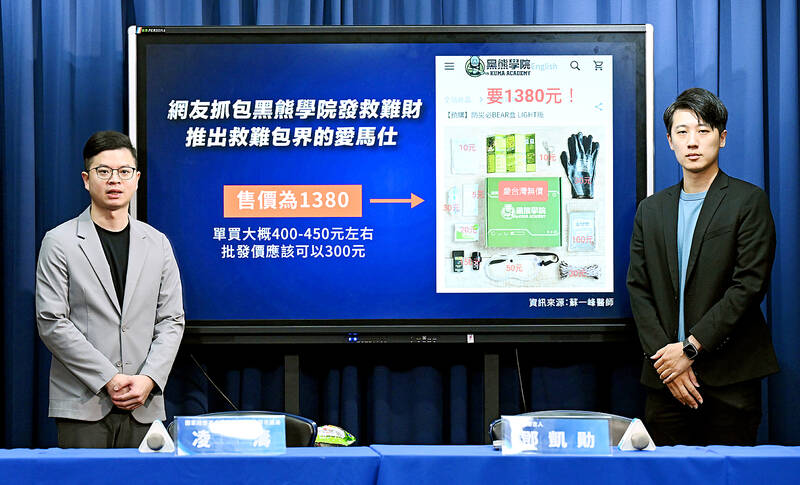
Photo: Liao Chen-huei, Taipei Times
KMT think tank deputy director Ling Tao (凌濤) yesterday said that Minister of the Interior Liu Shyh-fang (劉世芳) in January admitted to sending directives to the National Police Agency to set aside a budget of NT$22.18 million for non-governmental organizations, such as Kuma Academy and the Forward Alliance — a community-based organization dedicated to Taiwan’s security — to hold training courses for civilians.
These funds would only be able to purchase 16,000 kits from Kuma Academy, but if sourced elsewhere, could be used to buy goods that would provide kits for 74,000 citizens, Ling said.
Ling said that the DPP’s “anti-communist” stance has been thoroughly crushed, citing the examples of DPP caucus whip Ker Chien-ming’s (柯建銘) son doing business in China and that one of the members of the board at his company is a high-ranking member of the Chinese Communist Party (CCP).
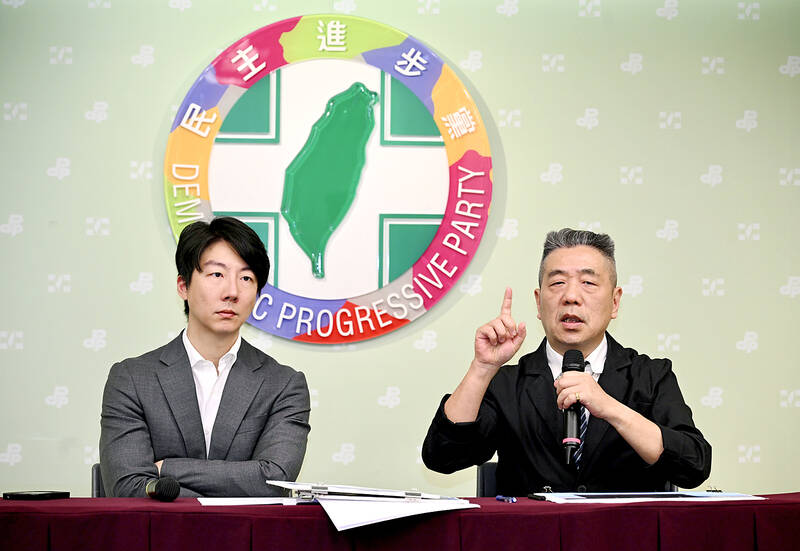
Photo: Lo Pei-de, Taipei Times
Shen’s father and family also have businesses in China, and this connection makes Shen, who serves on the legislature’s Foreign Affairs and National Defense Committee, the weakest link in Taiwan’s national security, Ling said, adding that Shen’s background ironically conforms with his characterization of fifth-column forces, and those who aid and abet the CCP.
In response, Su Tzu-yu (蘇紫雲), a research fellow at the Institute for National Defense and Security Research, told a news conference that a series of attacks on Kuma Academy and its marketing of the emergency kits have the marks of focused disinformation campaign by enemy forces, since China would be the main beneficiary from maligning the academy’s work.
“There are different emergency kits for people to choose from, depending on their needs ... but it is clear that Kuma Academy, and Shen as its cofounder, have come under attack, targeted by the ‘cognitive warfare’ of outside forces,” DPP spokesman Justin Wu (吳崢) said.
Disaster prevention kits are not just to prepare for war, but also for natural disasters, he said.
Taiwan can learn from Japan, where they have stores with a section for emergency food, handheld solar-powered chargers, blankets and radios that can be charged by hand, Su said.
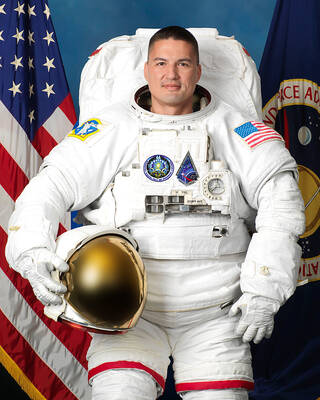
SPACE VETERAN: Kjell N. Lindgren, who helps lead NASA’s human spaceflight missions, has been on two expeditions on the ISS and has spent 311 days in space Taiwan-born US astronaut Kjell N. Lindgren is to visit Taiwan to promote technological partnerships through one of the programs organized by the US for its 250th national anniversary. Lindgren would be in Taiwan from Tuesday to Saturday next week as part of the US Bureau of Educational and Cultural Affairs’ US Speaker Program, organized to celebrate the 250th anniversary of the signing of the Declaration of Independence, the American Institute in Taiwan (AIT) said in a statement yesterday. Lindgren plans to engage with key leaders across the nation “to advance cutting-edge technological partnerships and inspire the next generation of scientists and engineers,”

UNREASONABLE SURVEILLANCE: A camera targeted on an road by a neighbor captured a man’s habitual unsignaled turn into home, netting him dozens of tickets The Taichung High Administrative Court has canceled all 45 tickets given to a man for failing to use a turn signal while driving, as it considered long-term surveillance of his privacy more problematic than the traffic violations. The man, surnamed Tseng (曾), lives in Changhua County and was reported 45 times within a month for failing to signal while driving when he turned into the alley where his residence is. The reports were filed by his neighbor, who set up security cameras that constantly monitored not only the alley but also the door and yard of Tseng’s house. The surveillance occurred from July
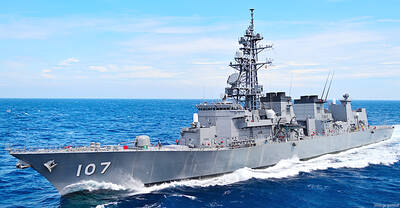
A Japan Self-Defense Forces vessel entered the Taiwan Strait yesterday, Japanese media reported. After passing through the Taiwan Strait, the Ikazuchi was to proceed to the South China Sea to take part in a joint military exercise with the US and the Philippines, the reports said. Japan Self-Defense Force vessels were first reported to have passed through the strait in September, 2024, with two further transits taking place in February and June last year, the Asahi Shimbun reported. Yesterday’s transit also marked the first time since Japanese Prime Minister Sanae Takaichi took office that a Japanese warship has been sent through the Taiwan
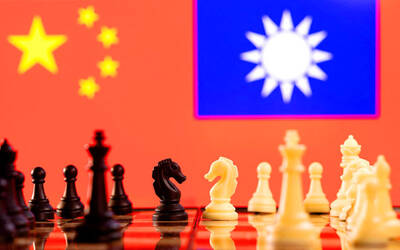
‘SAME OLD TRICK’: Even if Beijing resumes individual travel to Taiwan, it would only benefit Chinese tourism companies, the Economic Democracy Union convener said China’s 10 new “incentives” are “sugar-coated poison,” an official said yesterday, adding that Taiwanese businesses see them clearly for what they are, but that Beijing would inevitably find some local collaborators to try to drums up support. The official, speaking on condition of anonymity, made the remark ahead of a news conference the General Chamber of Commerce is to hold today. The event, titled “Industry Perspectives on China’s Recent Pro-Taiwan Policies,” is expected to include representatives from industry associations — such as those in travel, hotels, food and agriculture — to request the government cooperate with China’s new measures, people familiar with


 RSS
RSS