


Nearly 870,000 people received government-funded colorectal cancer screenings in the first five months of this year after eligibility for the procedure was expanded, the Health Promotion Administration (HPA) said.
Colorectal cancer is the second-most common type of cancer in Taiwan, with 17,643 new cases in 2022, the HPA said, citing its cancer registry data.
While nearly 90 percent of people who have the disease are 50 or older, the incidence rate in people aged 45 to 49 has been increasing, it said.
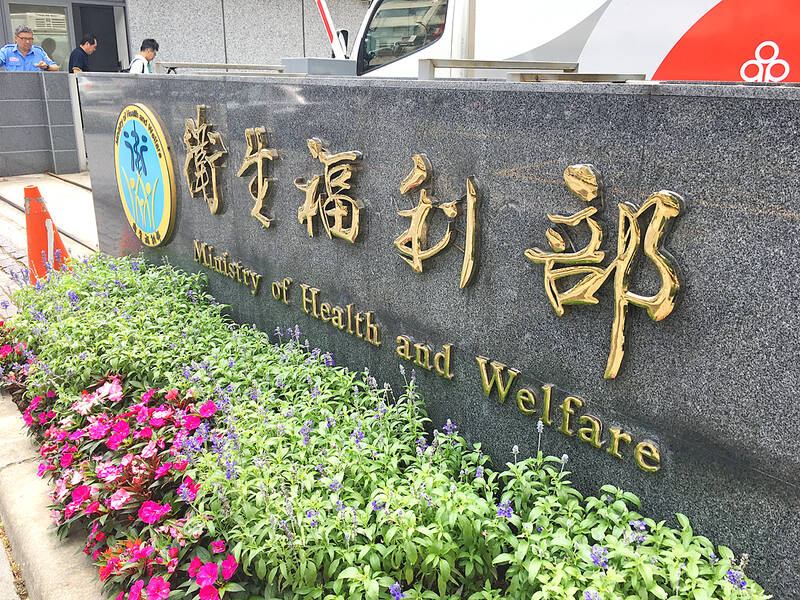
Photo: Lin Chih-yi, Taipei Times
At the start of this year, eligibility for government-funded colorectal cancer screenings was expanded to include people aged 45 to 74, as well as people aged 40 to 44 with a family history of colorectal cancer.
Those who are eligible can receive a free fecal occult blood test every two years.
As of last month, nearly 870,000 people had been screened this year, up 43.57 percent from the same period last year, the HPA said.
Colorectal cancer can develop without noticeable early symptoms, so it can easily be neglected, but studies suggested that getting a fecal occult blood test every two years can reduce the incidence rate of advanced-stage colorectal cancer by 29 percent and mortality by 35 percent, it said.
People who have an abnormal result from the test do not need to panic, but should cooperate with the healthcare facility and get a colonoscopy, the HPA said, adding that most colon polyps can be removed during the procedure, preventing them from growing into colorectal cancer.
The five-year survival rate of stage 0 or stage 1 colorectal cancer is above 90 percent, but it drops below 20 percent for stage 4, so early detection and intervention is crucial, it said.
A fecal occult blood test is a non-invasive screening method used to detect hidden blood in the stool that is not visible to the naked eye, the HPA said, adding that no special preparations or diet are required before the test.
Those who are eligible for the free test should take their National Health Insurance card to a contracted hospital or clinic to pick up a sample collection tube, it said.
They can use wooden implement provided to scrape stool into the tube after a bowel movement at home before returning it to be tested, it said.
People should take care of their gut health by maintaining healthy habits and getting a fecal occult blood test regularly, it added.

Considering that most countries issue more than five denominations of banknotes, the central bank has decided to redesign all five denominations, the bank said as it prepares for the first major overhaul of the banknotes in more than 24 years. Central bank Governor Yang Chin-lung (楊金龍) is expected to report to the Legislative Yuan today on the bank’s operations and the redesign’s progress. The bank in a report sent to the legislature ahead of today’s meeting said it had commissioned a survey on the public’s preferences. Survey results showed that NT$100 and NT$1,000 banknotes are the most commonly used, while NT$200 and NT$2,000

The Centers for Disease Control (CDC) yesterday reported the first case of a new COVID-19 subvariant — BA.3.2 — in a 10-year-old Singaporean girl who had a fever upon arrival in Taiwan and tested positive for the disease. The girl left Taiwan on March 20 and the case did not have a direct impact on the local community, it said. The WHO added the BA.3.2 strain to its list of Variants Under Monitoring in December last year, but this was the first imported case of the COVID-19 variant in Taiwan, CDC Deputy Director-General Lin Ming-cheng (林明誠) said. The girl arrived in Taiwan on

South Korea is planning to revise its controversial electronic arrival card, a step Taiwanese officials said prompted them to hold off on planned retaliatory measures, a South Korean media report said yesterday. A Yonhap News Agency report said that the South Korean Ministry of Foreign Affairs is planning to remove the “previous departure place” and “next destination” fields from its e-arrival card system. The plan, reached after interagency consultations, is under review and aims to simplify entry procedures and align the electronic form with the paper version, a South Korean ministry official said. The fields — which appeared only on the electronic form

The Ministry of Foreign Affairs (MOFA) is suspending retaliation measures against South Korea that were set to take effect tomorrow, after Seoul said it is updating its e-arrival system, MOFA said today. The measures were to be a new round of retaliation after Taiwan on March 1 changed South Korea's designation on government-issued alien resident certificates held by South Korean nationals to "South Korea” from the "Republic of Korea," the country’s official name. The move came after months of protests to Seoul over its listing of Taiwan as "China (Taiwan)" in dropdown menus on its new online immigration entry system. MOFA last week


 RSS
RSS