


President William Lai (賴清德) today announced a plan during his one-year anniversary speech for Taiwan to set up a sovereign wealth fund (SWF) that would be responsible for foreign investment "to connect with the world."
"The government will set up a sovereign wealth fund to build a national-level investment platform," he said in his address made at the Presidential Office in Taipei one year after he took office.
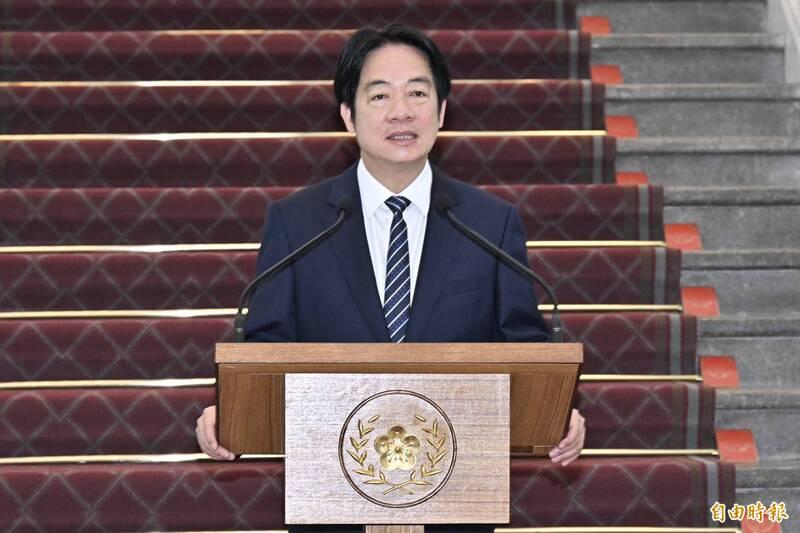
Photo: Tu Chien-jung, Taipei Times
The fund would "take advantage of the strengths of Taiwanese businesses and be led by the government while harnessing the power of the private sector to build a global presence and connect with major target markets in the AI era," Lai said, without elaboration.
During a question and answer session following his speech, Lai was asked by a reporter about why his government thinks it is the right time to set up a sovereign wealth fund for Taiwan and if it will focus on investing in the US.
In response, the president said the latest proposal was raised as part of its international economic strategy to deal with the latest challenges in the global economy.
Lai said the government would propose legislation to create the fund, which will be used mainly for foreign investment while at the same time helping local businesses to expand their international presence.
According to the IMF, sovereign wealth funds are "government-owned investment funds, set up for a variety of macroeconomic purposes. They are commonly funded by the transfer of foreign exchange assets that are invested long term, overseas."
The issue has been debated locally in recent months, with the Ministry of Finance saying last month that more discussion was needed before a consensus on the idea was reached.
In his speech today, Lai also mentioned the ongoing trade dialogue between Taiwan and the US over the threat of US President Donald Trump's tariffs on goods imported into the US from Taiwan.
Unlike other governments in the region, Taiwan has remained extremely vague about what has been going on in its interaction with the Trump administration, and Lai's speech was no different.
He said it was not uncommon for friends like Taiwan and the US to have some friction but that ultimately the two sides would find common ground.
Aside from continuing to expand economic and trade cooperation with the US, Taiwan has also been expanding such relations with the UK by signing the Enhanced Trade Partnership, Lai said.
It is actively in talks with other countries to sign more bilateral trade deals and double-taxation avoidance agreements, and also hopes to gain access to the Comprehensive and Progressive Agreement for Trans-Pacific Partnership (CPTPP), he said.
According to Taiwan's Office of Trade Negotiations, Taipei and Washington concluded a first in-person meeting on tariffs on May 3. The meeting followed an initial round of talks held via videoconference on April 11.
US President Donald Trump first announced sweeping "reciprocal" tariffs on April 2, including a 32-percent import duty on goods from Taiwan, that targeted countries with large trade surpluses with Washington.
A week later, he announced a 90-day pause to allow for negotiations to reduce the impact of the high tariffs.
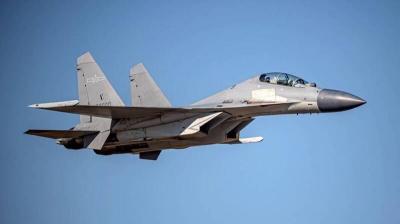
Eight Chinese naval vessels and 24 military aircraft were detected crossing the median line of the Taiwan Strait between 6am yesterday and 6am today, the Ministry of National Defense said this morning. The aircraft entered Taiwan’s northern, central, southwestern and eastern air defense identification zones, the ministry said. The armed forces responded with mission aircraft, naval vessels and shore-based missile systems to closely monitor the situation, it added. Eight naval vessels, one official ship and 36 aircraft sorties were spotted in total, the ministry said.
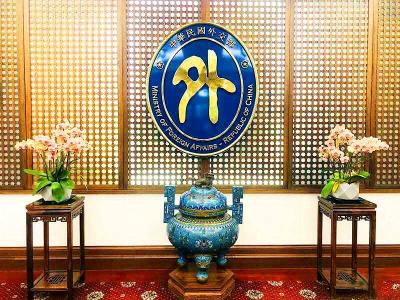
The Ministry of Foreign Affairs (MOFA) today said that if South Korea does not reply appropriately to its request to correct Taiwan’s name on its e-Arrival card system before March 31, it would take corresponding measures to alter how South Korea is labeled on the online Taiwan Arrival Card system. South Korea’s e-Arrival card system lists Taiwan as “China (Taiwan)” in the “point of departure” and “next destination” fields. The ministry said that it changed the nationality for South Koreans on Taiwan’s Alien Resident Certificates from “Korea” to “South Korea” on March 1, in a gesture of goodwill and based on the
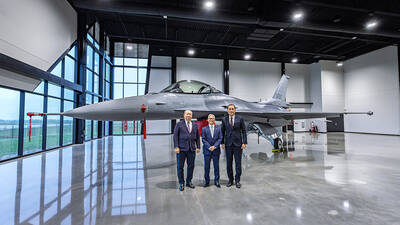
Taiwanese officials were shown the first of 66 F-16V fighter jets purchased by Taiwan from the United States, the Ministry of National Defense said yesterday, adding the aircraft has completed an initial flight test and is expected to be delivered later this year. A delegation led by Deputy Minister of National Defense Hsu Szu-chien (徐斯儉) visited Lockheed Martin’s F-16 C/D Block 70 (also known as F-16V) assembly line in South Carolina on March 16 to view the aircraft. The jet will undergo a final acceptance flight in the US before being delivered to Taiwan, the
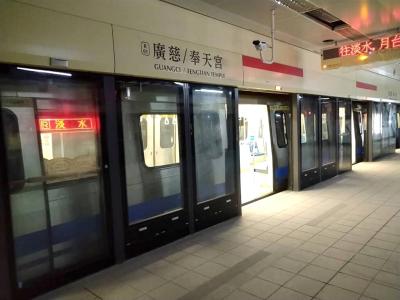
The New Taipei Metro's Sanyin Line and the eastern extension of the Taipei Metro's Tamsui-Xinyi Line (Red Line) are scheduled to begin operations in June, the National Development Council said today. The Red Line, which terminates at Xiangshan Station, would be connected by the 1.4km extension to a new eastern terminal, Guangci/Fengtian Temple Station, while the Sanyin Line would link New Taipei City's Tucheng and Yingge stations via Sanxia District (三峽). The council gave the updates at a council meeting reviewing progress on public construction projects for this year. Taiwan's annual public infrastructure budget would remain at NT$800 billion (US$25.08 billion), with NT$97.3


 RSS
RSS