


E-commerce transactions in Taiwan topped NT$1.8 trillion (US$55.85 billion) last year, 1.7 times higher than that in 2019, National Credit Card center data showed yesterday.
The figure was based on the amount of credit card transactions last year, which grew from NT$660 billion in 2019, the center said.
The number of online transactions also rose from 370 million in 2019 to 1.57 billion last year, it said.
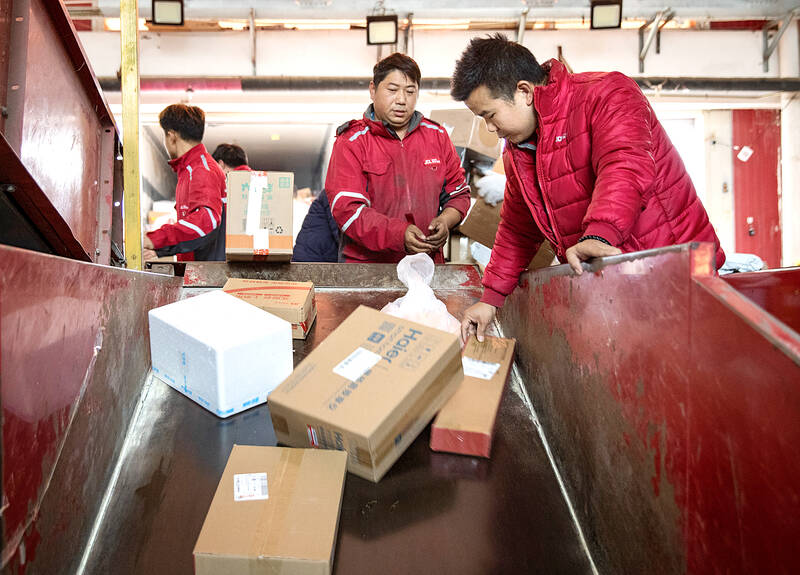
Photo: EPA-EFE
About half of the transactions in 2019 were for purchases of less than NT$500, and that percentage surged to more than 70 percent last year, it said.
This shows that people are more engaged in online transactions, including for purchases of daily items or necessities, it said.
Meanwhile, cross-border e-commerce transactions jumped 92.6 percent from 2019 to last year, with the annual amount exceeding NT$100 billion from 2022 to last year.
Cross-border transactions rose 63.5 percent from 2022 to last year, significantly outperforming overall online transaction growth of 35 percent, the center said.
However, the total amount of cross-border purchases was only about 10 percent of overall online transactions, indicating that people still shop largely on domestic e-commerce platforms.
Regarding items and services purchased online, more than 40 percent of the amount was for general retail items.
Online purchases for restaurant services accounted for 11 percent of the total last year, up from 2.2 percent in 2019.
Women accounted for about 54 percent of the total, the data showed.
People aged 30 to 60 mostly bought items and services from general merchandise retailers, while those aged 60 or older spent more on leisure and entertainment services.
Young people spent more on food delivery services, the center said.
Separately, Chunghwa Post and the Taiwan High Prosecutors’ Office yesterday signed a memorandum of understanding to deter financial fraud by monitoring and intercepting suspicious transactions and sharing intelligence.
As of last month, post offices across the nation intercepted 510 cases of fraud this year, with the amount of funds involved topping NT$230.66 million, up 50 percent from the same quarter last year.
The postal company also reported that suspicious accounts numbered 4,816 in the first quarter, down 8.5 percent from a year earlier.
Chunghwa Post chairman Wang Kwo-tsai (王國材) earlier this month said that the company had identified 10,619 suspicious accounts last year, and the goal this year was to halve the number.
“As more migrant workers unknowingly get involved in financial fraud, we want to remind them that they should prevent their accounts from being used as straw accounts,” the company said.
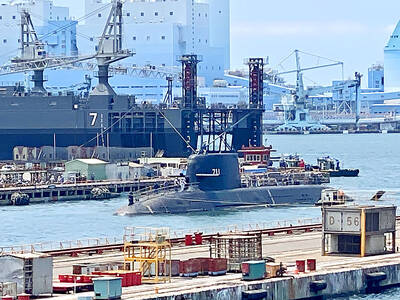
AGING: While Japan has 22 submarines, Taiwan only operates four, two of which were commissioned by the US in 1945 and 1946, and transferred to Taiwan in 1973 Taiwan would need at least 12 submarines to reach modern fleet capabilities, CSBC Corp, Taiwan chairman Chen Cheng-hung (陳政宏) said in an interview broadcast on Friday, citing a US assessment. CSBC is testing the nation’s first indigenous defense submarine, the Hai Kun (海鯤, Narwhal), which is scheduled to be delivered to the navy next month or in July. The Hai Kun has completed torpedo-firing tests and is scheduled to undergo overnight sea trials, Chen said on an SET TV military affairs program. Taiwan would require at least 12 submarines to establish a modern submarine force after assessing the nation’s operational environment and defense

A white king snake that frightened passengers and caused a stir on a Taipei MRT train on Friday evening has been claimed by its owner, who would be fined, Taipei Rapid Transit Corp (TRTC) said yesterday. A person on Threads posted that he thought he was lucky to find an empty row of seats on Friday after boarding a train on the Bannan (Blue) Line, only to spot a white snake with black stripes after sitting down. Startled, he jumped up, he wrote, describing the encounter as “terrifying.” “Taipei’s rat control plan: Release snakes on the metro,” one person wrote in reply, referring
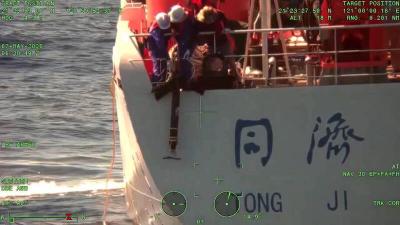
The coast guard today said that it had disrupted "illegal" operations by a Chinese research ship in waters close to the nation and driven it away, part of what Taipei sees a provocative pattern of China's stepped up maritime activities. The coast guard said that it on Thursday last week detected the Chinese ship Tongji (同濟號), which was commissioned only last year, 29 nautical miles (54km) southeast of the southern tip of Taiwan, although just outside restricted waters. The ship was observed lowering ropes into the water, suspected to be the deployment of scientific instruments for "illegal" survey operations, and the coast

Taiwan’s two cases of hantavirus so far this year are on par with previous years’ case numbers, and the government is coordinating rat extermination work, so there should not be any outbreaks, Centers for Disease Control (CDC) Director-General Philip Lo (羅一鈞) said today in an interview with the Liberty Times (the Taipei Times’ sister newspaper). An increase in rat sightings in Taipei and New Taipei City has raised concerns about the spread of hantavirus, as rats can carry the disease. In January, a man in his 70s who lived in Taipei’s Daan District (大安) tested positive posthumously for hantavirus, Taiwan’s


 RSS
RSS