


The Taipei District Court yesterday approved a request by prosecutors to extend the detention of two former staffers of the ruling Democratic Progressive Party (DPP) suspected of engaging in espionage for China.
The two detainees, Chiu Shih-yuan (邱世元) and Huang Chu-jung (黃取榮), had been held in custody since mid-February after being summoned by Taipei District Prosecutors Office for questioning, with their detention period due to expire tomorrow.
Citing strong suspicion of serious crimes and concerns over potential collusion or destruction of evidence, prosecutors sought an extension of Chiu and Huang's detention. The court held a hearing yesterday afternoon and approved the request.
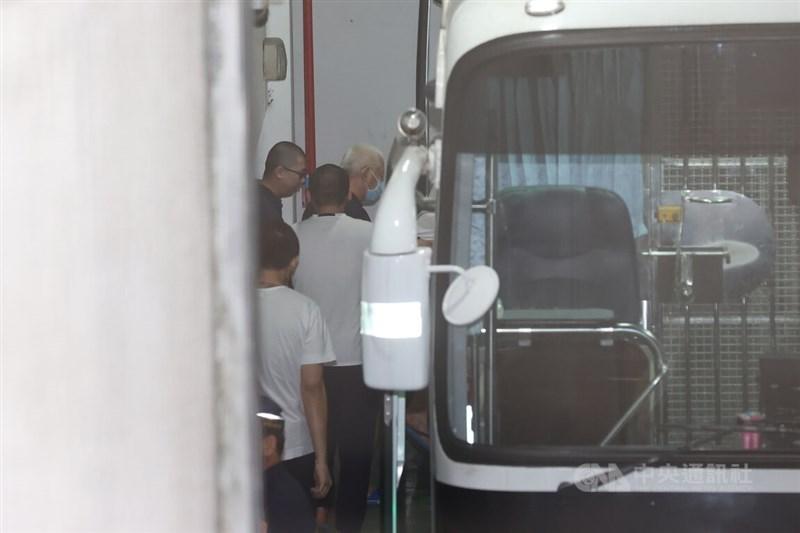
Photo: CNA
The two are to have their detention extended for another two months starting Sunday and remain being held incommunicado during the period.
Chiu, former deputy head of the DPP's Taiwan Institute of Democracy, and Huang, a former assistant to DPP New Taipei Councilor Lee Yu-tien (李余典), are among several individuals suspected of spying for Chinese intelligence services while working for senior officials in the DPP government, which has been in power since 2016.
Other suspects in the case include Wu Shang-yu (吳尚雨), who worked as an adviser in the office of President William Lai (賴清德), and Ho Jen-chieh (何仁傑), former assistant to the Secretary-General of the National Security Council Joseph Wu (吳釗燮) during his tenure as Taiwan's Foreign Minister.
According to the prosecutors, Huang was likely recruited by Beijing's intelligence services when doing business in China and after returning to Taiwan, started working with Ho, Wu Shang-yu and Chiu to gather confidential information about Lai and other top officials.
After providing such information to the Chinese intelligence services through Huang, Ho, Wu and Chiu received tens of thousands of Taiwan dollars in return, prosecutors said.
Prosecutors claimed the probe into the case was expanded after they traced money flows between Huang and the others in February. Huang, Wu and Chiu were detained in February following questioning, with Ho added to the list last week.
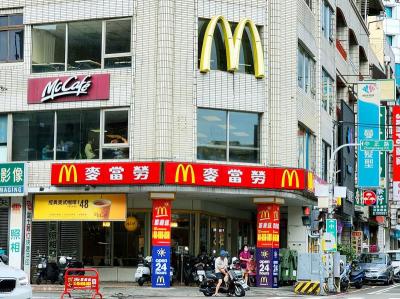
Fast food chain McDonald's is to raise prices by up to NT$5 on some products at its restaurants across Taiwan, starting on Wednesday next week, the company announced today. The prices of all extra value meals and sharing boxes are to increase by NT$5, while breakfast combos and creamy corn soup would go up by NT$3, the company said in a statement. The price of the main items of those meals, if ordered individually, would remain the same. Meanwhile, the price of a medium-sized lemon iced tea and hot cappuccino would rise by NT$3, extra dipping sauces for chicken nuggets would go up

Nvidia Corp CEO Jensen Huang (黃仁勳) arrived in Taiwan yesterday ahead of upcoming AI and technology events, saying he plans to meet with clients and Taiwan Semiconductor Manufacturing Co Chairman C.C. Wei (魏哲家) during his visit. After landing at Taipei Songshan Airport, Huang posed for photos with fans and handed out Yakult drinks to reporters and supporters waiting at the scene, saying he has “a lot to do” during the trip. Asked about reports that Nvidia’s planned headquarters site in Taipei’s Beitou Shilin Technology Park could break ground on May 27, Huang said that if the company holds an event, he would

Carrefour Taiwan is to begin using a new name from the start of July, but it cannot divulge the name until then, the chairman of the supermarket chain's parent company said today. President Chain Store Co chairman Lo Chih-hsien (羅智先) was asked by reporters after a shareholders' meeting to confirm whether the company has settled on a new name for the supermarket brand. In March, the government-registered name of two Carrefour Taiwan branches was quietly changed to "Le Chia Kang" (樂家康) in Chinese, raising speculation that has been selected as the name. Lo said that because of local regulations and contractual obligations, the

The Philippines would likely be involved in any conflict over Taiwan due to its proximity to the democracy claimed by China, President Ferdinand Marcos Jr said, reiterating a stance that risks angering Beijing. “In the Philippines, we do not have a choice because Taiwan is so close to the Philippines and we have almost 200,000 Filipino nationals living and working in Taiwan,” Marcos said in an interview with Japanese media in Manila on Monday. The Philippine leader’s comments come ahead of a state visit to Japan next week, where he is to meet with Japanese Prime Minister Sanae Takaichi to discuss security


 RSS
RSS