


On April 9, Taichung City Mayor Lu Shiow-Yen met with Director Matthieu Baudouin A. Branders of the Belgian Office in Taipei, Chief Representative Kazuyuki Katayama of the Japan-Taiwan Exchange Association, and Representative Yip Wei Kiat of the Singapore Trade Office in Taipei, to express appreciation for their support of the 2024 Taichung Shopping Festival and to exchange views on global trade challenges stemming from rising U.S. tariffs. Mayor Lu also called for deeper economic ties with Belgium, Japan, and Singapore through joint exhibitions and enhanced business incentives.
Mayor Lu sincerely thanked the three representatives for appearing in the international promotional videos of the 2024 Taichung Shopping Festival. Each video garnered over 250,000 views online, significantly boosting the festival’s global visibility. The campaign yielded remarkable results, with total registered spending reaching NT$35.3 billion. The “Taichung Pass (TCPASS)” app recorded more than 2.8 million downloads and over 1.65 million registered members. Moreover, the festival drew 2,784 foreign visitors from over 40 countries, generating NT$43 million in recorded spending. News and information was even shared across 47 countries and regions, including Singapore, Australia, and New Zealand, and reached over 500 hotels throughout Asia. Mayor Lu emphasized that these efforts not only showcased the culinary and cultural highlights of Belgium, Japan, and Singapore, but also reinforced Taichung’s image as a dynamic international city.
Mayor Lu highlighted Taichung’s close relationships with Belgium, Japan, and Singapore, which are key trade partners of Taiwan. As countries worldwide grapple with the impact of increased U.S. tariffs, many are exploring strategies for mitigation. Mayor Lu used the opportunity to seek insights from the three representatives on how to best navigate these challenges. Underscoring the notion that "crisis brings opportunity," she urged for enhanced economic cooperation with Belgium, Japan, and Singapore to diversify Taiwan’s international trade partnership, while maintaining focus on the U.S. market.
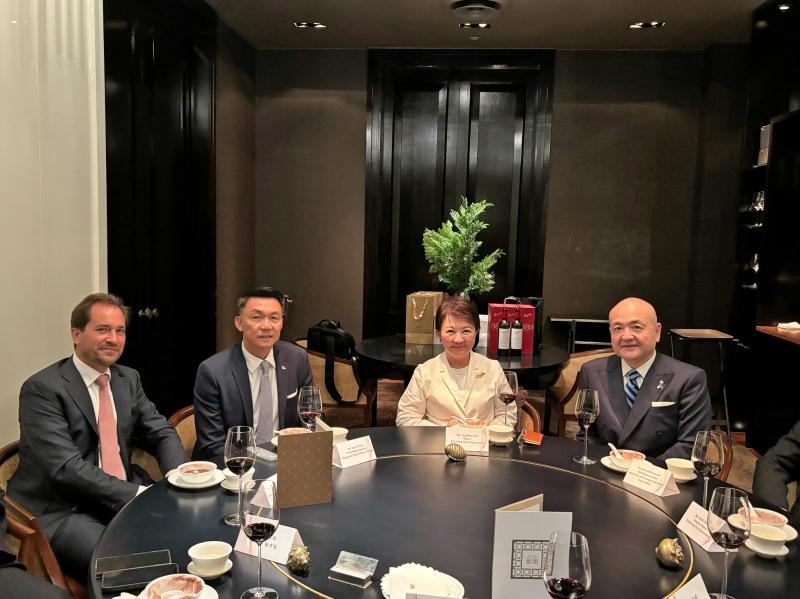
Photo: Economic Development Bureau, Taichung City Government
Mayor Lu also announced that the city government has formed an “Emergency Response Team” and launched six major strategies, including tax relief measures, in response to current trade uncertainties. These strategies aim to diversify export markets and reduce reliance on U.S. demand. The city will subsidize Taichung-based businesses for participation in international trade shows, encouraging them to explore new markets. Mayor Lu expressed her hope for closer collaboration with foreign representative offices in Taiwan, facilitating mutual participation in exhibitions and creating new business opportunities.
According to the Taichung City Government Economic Development Bureau, all three representatives expressed optimism about expanding cooperation, building on existing trade foundations. Taichung is widely regarded as a hub for industry and investment, with many enterprises from Belgium, Japan, and Singapore already operating in the city. Similarly, many Taiwanese businesses have established successful ventures in these countries. The representatives expressed enthusiasm for further collaboration to strengthen economic and trade ties.
The Economic Development Bureau highlighted several notable examples of foreign investment in Taichung. Japanese companies, such as Mitsui Fudosan and MGC Pure Chemicals, have established a strong presence in the city. Belgian companies are actively players in industries like offshore wind energy, bicycle components, and medical devices. Singaporean businesses are involved in areas such as software services, chemical manufacturing, and semiconductor equipment maintenance.
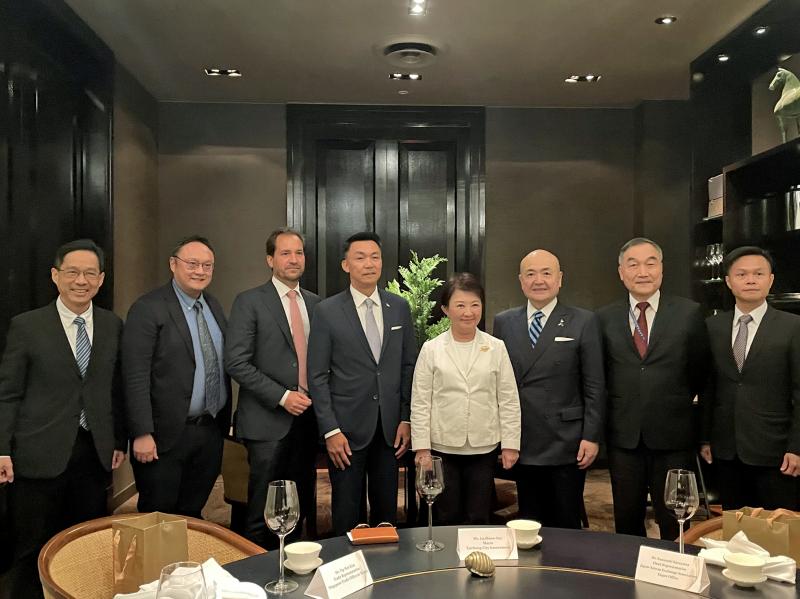
Photo: Economic Development Bureau, Taichung City Government
One recent milestone is Singapore’s ST Engineering Urban Solutions securing the turnkey contract for the Taichung MRT Blue Line BM01 project, which includes the E&M system, depot construction, and main substation.
The meeting was also attended by Deputy Mayors Huang Guo-Rong and Cheng Chao-Hsin, Deputy Secretary-General Lin Yu-Hong, and Economic Development Bureau Director Chang Feng-Yuan. The discussions were both dynamic and constructive, highlighting the shared commitment to strengthening cooperation.
Advertorial by Economic Development Bureau, Taichung City Government
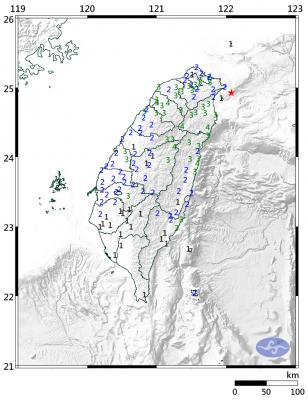
A magnitude 6.1 earthquake struck off the coast of Yilan County at 8:39pm tonight, the Central Weather Administration (CWA) said, with no immediate reports of damage or injuries. The epicenter was 38.7km east-northeast of Yilan County Hall at a focal depth of 98.3km, the CWA’s Seismological Center said. The quake’s maximum intensity, which gauges the actual physical effect of a seismic event, was a level 4 on Taiwan’s 7-tier intensity scale, the center said. That intensity level was recorded in Yilan County’s Nanao Township (南澳), Hsinchu County’s Guansi Township (關西), Nantou County’s Hehuanshan (合歡山) and Hualien County’s Yanliao (鹽寮). An intensity of 3 was
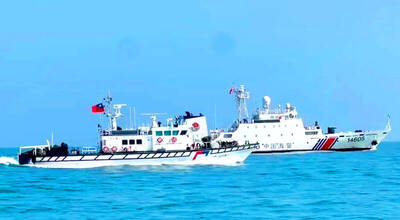
Instead of focusing solely on the threat of a full-scale military invasion, the US and its allies must prepare for a potential Chinese “quarantine” of Taiwan enforced through customs inspections, Stanford University Hoover fellow Eyck Freymann said in a Foreign Affairs article published on Wednesday. China could use various “gray zone” tactics in “reconfiguring the regional and ultimately the global economic order without a war,” said Freymann, who is also a nonresident research fellow at the US Naval War College. China might seize control of Taiwan’s links to the outside world by requiring all flights and ships entering or leaving Taiwan
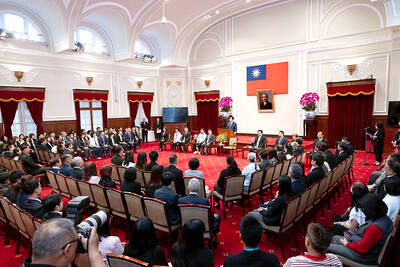
The next minimum wage hike is expected to exceed NT$30,000, President William Lai (賴清德) said yesterday during an award ceremony honoring “model workers,” including migrant workers, at the Presidential Office ahead of Workers’ Day today. Lai said he wished to thank the awardees on behalf of the nation and extend his most sincere respect for their hard work, on which Taiwan’s prosperity has been built. Lai specifically thanked 10 migrant workers selected for the award, saying that although they left their home countries to further their own goals, their efforts have benefited Taiwan as well. The nation’s industrial sector and small businesses lay
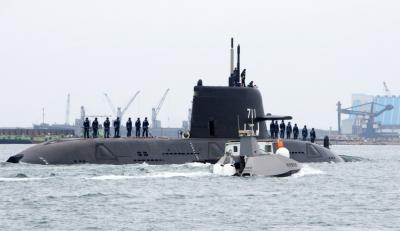
Taiwan's first indigenous defense submarine, the SS-711 Hai Kun (海鯤, or Narwhal), departed for its 13th sea trial at 7am today, marking its seventh submerged test, with delivery to the navy scheduled for July. The outing also marked its first sea deployment since President William Lai (賴清德) boarded the submarine for an inspection on March 19, drawing a crowd of military enthusiasts who gathered to show support. The submarine this morning departed port accompanied by CSBC Corp’s Endeavor Manta (奮進魔鬼魚號) uncrewed surface vessel and a navy M109 assault boat. Amid public interest in key milestones such as torpedo-launching operations and overnight submerged trials,


 RSS
RSS