


The Chinese Nationalist Party (KMT) yesterday urged President William Lai (賴清德) to clearly explain the government’s strategy and short to long-term response to the US’ new trade tariffs, while the Taiwan People’s Party (TPP) called on Lai to convene a national affairs conference over the matter.
US President Donald Trump on Wednesday last week announced “reciprocal tariffs” with major US trading partners, including a 32 percent tariff on Taiwan.
The Executive Yuan on Friday announced that it would allocate NT$88 billion (US$2.66 billion) to assist industrial and agricultural sectors impacted by the tariffs.
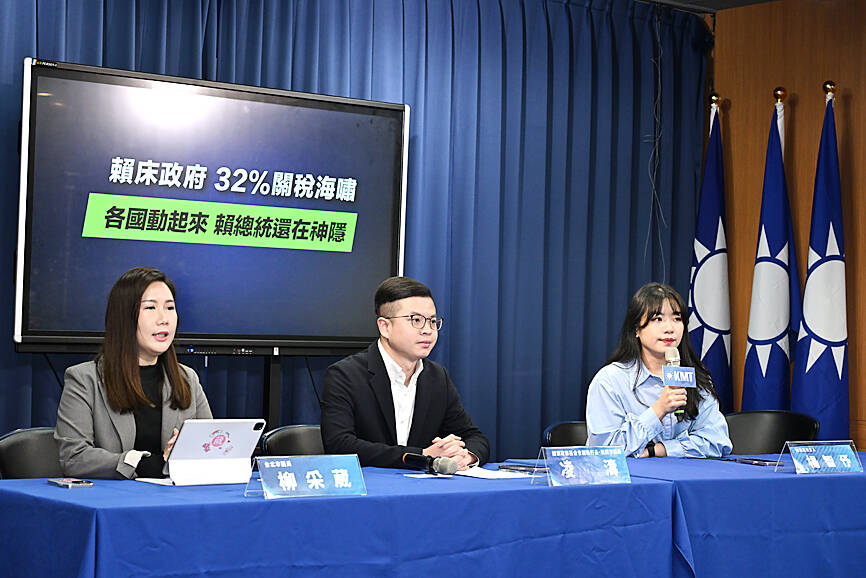
Photo: Chen Yi-kuan, Taipei Times
KMT think tank deputy director Ling Tao (凌濤) at a news conference in Taipei yesterday said the Lai administration does not have any countermeasures for the latest US tariffs, because it has been too focused on mass recall campaigns for the past year, Tao said.
Now the tariffs are taking effect, and the administration still does not have a solution, showing it is vastly ill-prepared, he said.
The Lai administration should communicate who would lead negotiations, their strategy and short to long-term response plans in the face of the tariffs, as Taiwan’s industries and financial markets cannot wait, Tao said.
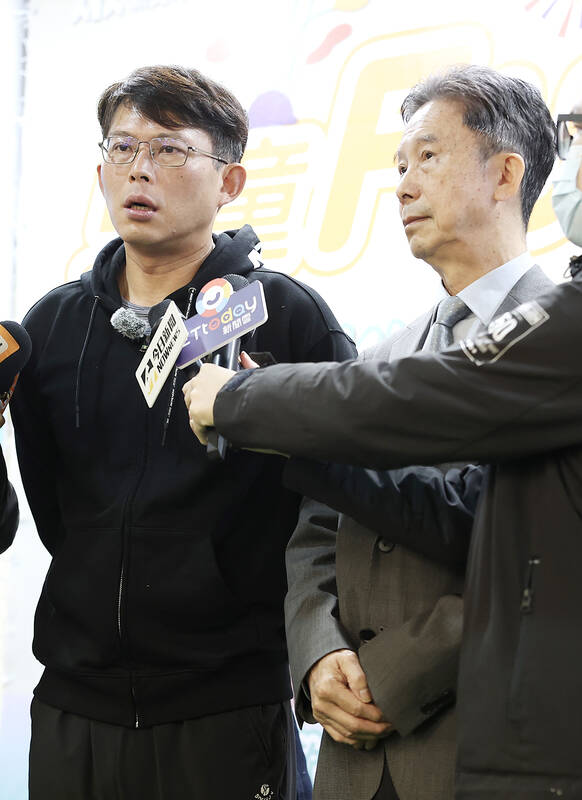
Photo: CNA
He also offered some suggestions, including procuring new nuclear energy facilities to improve national energy security and reduce the Taiwan-US trade surplus, forming a negotiation team, appointing a special envoy for talks with the US and binding trade to regional security defense.
Taiwan Semiconductor Manufacturing Co’s investment in the US could also be used as a bargaining chip in negotiations, he said.
KMT spokeswoman Yang Chih-yu said that Taiwan’s businesses are very worried, especially small and medium-sized enterprises, which would be the first to be impacted by the tariff.
Governments are taking action, as the global supply chain is being restructured, she said.
The Lai administration should take concrete actions, rather than procrastinating and brushing off the public, which is waiting for the government to provide solutions, she said.
KMT Taipei City Councilor Liu Tsai-wei (柳采葳) said that the public wants the government to face and solve problems.
“Unfortunately, it is like a group of patients unaware of their illness. They do not even know what the problem is, let alone how to solve it,” she said.
Separately yesterday, TPP Chairman Huang Kuo-chang (黃國昌) criticized Premier Cho Jung-tai (卓榮泰), saying he was “careless and incompetent,” referring to Cho’s response to US tariffs, and called on Lai to convene the governing and opposition parties to discuss national affairs together.
In the face of the tariffs, “the Lai administration could not even gather the most basic information, let alone have a concrete strategy for negotiating with the US,” Huang said. “It is clear that they were completely unprepared and lack any concrete measures.”
Cho’s “incompetent response” to the tariffs shows he is no longer capable of leading the executive team, he added.
“Lai must step up and convene a national affairs conference with the major political parties, industries and labor representatives to discuss how to resolve this major crisis facing Taiwan,” he said.
Huang said the TPP caucus submitted a letter to Legislative Speaker Han Kuo-yu (韓國瑜) on Saturday calling for cross-caucus talks and for an Executive Yuan representative to outline the government’s tariffs response plan to the legislature.
In response, Democratic Progressive Party spokesman Justin Wu (吳崢) yesterday said that the Lai administration has been making pre-emptive plans and response measures.
Lai and Cabinet officials have held a series of intensive meetings over the past few days and consulted with industries on appropriate countermeasures, Wu said.
“In contrast, what have the opposition parties done other than criticizing and attacking the administration?” he asked.
Additional reporting by Chen Yun
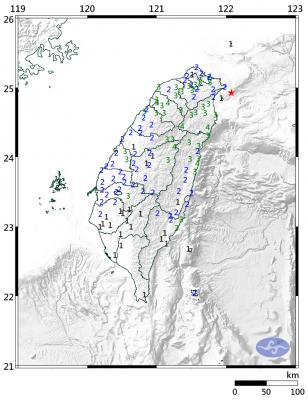
A magnitude 6.1 earthquake struck off the coast of Yilan County at 8:39pm tonight, the Central Weather Administration (CWA) said, with no immediate reports of damage or injuries. The epicenter was 38.7km east-northeast of Yilan County Hall at a focal depth of 98.3km, the CWA’s Seismological Center said. The quake’s maximum intensity, which gauges the actual physical effect of a seismic event, was a level 4 on Taiwan’s 7-tier intensity scale, the center said. That intensity level was recorded in Yilan County’s Nanao Township (南澳), Hsinchu County’s Guansi Township (關西), Nantou County’s Hehuanshan (合歡山) and Hualien County’s Yanliao (鹽寮). An intensity of 3 was
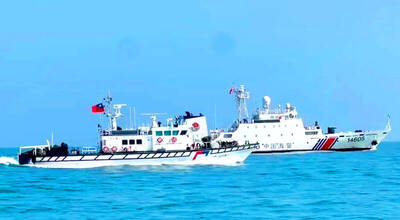
Instead of focusing solely on the threat of a full-scale military invasion, the US and its allies must prepare for a potential Chinese “quarantine” of Taiwan enforced through customs inspections, Stanford University Hoover fellow Eyck Freymann said in a Foreign Affairs article published on Wednesday. China could use various “gray zone” tactics in “reconfiguring the regional and ultimately the global economic order without a war,” said Freymann, who is also a nonresident research fellow at the US Naval War College. China might seize control of Taiwan’s links to the outside world by requiring all flights and ships entering or leaving Taiwan
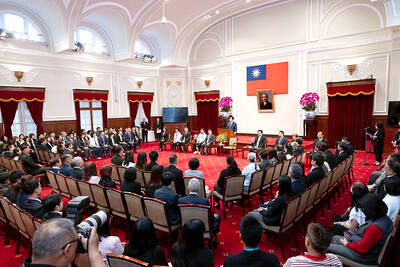
The next minimum wage hike is expected to exceed NT$30,000, President William Lai (賴清德) said yesterday during an award ceremony honoring “model workers,” including migrant workers, at the Presidential Office ahead of Workers’ Day today. Lai said he wished to thank the awardees on behalf of the nation and extend his most sincere respect for their hard work, on which Taiwan’s prosperity has been built. Lai specifically thanked 10 migrant workers selected for the award, saying that although they left their home countries to further their own goals, their efforts have benefited Taiwan as well. The nation’s industrial sector and small businesses lay
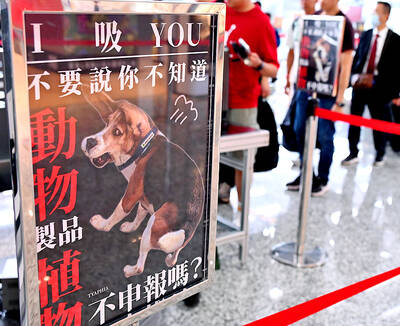
Quarantine awareness posters at Taiwan Taoyuan International Airport have gone viral for their use of wordplay. Issued by the airport branch of the Animal and Plant Health Inspection Agency, the posters feature sniffer dogs making a range of facial expressions, paired with advisory messages built around homophones. “We update the messages for holidays and campaign needs, periodically refreshing materials to attract people’s attention,” quarantine officials said. “The aim is to use the dogs’ appeal to draw focus to quarantine regulations.” A Japanese traveler visiting Taiwan has posted a photo on X of a poster showing a quarantine dog with a


 RSS
RSS