


The National Science and Technology Council (NSTC) yesterday announced that it has selected Jiupeng Village (九棚) in Pingtung County’s Manjhou Township (滿州) as the location for the nation's national space mission launch site.
The decision was the result of a comprehensive review conducted by an inter-agency panel, which evaluated environmental conditions, launch conditions, development execution and potential for further development, the Cabinet-level agency said in a news release.
The site was chosen due to its advantages in terms of land acquisition, size, usability and lack of environmentally sensitive areas, the council said.
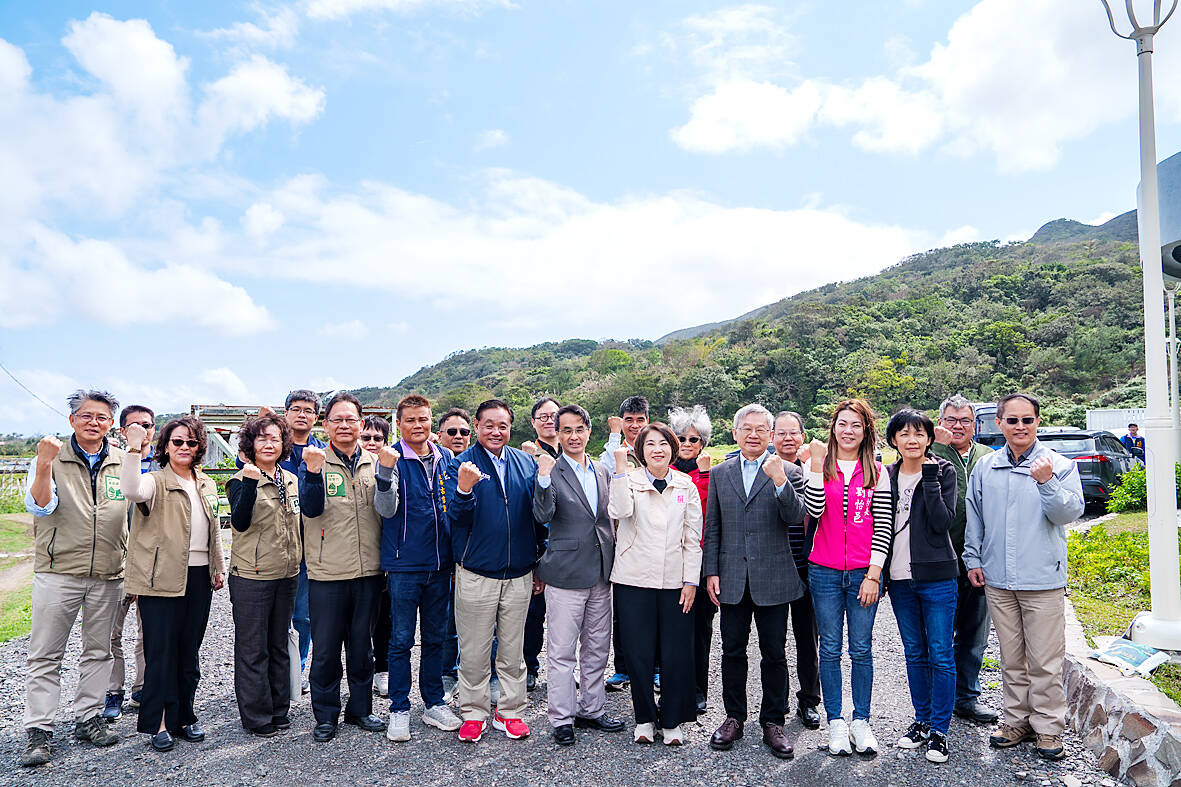
Photo: courtesy of the Pingtung County Government
Both Jiupeng Village in Pingtung and Liubetj indigenous village in Taitung County’s Dajen Township (達仁) met the basic criteria for space technology development, but the Pingtung site had clearer advantages, the NSTC said.
NSTC officials said that the National Launch Site would help promote the nation’s space industry and be integrated with local efforts to boost technology, education and tourism, such as the construction of a space-themed museum.
Pingtung County Commissioner Chou Chun-mi (周春迷) said on Facebook that the decision was “exciting.”
“The space industry is ready to take off in Pingtung,” she said.
The next steps include more detailed planning and environmental evaluations, with the project expected to be completed by 2030 or 2031 at the earliest, the NSTC said.
The Taiwan Space Agency, which operates under the NSTC, was established in 2023 following the restructuring of the National Space Organization, the agency's Web site said.
The space agency already operates a Sounding Rocket Launch Site in Pingtung County’s Mudan Township (牡丹), where rocket research test flights have been conducted since 2022, the agency’s Web site says.
The agency focuses on “enhancing the Taiwan space technology research and development capabilities, implementing national space policies and plans, and promoting Taiwan space activities and the development of the space industry,” it says.
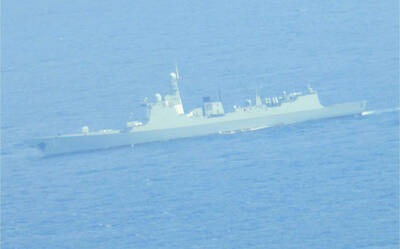
The military has spotted two Chinese warships operating in waters near Penghu County in the Taiwan Strait and sent its own naval and air forces to monitor the vessels, the Ministry of National Defense (MND) said. Beijing sends warships and warplanes into the waters and skies around Taiwan on an almost daily basis, drawing condemnation from Taipei. While the ministry offers daily updates on the locations of Chinese military aircraft, it only rarely gives details of where Chinese warships are operating, generally only when it detects aircraft carriers, as happened last week. A Chinese destroyer and a frigate entered waters to the southwest
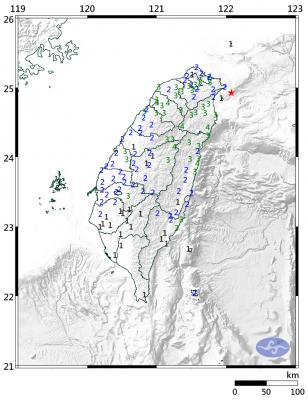
A magnitude 6.1 earthquake struck off the coast of Yilan County at 8:39pm tonight, the Central Weather Administration (CWA) said, with no immediate reports of damage or injuries. The epicenter was 38.7km east-northeast of Yilan County Hall at a focal depth of 98.3km, the CWA’s Seismological Center said. The quake’s maximum intensity, which gauges the actual physical effect of a seismic event, was a level 4 on Taiwan’s 7-tier intensity scale, the center said. That intensity level was recorded in Yilan County’s Nanao Township (南澳), Hsinchu County’s Guansi Township (關西), Nantou County’s Hehuanshan (合歡山) and Hualien County’s Yanliao (鹽寮). An intensity of 3 was

Japanese Prime Minister Sanae Takaichi’s comment last year on Tokyo’s potential reaction to a Taiwan-China conflict has forced Beijing to rewrite its invasion plans, a retired Japanese general said. Takaichi told the Diet on Nov. 7 last year that a Chinese naval blockade or military attack on Taiwan could constitute a “survival-threatening situation” for Japan, potentially allowing Tokyo to exercise its right to collective self-defense. Former Japan Ground Self-Defense Force general Kiyofumi Ogawa said in a recent speech that the remark has been interpreted as meaning Japan could intervene in the early stages of a Taiwan Strait conflict, undermining China’s previous assumptions
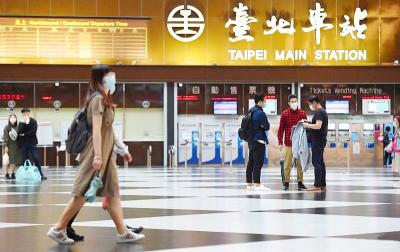
Taiwan Railways Corp (TRC) today announced that Shin Kong Mitsukoshi has been selected as the preferred bidder to operate the Taipei Railway Station shopping mall, replacing the current operator, Breeze Development Co Ltd. Among eight qualified firms that delivered presentations and were evaluated by a review committee, Shin Kong Mitsukoshi was ranked first, while Breeze was named the runner-up, the rail company said in a statement. Contract negotiations are to proceed in accordance with regulations, it said, adding that if negotiations with the top bidder fail, it could invite the second-ranked applicant to enter talks. Breeze in a statement today expressed doubts over


 RSS
RSS