


US Secretary of State Marco Rubio yesterday said that US President Donald Trump is opposed to any change of Taiwan's "status quo" by force or extortion and would maintain that policy.
Speaking with conservative TV host Hugh Hewitt, Rubio said the US' policy is to maintain Taiwan's "status quo" and to oppose any changes in the situation by force or extortion.
"That's the policy of the United States. That remains the policy of the United States," Rubio said. "That's been the policy of President Trump, and that will continue to be his policy. And when he makes policy decisions, he means them."
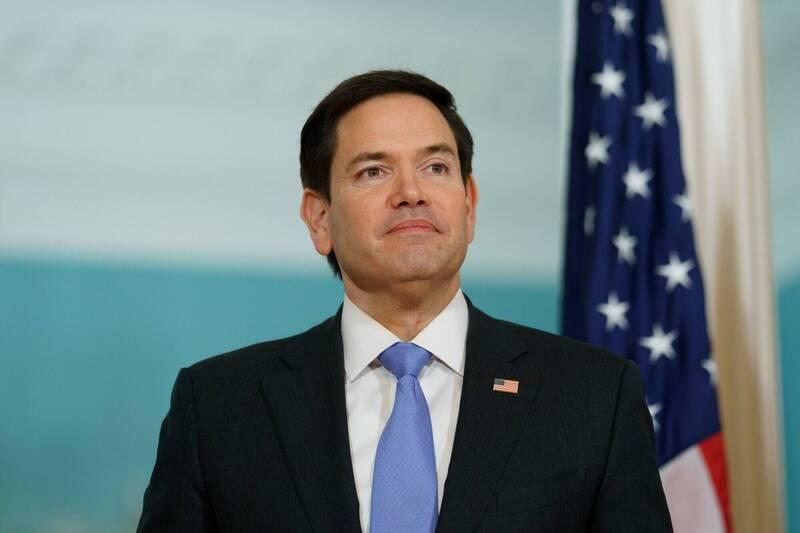
Photo: EPA
Rubio's comments followed a statement on Tuesday by a US Department of State spokesperson, who described China's latest drills near Taiwan the previous day as "brazen and irresponsible threats" and reiterated Washington's decades-long support for Taipei.
On Monday, the Chinese People's Liberation Army deployed more than two dozen military aircraft across the median line of the Taiwan Strait and sent dozens more into Taiwan's air defense identification zone (ADIZ), in collaboration with Chinese naval vessels, from 6am to about 9pm, according to data issued by Taiwan's military.
In Rubio's interview on Tuesday, he was asked about the significance of Trump's meeting earlier this month with C.C. Wei (魏哲家), chairman of Taiwan Semiconductor Manufacturing Co (TSMC), which the president described as a "big deal."
When asked whether Trump's comment was an indication of the US' resolve to stand with Taiwan, Rubio said Washington's policy on the issue remains the same as it has always been.
On March 3, during a visit by Wei to the White House, Trump announced that TSMC would invest an additional US$100 billion in the US.
According to Wei, the investment is intended to cover the establishment of three more advanced wafer fabs, two IC assembly plants, and one research and development center in Arizona, which would bring the company's total investment in the US state to US$165 billion.
On Tuesday, Rubio was also asked in the interview whether the US would be able to deter Chinese President Xi Jinping (習近平) from attacking Taiwan.
In response, Rubio said Washington can delay and deter by making the price of taking Taiwan higher than what Xi believes to be the benefits.
He noted, however, that the Chinese president wants the annexation of Taiwan to be defined as a crown jewel of his time in power.
"So it's a very delicate situation there," Rubio said. "Our policy remains the same. We do not believe that there should be any violent and/or extortion-based change to the status."
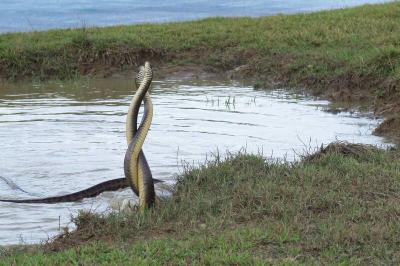
Kenting National Park service technician Yang Jien-fon (楊政峰) won a silver award in World Grand Prix Photography Awards Spring Season for his photograph of two male rat snakes intertwined in combat. Yang’s colleagues at Kenting National Park said he is a master of nature photography who has been held back by his job in civil service. The awards accept entries in all four seasons across six categories: architectural and urban photography, black-and-white and fine art photography, commercial and fashion photography, documentary and people photography, nature and experimental photography, and mobile photography. Awards are ranked according to scores and divided into platinum, gold and
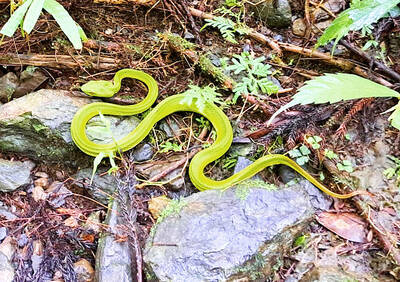
More than half of the bamboo vipers captured in Tainan in the past few years were found in the city’s Sinhua District (新化), while other districts had smaller catches or none at all. Every year, Tainan captures about 6,000 snakes which have made their way into people’s homes. Of the six major venomous snakes in Taiwan, the cobra, the many-banded krait, the brown-spotted pit viper and the bamboo viper are the most frequently captured. The high concentration of bamboo vipers captured in Sinhua District is puzzling. Tainan Agriculture Bureau Forestry and Nature Conservation Division head Chu Chien-ming (朱健明) earlier this week said that the
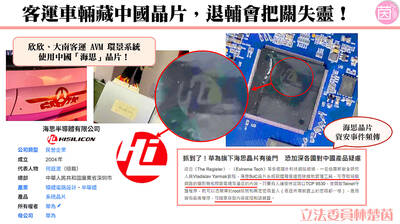
BREACH OF CONTRACT: The bus operators would seek compensation and have demanded that the manufacturer replace the chips with ones that meet regulations Two bus operators found to be using buses with China-made chips are to demand that the original manufacturers replace the systems and provide compensation for breach of contract, the Veterans Affairs Council said yesterday. Democratic Progressive Party Legislator Michelle Lin (林楚茵) yesterday said that Da Nan Bus Co and Shin-Shin Bus Co Ltd have fielded a total of 82 buses that are using Chinese chips. The bus models were made by Tron-E, while the systems provider was CYE Electronics, Lin said. Lin alleged that the buses were using chips manufactured by Huawei subsidiary HiSilicon Co, which presents a national security risk if the

The National Immigration Agency has banned two Chinese from returning to Taiwan, after they published social media content it described as disrespectful to national sovereignty. The agency imposed a two-month ban on a Chinese man surnamed Liang (梁) and a permanent ban on a woman surnamed Yang (楊), an influencer with 23 million followers, in October last year and last week respectively. Minister of the Interior Liu Shyh-fang (劉世芳) yesterday said on the sidelines of a legislative meeting that Chinese visitors to Taiwan are required to comply with the rules and regulations governing their entry permits. The government has handled the ban and


 RSS
RSS