


A US government spokesperson yesterday refused to confirm a Reuters report that Taiwan is planning a multibillion-dollar weapons purchase from the US to appease the US President Donald Trump administration.
Reuters cited three anonymous sources as saying that Taipei is in talks with Washington over an arms deal worth an estimated US$7 billion to US$10 billion.
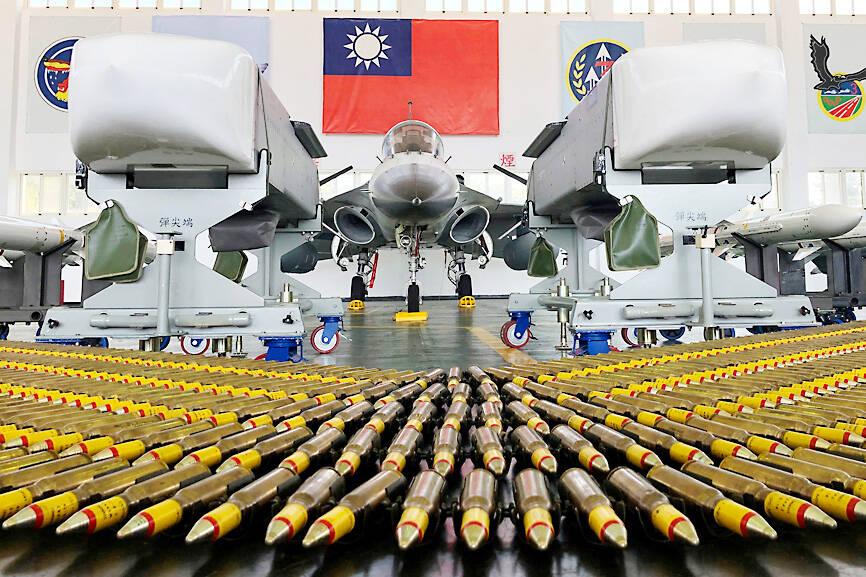
Photo: Yimou Lee, Reuters
"The package is meant to demonstrate to the US that Taiwan is committed to its defense," Reuters cited one of the sources as saying.
Asked to comment, the US Department of State said that, as is longstanding practice, Washington does not make any comment until a deal is formalized.
"Consistent with the Taiwan Relations Act, the United States will continue to enable Taiwan's self-defense capabilities. As a matter of policy, we are unable to comment on or confirm potential or pending arms transfers before they are formally notified to Congress," the spokesperson said in an e-mail.
Based on a list of steps provided by the Ministry of National Defense (MND), Taiwan first requests to purchase weapons from the US.
Washington then sends a letter of offer and acceptance (LOA) with more details after the green light is given.
Taipei reviews the offer and completes a procurement proposal before sending the LOA back to Washington.
Various US government branches then review the proposal before the US government notifies Congress of the sale.
The Defense Security Cooperation Agency under the US Department of Defense subsequently makes the deal public.
According to the Reuters report, the deal could include coastal defense cruise missiles and High Mobility Artillery Rocket Systems, a source was cited as saying.
Taiwan is planning a special budget focused on precision ammunition, air-defense upgrades, command and control systems, reserve force equipment and anti-drone technology, another source told Reuters.
The MND also did not comment on the report.

UNREASONABLE SURVEILLANCE: A camera targeted on an road by a neighbor captured a man’s habitual unsignaled turn into home, netting him dozens of tickets The Taichung High Administrative Court has canceled all 45 tickets given to a man for failing to use a turn signal while driving, as it considered long-term surveillance of his privacy more problematic than the traffic violations. The man, surnamed Tseng (曾), lives in Changhua County and was reported 45 times within a month for failing to signal while driving when he turned into the alley where his residence is. The reports were filed by his neighbor, who set up security cameras that constantly monitored not only the alley but also the door and yard of Tseng’s house. The surveillance occurred from July

A Japan Self-Defense Forces vessel entered the Taiwan Strait yesterday, Japanese media reported. After passing through the Taiwan Strait, the Ikazuchi was to proceed to the South China Sea to take part in a joint military exercise with the US and the Philippines, the reports said. Japan Self-Defense Force vessels were first reported to have passed through the strait in September, 2024, with two further transits taking place in February and June last year, the Asahi Shimbun reported. Yesterday’s transit also marked the first time since Japanese Prime Minister Sanae Takaichi took office that a Japanese warship has been sent through the Taiwan
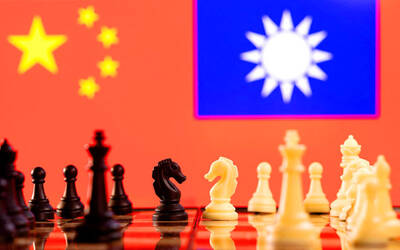
‘SAME OLD TRICK’: Even if Beijing resumes individual travel to Taiwan, it would only benefit Chinese tourism companies, the Economic Democracy Union convener said China’s 10 new “incentives” are “sugar-coated poison,” an official said yesterday, adding that Taiwanese businesses see them clearly for what they are, but that Beijing would inevitably find some local collaborators to try to drums up support. The official, speaking on condition of anonymity, made the remark ahead of a news conference the General Chamber of Commerce is to hold today. The event, titled “Industry Perspectives on China’s Recent Pro-Taiwan Policies,” is expected to include representatives from industry associations — such as those in travel, hotels, food and agriculture — to request the government cooperate with China’s new measures, people familiar with

SECURITY: Starlink owner Elon Musk has taken pro-Beijing positions, and allowing pro-China companies to control Taiwan’s critical infrastructure is risky, a legislator said Starlink was reluctant to offer services in Taiwan because of the nation’s extremely high penetration rates in 4G and 5G services, the Ministry of Digital Affairs said yesterday. The ministry made the comments at a meeting of the legislature’s Transportation Committee, which reviewed amendments to Article 36 of the Telecommunications Management Act (電信管理法). Article 36 bans foreigners from holding more than 49 percent of shares in public telecommunications networks, while shares foreigners directly and indirectly hold are also capped at 60 percent of the total, unless specified otherwise by law. The amendments, sponsored by Chinese Nationalist Party (KMT) Legislator Ko


 RSS
RSS