


The legislature is on Thursday to hold cross-party negotiations to reconsider controversial changes to rules governing recall petitions, Legislative Speaker Han Kuo-yu (韓國瑜) said yesterday, a day after the Executive Yuan submitted a request to revisit the amendment passed late last year.
The amendment to the Public Officials Election and Recall Act (公職人員選舉罷免法) passed by opposition lawmakers stipulates that those who propose or sign a recall motion must provide a copy of their ID card, which critics said would make it harder to collect signatures for recall petitions.
Anyone found guilty of using someone else’s identification or forging an ID for a recall petition could be subject to a jail sentence of up to five years or face a fine of up to NT$1 million (US$30,332).
Currently, campaigners only have to list the ID numbers and registered addresses of petition signers, a process some critics said has been abused by listing ID numbers of people who were unaware it was being used.
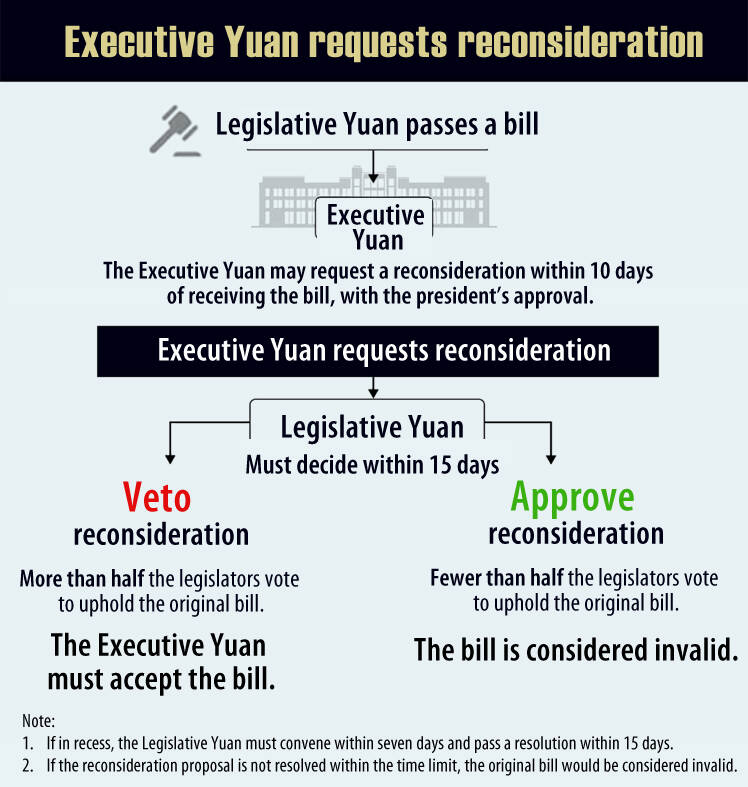
Although the amendment was passed on Dec. 20 last year, the legislature sent the bill to the Executive Yuan for promulgation on Jan. 24. The Cabinet immediately met and agreed to send it back to the legislature to reconsider, saying it would be difficult to implement.
Executive Yuan Secretary-General Kung Ming-hsin (龔明鑫) on Sunday delivered the reconsideration proposal to the Legislative Yuan, and staff received it yesterday morning.
Han said he scheduled a cross-party meeting for Thursday afternoon to discuss the opening of the new legislative session and how to handle the request.
Under the Constitution, the legislature has 15 days to review the amendments, or they would be considered invalid.
If more than half of legislators vote to uphold the changes, the Executive Yuan must accept the decision.
The legislature is likely to address the reconsideration request during the plenary session on Tuesday next week, Chinese Nationalist Party (KMT) caucus whip Fu Kun-chi (傅?萁) told a news conference, which was also attended by newly appointed KMT caucus secretary-general Wang Hung-wei (王鴻薇) and deputy secretary-general Lo Chih-chiang (羅智強).
The legislature would consult all party caucuses and schedule a clear timeline for handling the reconsideration, Fu said.
The Cabinet is also likely to request that the legislature reconsider amendments to the Act Governing the Allocation of Government Revenues and Expenditures (財政收支劃分法), as well as the central government’s budget, Premier Cho Jung-tai (卓榮泰) said previously.
Fu said that Cho should think twice before requesting that the bills be reconsidered, as they were passed through a democratic process, adding that it was regrettable that the premier had not contacted opposition party lawmakers to discuss the budget.
In the spirit of the new year, Cho should sit down to talk with the opposition, he said.
The KMT would continue to work with the Taiwan People’s Party in the new session, as cooperation between opposition parties prevents corruption in the ruling party, he said.
The KMT welcomes any cooperation that ensures government oversight and protects the public’s interests, Fu said, adding that the party is open to sincere discussions with the Democratic Progressive Party.

FUKUOKA SITUATION: Japanese media reported that the pathogen is expected to be identified by the summer, while the CDC downplayed the idea that it was hMPV A “mysterious cold-like illness” reported in Japan’s Fukuoka Prefecture does not seem to be a new disease, but Japanese authorities have been asked about the situation, the Centers for Disease Control (CDC) said yesterday. The Fukuoka Prefectural Medical Association on Wednesday told a news conference that a “mystery cold” that has become a hot topic on social media is “highly likely to be caused by some kind of viral infection,” Japan’s KBC News reported. “Many people are experiencing symptoms starting with a sore throat, followed by a runny nose, phlegm and a severe cough,” KBC News reported, citing association officials. Health authorities are

Nvidia Corp CEO Jensen Huang (黃仁勳) arrived in Taiwan yesterday ahead of upcoming AI and technology events, saying he plans to meet with clients and Taiwan Semiconductor Manufacturing Co Chairman C.C. Wei (魏哲家) during his visit. After landing at Taipei Songshan Airport, Huang posed for photos with fans and handed out Yakult drinks to reporters and supporters waiting at the scene, saying he has “a lot to do” during the trip. Asked about reports that Nvidia’s planned headquarters site in Taipei’s Beitou Shilin Technology Park could break ground on May 27, Huang said that if the company holds an event, he would

The Ministry of Finance this afternoon announced the winning numbers for the March-April uniform invoice lottery. The winning number for the NT$10 million (US$318,060) special prize is 19531471, and the winning number for the NT$2 million grand prize is 85941329. Three numbers were drawn for the NT$200,000 first prize: 07225810, 20231230 and 83518781. Those with receipts matching the last seven digits of any of the first-prize numbers will win the NT$40,000 second prize, while those matching the last six digits will win the NT$10,000 third prize. Those whose receipts match the last five digits of the first-prize numbers can claim the NT$4,000 fourth prize,
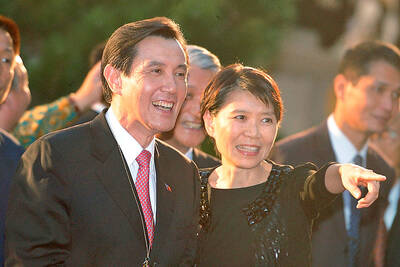
Former president Ma Ying-jeou (馬英九) yesterday expressed “shock and regret” over a statement issued by his wife without his consent, and rejected her assertion that his eldest sister, Ma Yi-nan (馬以南), would manage his medical care or act as his spokesperson amid an ongoing embezzlement probe into his foundation. Ma Ying-jeou in a statement said he was shocked by a statement by his wife, Chou Mei-ching (周美青), regarding his affairs. Ma Yi-nan “must not” be in charge of his healthcare and other personal affairs, nor can she be allowed to represent the Ma family, the former president said. He said he was also


 RSS
RSS