


Campaign groups have submitted petitions to recall 19 Chinese Nationalist Party (KMT) lawmakers and a suspended Taiwan People’s Party (TPP) mayor, the Central Election Commission (CEC) confirmed yesterday.
Nineteen civil groups delivered boxes full of petitions to the commission’s headquarters in Taipei yesterday morning, where United Microelectronics Corp founder Robert Tsao (曹興誠) addressed the gathering.
Grassroots recall efforts are the true expression of the public’s will, to show that the people are the masters of the nation, Tsao said as spokesman for the Safeguard Taiwan, Anti-Communist Volunteers Alliance.
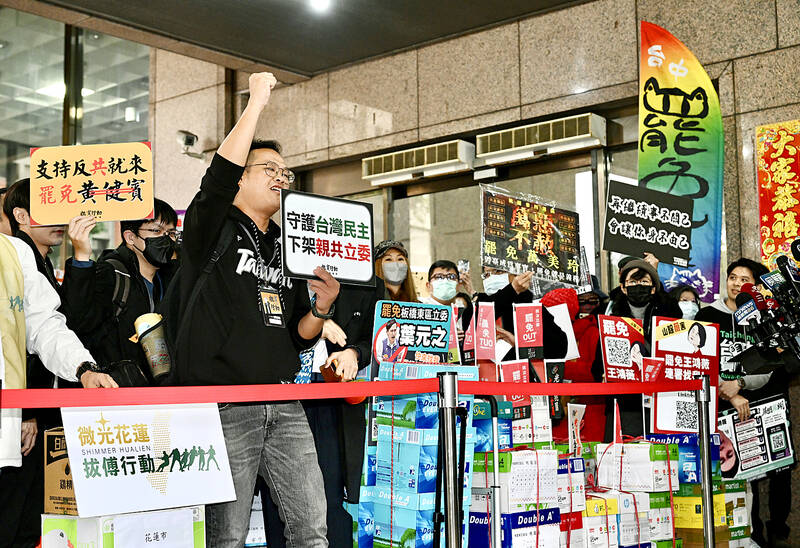
Photo: Lo Pei-de, Taipei Times
The 19 lawmakers potentially facing recall votes include KMT caucus whip Fu Kun-chi (傅?萁) and Legislator Wang Hung-wei (王鴻薇).
The other KMT legislators are Lee Yen-hsiu (李彥秀), Yeh Yuan-chih (葉元之), Niu Hsu-ting (牛煦庭), Tu Chuan-chi (涂權吉), Lu Ming-che (魯明哲), Wan Mei-ling (萬美玲), Lu Yu-ling (呂玉玲), Chiu Jo-hua (邱若華), Cheng Cheng-chien (鄭正鈐), Yu Hao (游顥), Yen Kuan-heng (顏寬恒), Liao Wei-hsiang (廖偉翔), Huang Chien-hao (黃健豪), Lo Ting-wei (羅廷瑋), Ting Hsueh-chung (丁學忠), Huang Chien-pin (黃建賓) and Ma Wen-chun (馬文君).
Suspended Hsinchu mayor Ann Kao (高虹安) of the TPP is also facing a recall vote, after she was suspended following a conviction for corruption in July last year.
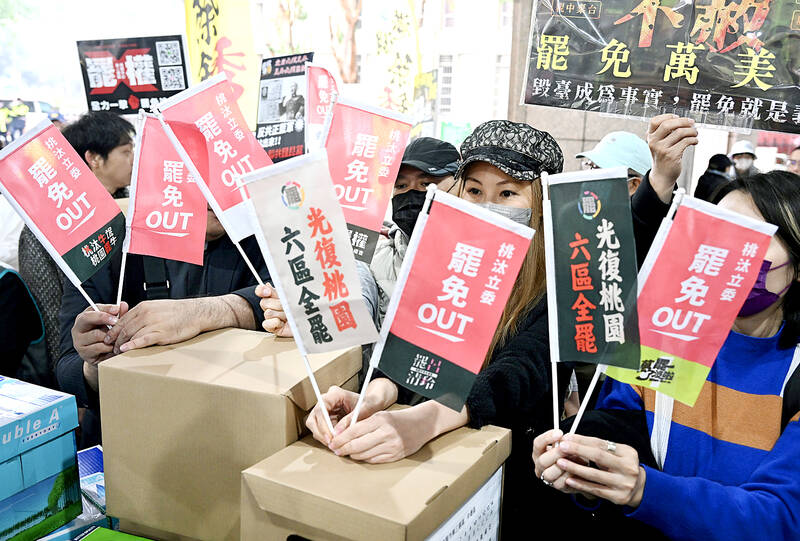
Photo: Lo Pei-de, Taipei Times
The CEC said it would conduct an initial review of the recall petitions and, if approved, forward them to local election committees for review.
“These are citizen groups acting independently, working at the grassroots level and going beyond partisan politics,” Tsao said.
“China believes it can control Taiwan’s legislature by using money to buy off unscrupulous legislators, that it can subvert the country from within,” he said.
He said that KMT and TPP legislators feel emboldened to push through numerous bills in an “arrogant and autocratic manner.”
“However, they forgot that the main components of Taiwan’s political system are the citizens who vote in elections, not political parties,” Tsao said, calling the recall movement a “holy war” to clear out Chinese collaborators.
At a news conference at the legislature, Fu said that the KMT respects people expressing their opinions, “but we hope the ruling party would not stir up trouble.”
Fu urged people to remember President William Lai’s (賴清德) Lunar New Year message wishing that “every family can enjoy peace, togetherness and happiness,” and for “the ruling and opposition parties to have harmony and unity” in the coming year.
Separately, KMT youth wing members told reporters that their recall efforts against Democratic Progressive Party (DPP) caucus secretary-general Rosalia Wu (吳思瑤) and DPP Legislator Wu Pei-yi (吳沛憶) have reached the first-stage threshold, at 1 percent of all eligible voters in their electoral districts.
They vowed to submit the signatures and documentation to the CEC later this week.
At a DPP news conference, caucus whip Ker Chien-ming (柯建銘) said that the current legislative session would be a “recall vote session” because “both sides have launched large-scale recall votes.”
“The large-scale recall vote initiative was started by the KMT,” Ker said, without elaborating. “The DPP is just responding.”
The recall votes would be completed by Sept. 1 at the latest, he said, adding that “the KMT would undoubtedly be defeated.”
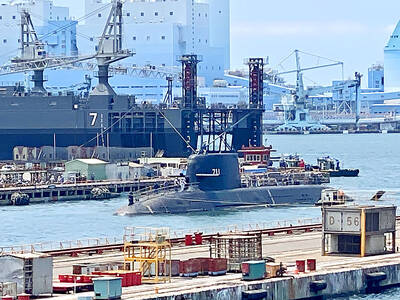
AGING: While Japan has 22 submarines, Taiwan only operates four, two of which were commissioned by the US in 1945 and 1946, and transferred to Taiwan in 1973 Taiwan would need at least 12 submarines to reach modern fleet capabilities, CSBC Corp, Taiwan chairman Chen Cheng-hung (陳政宏) said in an interview broadcast on Friday, citing a US assessment. CSBC is testing the nation’s first indigenous defense submarine, the Hai Kun (海鯤, Narwhal), which is scheduled to be delivered to the navy next month or in July. The Hai Kun has completed torpedo-firing tests and is scheduled to undergo overnight sea trials, Chen said on an SET TV military affairs program. Taiwan would require at least 12 submarines to establish a modern submarine force after assessing the nation’s operational environment and defense
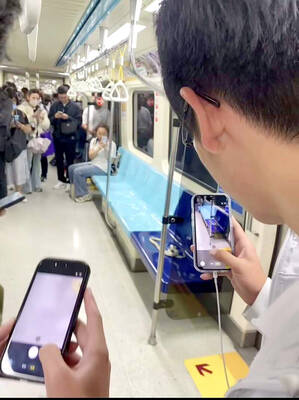
A white king snake that frightened passengers and caused a stir on a Taipei MRT train on Friday evening has been claimed by its owner, who would be fined, Taipei Rapid Transit Corp (TRTC) said yesterday. A person on Threads posted that he thought he was lucky to find an empty row of seats on Friday after boarding a train on the Bannan (Blue) Line, only to spot a white snake with black stripes after sitting down. Startled, he jumped up, he wrote, describing the encounter as “terrifying.” “Taipei’s rat control plan: Release snakes on the metro,” one person wrote in reply, referring
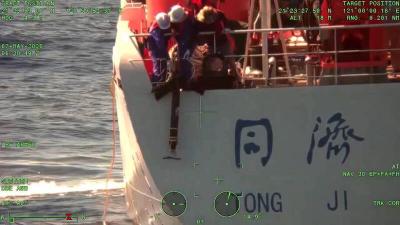
The coast guard today said that it had disrupted "illegal" operations by a Chinese research ship in waters close to the nation and driven it away, part of what Taipei sees a provocative pattern of China's stepped up maritime activities. The coast guard said that it on Thursday last week detected the Chinese ship Tongji (同濟號), which was commissioned only last year, 29 nautical miles (54km) southeast of the southern tip of Taiwan, although just outside restricted waters. The ship was observed lowering ropes into the water, suspected to be the deployment of scientific instruments for "illegal" survey operations, and the coast
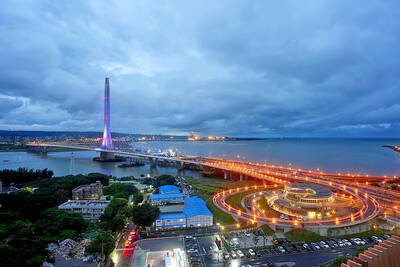
An inauguration ceremony was held yesterday for the Danjiang Bridge, the world’s longest single-mast asymmetric cable-stayed bridge, ahead of its official opening to traffic on Tuesday, marking a major milestone after nearly three decades of planning and construction. At the ceremony in New Taipei City attended by President William Lai (賴清德), Premier Cho Jung-tai (卓榮泰), Minister of Transportation and Communications Chen Shih-kai (陳世凱) and New Taipei City Mayor Hou Yu-ih (侯友宜), the bridge was hailed as both an engineering landmark and a long-awaited regional transport link connecting Tamsui (淡水) and Bali (八里)


 RSS
RSS