


The Ministry of Foreign Affairs (MOFA) yesterday said that cooperation in semiconductor development with Lithuania would continue despite the halting of construction of a joint-production chip factory in Vilnius.
The ministry in a statement confirmed that Teltonika, a technology group in Lithuania, has suspended construction of an industrial park in Vilnius containing 10 planned investment projects, including one between Taiwan and the Baltic state.
The stoppage is due to a shortage of electricity and an unresolved dispute over the conversion of land into industrial use.
Photo: Lu Yi-hsuan, Taipei Times
Arvydas Paukstys, Teltonika’s main shareholder, in a post on social media site LinkedIn said that because of the halt in the construction of the industrial park, the contract for purchasing semiconductor design services from Taiwan would have to be terminated.
In January last year, the government-sponsored Industrial Technology Research Institute (ITRI) signed an agreement with Teltonika for the semiconductor project in the industrial park to build chip production capacity in the European nation. The agreement was valued at 14 million euros (US$14.76 million).
The ministry said that despite the hiccup, the semiconductor partnership between Taiwan and Lithuania would continue.
ITRI was not immediately available for comment
Paukstys said the 10 factories’ investments in the 55-hectare Teltonika High-Tech Hill Park would be stopped.
The construction of the industrial park had been previously scheduled to be completed by 2028.
The Lithuanian news agency ELTA cited Paukstys as saying that a new chip industry would not be set up in the country due to the termination of the contract with Taiwan.
The Lithuanian investor in his LinkedIn post wrote that the investment would have created 6,000 new jobs earning an average salary of 10,000 euros a month, and added several billions of euros to Lithuania’s GDP.
He said Teltonika had faced difficulties in securing 63 megawatts of electricity, delaying the construction of a planned power distribution center.
Paukstys said that while the Lithuanian Ministry of Energy promised him there would be electricity supply for the park, when he approached LITGRID, an operator of electricity transmission networks, about providing electricity, the company said that due to ongoing projects, it did not have the capacity to participate.
Paukstys said that Teltonika leased state land to build four chip factories and a design center in the high-tech park as part of an agreement signed with the Lithunian Ministry of Economy and Innovation two years ago, but so far the land has not yet been converted for industrial use.
Paukstys said that under the agreement his group must implement the projects within five years, but the conversion of the land to industrial use has already taken the group two years, and the group would probably need another year to secure approval from Vilnius City Municipality for land use changes.
“We cannot even start designing the buildings, because neither the height nor the technical conditions of the construction are clear,” he said, adding that the delay would mean the company would be unable to complete the construction of the factories by 2027, and the Lithuanian Ministry of Economy and Innovation has declined to extend the contract.
Lithuanian National Radio and Television cited Paukstys as saying the Lithuanian government has blocked 3.5 billion euros in investment.

Actor Darren Wang (王大陸) was sentenced to six months in prison, commutable to a fine, by the New Taipei District Court today for contravening the Personal Data Protection Act (個人資料保護法) in a case linked to an alleged draft-dodging scheme. Wang allegedly paid NT$3.6 million (US$114,380) to an illegal group to help him evade mandatory military service through falsified medical documents, prosecutors said. He transferred the funds to Chen Chih-ming (陳志明), the alleged mastermind of a draft-evasion ring, although he lost contact with him as he was already in detention on fraud charges, they said. Chen is accused of helping a

SECURITY: Starlink owner Elon Musk has taken pro-Beijing positions, and allowing pro-China companies to control Taiwan’s critical infrastructure is risky, a legislator said Starlink was reluctant to offer services in Taiwan because of the nation’s extremely high penetration rates in 4G and 5G services, the Ministry of Digital Affairs said yesterday. The ministry made the comments at a meeting of the legislature’s Transportation Committee, which reviewed amendments to Article 36 of the Telecommunications Management Act (電信管理法). Article 36 bans foreigners from holding more than 49 percent of shares in public telecommunications networks, while shares foreigners directly and indirectly hold are also capped at 60 percent of the total, unless specified otherwise by law. The amendments, sponsored by Chinese Nationalist Party (KMT) Legislator Ko
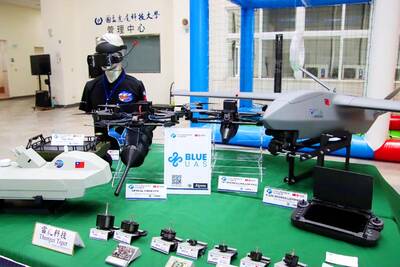
NON-RED SUPPLY: Boosting the nation’s drone industry is becoming increasingly urgent as China’s UAV dominance could become an issue in a crisis, an analyst said Taiwan’s drone exports to Europe grew 41.7-fold from 2024 to last year, with demand from Ukraine’s fight against Russian aggression the most likely driver of growth, a study showed. The Institute for Democracy, Society and Emerging Technology (DSET) in a statement on Wednesday said it found that many of Taiwan’s uncrewed aerial vehicle (UAV) sales were from Poland and the Czech Republic. These countries likely transferred the drones to Ukraine to aid it in its fight against the Russian invasion that started in 2022, it said. Despite the gains, Taiwan is not the dominant drone exporter to these markets, ranking second and fourth
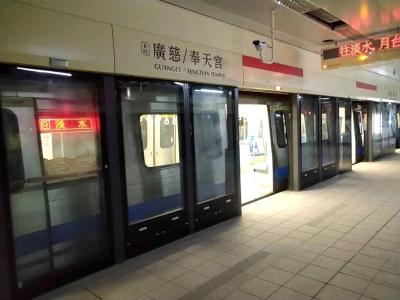
The eastern extension of the Taipei MRT Red Line could begin operations as early as late June, the Taipei Department of Rapid Transit Systems said yesterday. Taipei Rapid Transit Corp said it is considering offering one month of free rides on the new section to mark its opening. Construction progress on the 1.4km extension, which is to run from the current terminal Xiangshan Station to a new eastern terminal, Guangci/Fengtian Temple Station, was 90.6 percent complete by the end of last month, the department said in a report to the Taipei City Council's Transportation Committee. While construction began in October 2016 with an


 RSS
RSS