


The Control Yuan censured the National Police Agency yesterday for its officers’ excessive use of force during an incident in May last year involving a man who attacked police while rampaging through a convenience store in Taoyuan.
The police officers not only violated safety protocols during the arrest and put themselves in danger, but also acted disproportionately by striking the man with a baton after he had already been subdued, the government watchdog said in a statement.
The police agency should improve its training and review the procurement of security equipment on a regular basis, it said.

Photo copied by CNA
A 28-year-old amateur bodybuilder, surnamed Chu (朱), entered a 7-Eleven store shirtless on May 20 last year and allegedly showed erratic behavior, talking to himself and knocking over products, prompting the store’s clerk to call the police.
When police arrived at the store and asked Chu to leave, he got enraged and hit officers in the face as they tried to disable him with pepper spray, the Taoyuan Police Department’s Jhongli Precinct said.
Videos of the incident were widely shared on social media, particularly a clip in which Chu, while fighting off the two officers, squats, flexes his muscles and roars, leading local media to dub him the “Taiwanese Hulk.”
However, more controversial was a second clip taken after he had been subdued.
The video footage showed Chu sitting on the steps outside the store and being struck by an officer 12 times with a baton as he curled up on the ground and cried repeatedly that the officer was hurting him.
As the video spread on social media, the Jhongli Precinct said that after Chu was subdued, he continued to verbally “provoke” the responding officers by threatening to kill them.
However, the precinct also said that one of the officers, surnamed Wang (王), appeared to have lost control and used excessive force, resulting in administrative demerits.
Although Chu and the police officers initially sued each other for injury, the two parties reached a settlement and withdrew their complaints in August last year.
The officers should have maintained a safe distance from Chu upon noticing his unstable mental condition, rather than “grabbing Chu’s wrist to take him outside the store for clarification on the incident,” the Control Yuan said.
Additionally, the watchdog pointed out that police training should focus on effective communication rather than resorting to force.
It also urged the agency to review its equipment, as officers were not equipped with projectile stun guns due to a shortage, although its training materials indicated that they are the most effective tools for police enforcement in similar situations.

The Centers for Disease Control (CDC) yesterday reported the first case of a new COVID-19 subvariant — BA.3.2 — in a 10-year-old Singaporean girl who had a fever upon arrival in Taiwan and tested positive for the disease. The girl left Taiwan on March 20 and the case did not have a direct impact on the local community, it said. The WHO added the BA.3.2 strain to its list of Variants Under Monitoring in December last year, but this was the first imported case of the COVID-19 variant in Taiwan, CDC Deputy Director-General Lin Ming-cheng (林明誠) said. The girl arrived in Taiwan on

South Korea is planning to revise its controversial electronic arrival card, a step Taiwanese officials said prompted them to hold off on planned retaliatory measures, a South Korean media report said yesterday. A Yonhap News Agency report said that the South Korean Ministry of Foreign Affairs is planning to remove the “previous departure place” and “next destination” fields from its e-arrival card system. The plan, reached after interagency consultations, is under review and aims to simplify entry procedures and align the electronic form with the paper version, a South Korean ministry official said. The fields — which appeared only on the electronic form

The Ministry of Foreign Affairs (MOFA) is suspending retaliation measures against South Korea that were set to take effect tomorrow, after Seoul said it is updating its e-arrival system, MOFA said today. The measures were to be a new round of retaliation after Taiwan on March 1 changed South Korea's designation on government-issued alien resident certificates held by South Korean nationals to "South Korea” from the "Republic of Korea," the country’s official name. The move came after months of protests to Seoul over its listing of Taiwan as "China (Taiwan)" in dropdown menus on its new online immigration entry system. MOFA last week
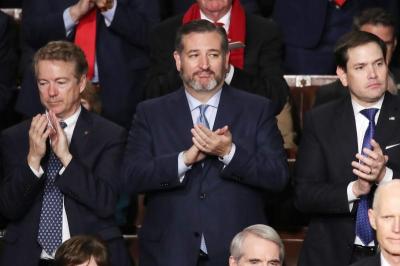
A bipartisan group of US senators has introduced a bill to enhance cooperation with Taiwan on drone development and to reduce reliance on supply chains linked to China. The proposed Blue Skies for Taiwan Act of 2026 was introduced by Republican US senators Ted Cruz and John Curtis, and Democratic US senators Jeff Merkley and Andy Kim. The legislation seeks to ease constraints on Taiwan-US cooperation in uncrewed aerial systems (UAS), including dependence on China-sourced components, limited access to capital and regulatory barriers under US export controls, a news release issued by Cruz on Wednesday said. The bill would establish a "Blue UAS


 RSS
RSS