


Taiwan, a major economy the size of Poland but absent from global organizations, is making a longshot push to join the IMF, the 190-country organization that offers members emergency loans and other financial assistance.
“Taiwan’s membership at the IMF would help boost financial resilience,” the Taipei Economic and Cultural Representative Office in Washington said during this week’s IMF and World Bank annual meetings. The office serves as Taiwan’s de facto embassy in the US.
The push is part of a wider effort to boost Taiwan’s global status. Taiwan is also seeking to participate in the WHO’s annual World Health Assembly and join Interpol. The US and its allies are Taiwan’s supporters.
Photo: REUTERS
However, China, which has threatened to annex it by force, has blocked such efforts and insists it represent Taiwan in international forums. The nation is designated as “Taiwan Province of China” in IMF literature.
In 2020, then-US president Donald Trump signed legislation making it US policy to advocate for Taiwan’s membership or observer status in international organizations such as the IMF.
The US Department of State said the world “stands to benefit from Taiwan’s expertise and resources to address some of today’s most difficult global challenges.” It said it would continue to support Taiwan’s membership in international organizations where statehood is not required and encourage Taiwan’s meaningful participation in groups where its membership is not possible.
The IMF had no comment on Taiwan’s efforts to gain membership. The US has the biggest say within the group, but China is also influential, having more voting power than any other country except for the US and Japan.
Li Bo (李波), who had worked as vice governor of the People’s Bank of China, now serves as the IMF’s deputy managing director.
The idea of Taiwan joining the IMF is to protect the democratically ruled island from a financial assault by China.
While Washington is worried over a military conflict in the Taiwan Strait, analysts and observers have raised concerns that Beijing could wage an economic and cyber war to force a surrender from Taiwan.
In a report this month, the research group Taiwan Academy of Banking and Finance warned that China could try to destabilize the Taiwanese currency by placing big bets against Taiwan’s stock market and manipulating foreign exchange markets. Joining the IMF would give Taiwan access to a rainy-day fund it could use to defend itself.
The US House of Representatives has approved a bill that would direct the US to advocate for Taiwan’s IMF membership. The legislation reflects growing concern from Republicans and Democrats alike over Beijing’s rising threats to Taiwan, which is critical to the global supply of computer chips.
US Representative Patrick McHenry, a North Carolina Republican and chairman of the House Financial Services Committee, argued in January that the US needed to look beyond Beijing’s military threats and help Taiwan defend itself financially.
“As one of the world’s most advanced and innovative economies, Taiwan should be included under the fund’s activities,” McHenry said.
Taiwan does not have a seat at the UN. However, Representative Young Kim, a Republican from California, has noted that Kosovo in southeastern Europe is an IMF member even though it is not recognized by the UN.

FUKUOKA SITUATION: Japanese media reported that the pathogen is expected to be identified by the summer, while the CDC downplayed the idea that it was hMPV A “mysterious cold-like illness” reported in Japan’s Fukuoka Prefecture does not seem to be a new disease, but Japanese authorities have been asked about the situation, the Centers for Disease Control (CDC) said yesterday. The Fukuoka Prefectural Medical Association on Wednesday told a news conference that a “mystery cold” that has become a hot topic on social media is “highly likely to be caused by some kind of viral infection,” Japan’s KBC News reported. “Many people are experiencing symptoms starting with a sore throat, followed by a runny nose, phlegm and a severe cough,” KBC News reported, citing association officials. Health authorities are

Nvidia Corp CEO Jensen Huang (黃仁勳) arrived in Taiwan yesterday ahead of upcoming AI and technology events, saying he plans to meet with clients and Taiwan Semiconductor Manufacturing Co Chairman C.C. Wei (魏哲家) during his visit. After landing at Taipei Songshan Airport, Huang posed for photos with fans and handed out Yakult drinks to reporters and supporters waiting at the scene, saying he has “a lot to do” during the trip. Asked about reports that Nvidia’s planned headquarters site in Taipei’s Beitou Shilin Technology Park could break ground on May 27, Huang said that if the company holds an event, he would

The Ministry of Finance this afternoon announced the winning numbers for the March-April uniform invoice lottery. The winning number for the NT$10 million (US$318,060) special prize is 19531471, and the winning number for the NT$2 million grand prize is 85941329. Three numbers were drawn for the NT$200,000 first prize: 07225810, 20231230 and 83518781. Those with receipts matching the last seven digits of any of the first-prize numbers will win the NT$40,000 second prize, while those matching the last six digits will win the NT$10,000 third prize. Those whose receipts match the last five digits of the first-prize numbers can claim the NT$4,000 fourth prize,
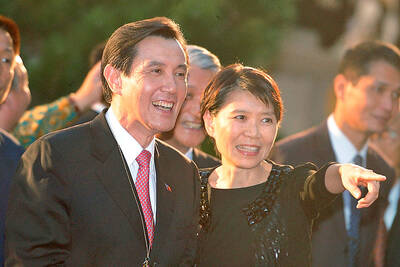
Former president Ma Ying-jeou (馬英九) yesterday expressed “shock and regret” over a statement issued by his wife without his consent, and rejected her assertion that his eldest sister, Ma Yi-nan (馬以南), would manage his medical care or act as his spokesperson amid an ongoing embezzlement probe into his foundation. Ma Ying-jeou in a statement said he was shocked by a statement by his wife, Chou Mei-ching (周美青), regarding his affairs. Ma Yi-nan “must not” be in charge of his healthcare and other personal affairs, nor can she be allowed to represent the Ma family, the former president said. He said he was also


 RSS
RSS