


The planned sports ministry would introduce a program to produce elite athletes, broaden sports education and address issues stemming from Taiwan’s declining birthrate, Deputy Minister of Education Chang Liao Wan-chien (張廖萬堅) said yesterday.
The new ministry — which is to be established next year — would be an entirely new agency, not merely an administrative upgrade of the Sports Administration, Chang Liao told the Liberty Times (sister paper of the Taipei Times).
Efforts to reform sports in Taiwan over the past few years have focused on benefits for athletes and their welfare, as well as boosting funding, but the ministry would also focus on increasing affinity for sports among the public in line with President William Lai’s (賴清德) comments on the issue, Chang Liao said.

Photo: Huang Yun-hsuan, Taipei Times
Chang Liao, who is 59, said that he has seen a drop in school participation in baseball.
An illustration of the trend was that when he was a child, 15 out of 30 elementary schools in the city had baseball teams.
However, by the time the 2000s, there were only four out of 60, he said, citing a survey conducted by his office.
The decline in the number of teams was the result of sports training programs that became increasingly elitist and focused on performance above all else, Chang Liao said.
With birthrates declining, sports education and training policies must change, and more effort needs to be made to encourage the public to take up sports, he said, adding that the program to be implemented by the planned ministry would focus on that.
There must be ways to allow students who excel in their studies to also excel in sports, which would help with people’s well-being as more people get more exercise, Chang Liao said.
Students would not need to feel that they had to be good enough to play professionally when they graduate, but rather the exposure would cultivate an interest in sports and exercise, he said.
Children should be given the chance to play sports, derive the benefits from doing so and keep the memories of their exploits on the field or court, he said, adding that the program would seek to enable that.
The program would expose more people to sports that were previously exclusive to top athletes, he said.
It would broaden the pool of players Taiwan could draw from when looking for athletes to represent the country, he added.

Left-Handed Girl (左撇子女孩), a film by Taiwanese director Tsou Shih-ching (鄒時擎) and cowritten by Oscar-winning director Sean Baker, won the Gan Foundation Award for Distribution at the Cannes Critics’ Week on Wednesday. The award, which includes a 20,000 euro (US$22,656) prize, is intended to support the French release of a first or second feature film by a new director. According to Critics’ Week, the prize would go to the film’s French distributor, Le Pacte. "A melodrama full of twists and turns, Left-Handed Girl retraces the daily life of a single mother and her two daughters in Taipei, combining the irresistible charm of
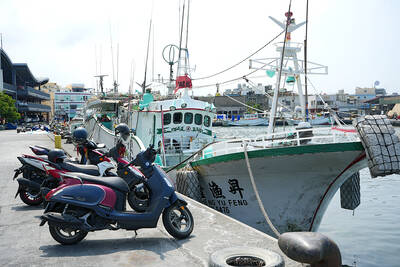
A Philippine official has denied allegations of mistreatment of crew members during Philippine authorities’ boarding of a Taiwanese fishing vessel on Monday. Philippine Bureau of Fisheries and Aquatic Resources (BFAR) spokesman Nazario Briguera on Friday said that BFAR law enforcement officers “observed the proper boarding protocols” when they boarded the Taiwanese vessel Sheng Yu Feng (昇漁豐號) and towed it to Basco Port in the Philippines. Briguera’s comments came a day after the Taiwanese captain of the Sheng Yu Feng, Chen Tsung-tun (陳宗頓), held a news conference in Pingtung County and accused the Philippine authorities of mistreatment during the boarding of

88.2 PERCENT INCREASE: The variants driving the current outbreak are not causing more severe symptoms, but are ‘more contagious’ than previous variants, an expert said Number of COVID-19 cases in the nation is surging, with the Centers for Disease Control (CDC) describing the ongoing wave of infections as “rapid and intense,” and projecting that the outbreak would continue through the end of July. A total of 19,097 outpatient and emergency visits related to COVID-19 were reported from May 11 to Saturday last week, an 88.2 percent increase from the previous week’s 10,149 visits, CDC data showed. The nearly 90 percent surge in case numbers also marks the sixth consecutive weekly increase, although the total remains below the 23,778 recorded during the same period last year,
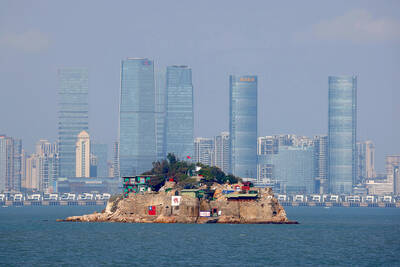
The Chinese Communist Party (CCP) is pushing for residents of Kinmen and Lienchiang counties to acquire Chinese ID cards in a bid to “blur national identities,” a source said. The efforts are part of China’s promotion of a “Kinmen-Xiamen twin-city living sphere, including a cross-strait integration pilot zone in China’s Fujian Province,” the source said. “The CCP is already treating residents of these outlying islands as Chinese citizens. It has also intensified its ‘united front’ efforts and infiltration of those islands,” the source said. “There is increasing evidence of espionage in Kinmen, particularly of Taiwanese military personnel being recruited by the


 RSS
RSS