


The Mainland Affairs Council yesterday rejected an application for a concert in Taiwan by Chinese hip-hop musician Wang Yitai (王以太) after finding that the event organizer had sold tickets without permission and that the artist’s promotional content read: “Next stop: Taipei, China,” an official familiar with the matter said.
What would have been Wang’s first concert in Taiwan, titled “Love Me Later,” was scheduled for Sept. 14 at Legacy Max in Taipei’s Xinyi District (信義), organizer Mercury Entertainment said.
Mercury Entertainment said it began selling tickets online on July 1 for NT$2,900 each, as well as merchandise, and that the tickets were already sold out.

Photo: Screen grab from Xiaohongshu
Promotional content on the online ticketing site said that Wang was a member of rap collective CDC and one of the top six finalists in the 2018 The Rap of China competition.
He later participated in music programs such as I Am a Singer-Songwriter and Our Band. In 2022, Wang and his team, performing under the name “One Seat,” won the championship in the “China Rap Summit Showdown,” the ticketing site said.
“In 2024, Wang Yitai will embark on a tour with his third new solo album, Love Me Later, and will hold his first solo concert in Taipei on Sept. 14, promising to create the most explosive hip-hop stage with his fans,” it said.
In rejecting the application, the council found that in Wang’s promotional content for his album he had used the wording “Next stop: Taipei, China,” belittling Taiwan’s status. He also shot a series of promotional photos, including one that features a station sign that reads: “Beijing South Station,” and indicates a route between Beijing and “Taipei, China.”
The council also cited Mercury Entertainment’s failure to apply for approval before selling tickets as part of the reason for the rejection.
The organizer did not submit the required information until July 10, more than a week later than the date they started selling tickets, it said.
The official said that the government does not need to grant approval just because tickets have been sold.
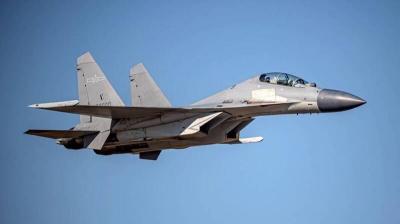
Eight Chinese naval vessels and 24 military aircraft were detected crossing the median line of the Taiwan Strait between 6am yesterday and 6am today, the Ministry of National Defense said this morning. The aircraft entered Taiwan’s northern, central, southwestern and eastern air defense identification zones, the ministry said. The armed forces responded with mission aircraft, naval vessels and shore-based missile systems to closely monitor the situation, it added. Eight naval vessels, one official ship and 36 aircraft sorties were spotted in total, the ministry said.
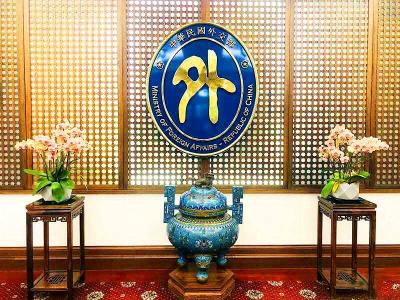
The Ministry of Foreign Affairs (MOFA) today said that if South Korea does not reply appropriately to its request to correct Taiwan’s name on its e-Arrival card system before March 31, it would take corresponding measures to alter how South Korea is labeled on the online Taiwan Arrival Card system. South Korea’s e-Arrival card system lists Taiwan as “China (Taiwan)” in the “point of departure” and “next destination” fields. The ministry said that it changed the nationality for South Koreans on Taiwan’s Alien Resident Certificates from “Korea” to “South Korea” on March 1, in a gesture of goodwill and based on the

Taiwanese officials were shown the first of 66 F-16V fighter jets purchased by Taiwan from the United States, the Ministry of National Defense said yesterday, adding the aircraft has completed an initial flight test and is expected to be delivered later this year. A delegation led by Deputy Minister of National Defense Hsu Szu-chien (徐斯儉) visited Lockheed Martin’s F-16 C/D Block 70 (also known as F-16V) assembly line in South Carolina on March 16 to view the aircraft. The jet will undergo a final acceptance flight in the US before being delivered to Taiwan, the
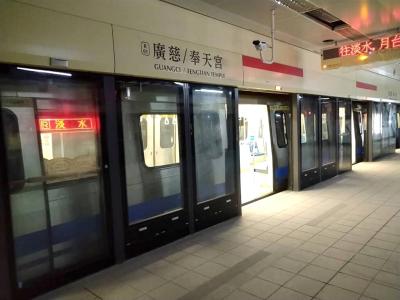
The New Taipei Metro's Sanyin Line and the eastern extension of the Taipei Metro's Tamsui-Xinyi Line (Red Line) are scheduled to begin operations in June, the National Development Council said today. The Red Line, which terminates at Xiangshan Station, would be connected by the 1.4km extension to a new eastern terminal, Guangci/Fengtian Temple Station, while the Sanyin Line would link New Taipei City's Tucheng and Yingge stations via Sanxia District (三峽). The council gave the updates at a council meeting reviewing progress on public construction projects for this year. Taiwan's annual public infrastructure budget would remain at NT$800 billion (US$25.08 billion), with NT$97.3


 RSS
RSS