

A Changhua City barista has found commercial success by turning used coffee grounds into recycled products.
Aside from brewing coffee with the beans grown by his parents atop the city’s Baguashan (八卦山), barista Chang Chih-min (張智閔) also sells merchandise like mosquito repellent incense, charcoal, soaps and even tea made from the skins of coffee cherries in his cafe.
Chang’s parents began growing coffee more than 10 years ago thanks to a program started by the Changhua City Farmers’ Association to help pineapple, longan berry and lychee farmers switch to new crops.
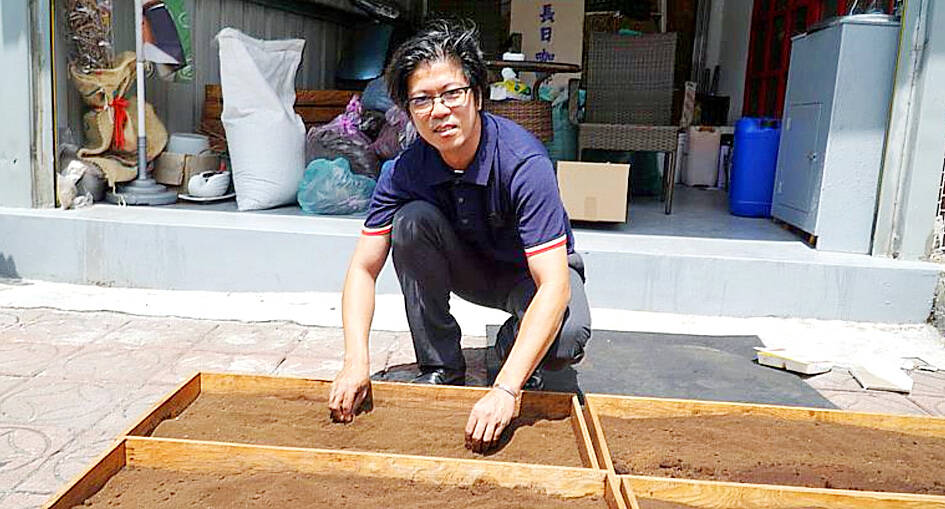
Photo courtesy of Chang Chih-min
After opening Chang Coffee to help his parents sell their new crop, he said he soon found that the coffee industry was wasteful in how it used resources.
He said he started looking into sustainable recycling practices after seeing the massive amounts of coffee grounds that were the byproducts of his business.
As coffee beans are often the only commodity farmers need to harvest, the rest of the fruit is usually thrown away, Chang said.
The coffee business is also energy intensive he said, adding that coffee beans require a lot water to be cleaned before use, and brewing consumes a lot of electricity and heat.
Chang started looking into the possibility of using all that the coffee fruit has to offer, with the aim of making his business greener and more sustainable.
Traditionally in Taiwan, coffee grounds are sometimes reused as fertilizer or deodorizer Chang said.
However, studies from other countries show that that coffee grounds have insect-repelling qualities that have yet to be commercially explored, he added.
The study prompted Chang to explore business opportunities in reusing ground coffee. He eventually teamed up a former classmate who helped him design mosquito-repellent incense made from used coffee grounds.
After much trial and error, they tweaked their recipe and launched their mosquito-repelling incense, which is now sold as incense coils.
Chang said the popularity and commercial success of the repellent encouraged him to dive further into sustainable recycling and create other merchandise made from coffee byproducts such as soaps and charcoal.
“Converting coffee grounds into charcoal, through pyrolysis takes just a day, while traditional wood would require a month or so,” he said. “Drastically reducing the time for pyrolysis means a reduction in energy consumption. In addition, using coffee soaps could cut handwashing time by one-third, which also means a one-third reduction in water consumption.”
With the success of his incense, Chang said local supermarket and convenience store chains had shown interest in carrying his products.
In the spirit of his sustainable lifestyle, he said he is trying to develop solid fuel sticks made from used coffee grounds.
Once he creates the product, he said coffee ground processing plants would be able to recycle it to power their operations, thus achieving self-sustainability, which Chang called the ultimate goal of sustainable recycling.
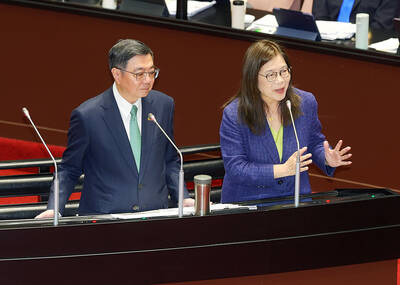
The donation of offshore patrol vessel Kinmen to the Philippines includes provisions that protect Taiwanese fishers and facilitate security cooperation across the First Island Chain, officials said yesterday. The comment was made during the Cabinet’s comprehensive administrative report at the legislature after Chinese Nationalist Party (KMT) Legislator Hsu Yu-chen (許宇甄) expressed concerns about the decision to give a ship to a country whose coast guard had in 2013 fired on a Taiwanese trawler and killed its captain without provocation. The Cabinet should lay out the safeguards that have been established to prevent the Philippine government from using the Kinmen to harass, expel
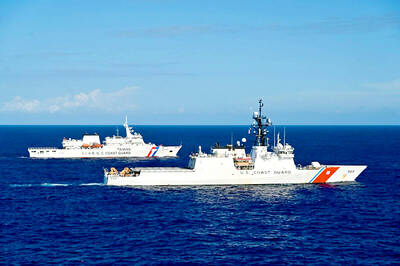
GROWING TIES: The CGA is planning a goodwill mission to the Philippines, in what would be the first time since 1975 a Taiwanese paramilitary vessel has visited the country The Coast Guard Administration (CGA) plans to significantly expand its participation in international security cooperative frameworks and its operational capabilities, a budget proposal for next year showed. The budget indicates a transformation of the CGA from a maritime law enforcement arm into a national defense and intelligence gathering entity capable of tackling larger regional security matters. The proposal showed that personnel from the coast guard’s Intelligence Division and Special Action Support Center are to participate in high-level national security talks with the US. As the CGA has dealt with China’s rising “gray zone” threats around Taiwan, it has become a valuable asset to
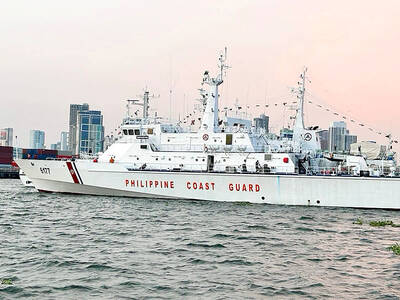
A patrol vessel donated by the Coast Guard Administration (CGA) to the Philippines was commissioned into the Philippine Coast Guard (PCG) on Friday, a Philippine non-governmental organization said. The CGA on Sept. 16 confirmed media reports that Taiwan had donated a retired 500-tonne patrol vessel to the Philippines. The Manila-based We Protect Our Seas (WPS) foundation, which served as an intermediary in the transfer, said that the vessel was formerly the CGA’s 500-tonne petrol vessel Kinmen (CG123). The WPS, in a statement issued on Friday, said the vessel, renamed as the BRP Sarangani, had been commissioned into the PCG the
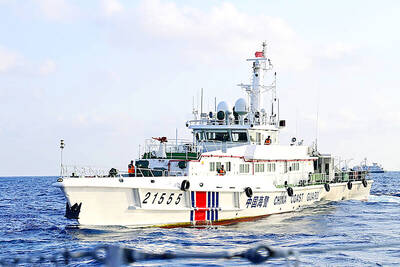
‘GRAY ZONE’ TACTICS: Beijing sent two China Coast Guard vessels to escort a ‘supposedly private research ship,’ a Philippine Coast Guard spokesman said The Coast Guard Administration (CGA) yesterday confirmed that it had recently deployed three patrol vessels to waters in Taiwan’s overlapping exclusive economic zone with the Philippines to monitor three Chinese vessels. CGA Deputy Director-General Hsieh Ching-chin (謝慶欽) said the agency regularly monitors Chinese vessels around Taiwan, and that the deployment south of Oluanpi (鵝鑾鼻), Taiwan proper’s southernmost point, was carried out in accordance with standard procedures. He added that the waters fall within the overlapping exclusive economic zones of Taiwan and the Philippines, which extend 200 nautical miles (370km) from their coastlines. Hsieh made the comments when asked about a


 RSS
RSS