


Taiwanese parents believe that many topics relating to sexual education should start later than the UN recommendation, civil groups said yesterday.
Most parents in Taiwan believe that contraception and other topics related to sexual health should be taught in junior-high school, later than the time suggested by the UN Educational, Scientific and Cultural Organization (UNESCO) in its 2018 International Technical Guidance on Sexuality Education, a survey conducted by the Taiwan Association for Sexuality Education (TASE) and the Action Alliance on Basic Education (AABE) showed.
The groups sent an online questionnaire to parents of elementary and junior-high students inquiring about the appropriate age to teach a variety of topics on sex education. They received 1,203 valid responses between April 10 and May 12.
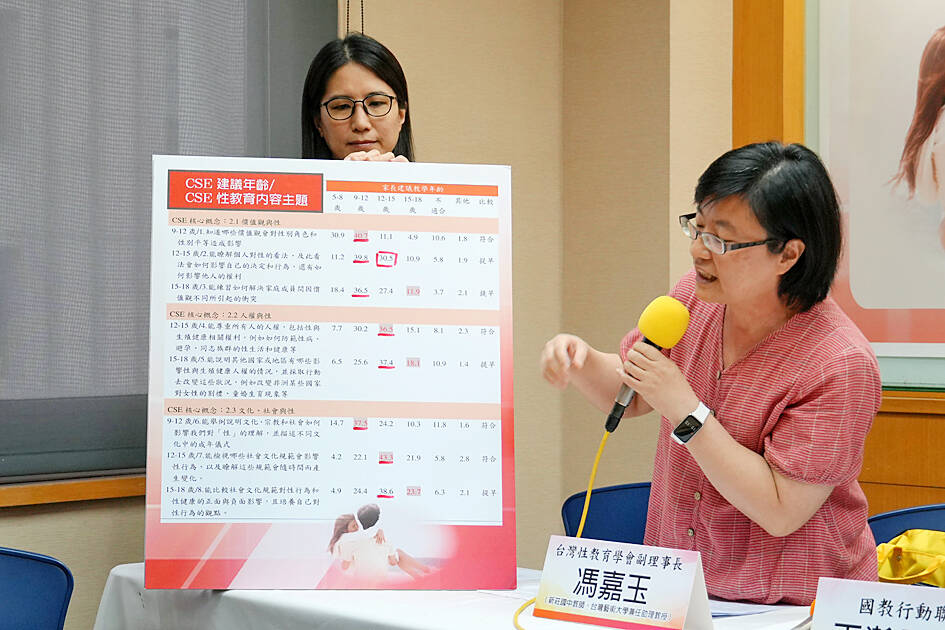
Photo: CNA
Of the 49 questions, most parents believed 13 of the topics should be taught in elementary schools, 32 in junior-high schools and four in senior-high schools, TASE vice chairman Feng Chia-yu (馮嘉玉) said.
While UNESCO advises teaching pregnancy and fertility-related topics at ages five to eight, and precautions such as condom use at ages nine to 12, 42 percent of Taiwanese parents surveyed said the proper age for both should be between 12 and 15.
Most of the parents said that teaching intimacy as a normal part of emotional expression and about how people experience pleasure through physical contact should be taught between ages 12 and 15, later than the UNESCO-recommended five-to-eight and nine-to-12 respectively.
However, the parents also believed that values, rights and cultural issues related to sexuality should be taught in elementary schools, earlier than the recommendation.
UNESCO in the guidelines says “it recognizes the diversity of different national contexts in which sexuality education is taking place, and the authority of governments to determine the content of educational curricula in their country,” said Yan Han-wen (晏涵文), TASE honorary chairman and a professor in National Taiwan Normal University’s Department of Health Promotion and Health Education.
A good understanding of local needs is the key to effective sex education, Yan said.
The lack of professional sexuality educators in junior-high schools is of concern, as parents in Taiwan expect most sex education content to be taught then, AABE chairman Wang Han-yang (王瀚陽) said.
The local needs for sexuality education of parents, teachers and students should continue to be studied for educators’ reference, Wang said.
The planning of sexuality-related curricula should allow participation by parent groups that understand education affairs and care about sex education, Wang added.
Additional reporting by Kayleigh Madjar and CNA
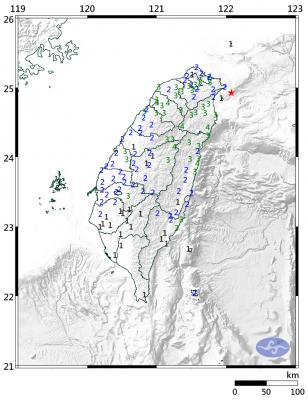
A magnitude 6.1 earthquake struck off the coast of Yilan County at 8:39pm tonight, the Central Weather Administration (CWA) said, with no immediate reports of damage or injuries. The epicenter was 38.7km east-northeast of Yilan County Hall at a focal depth of 98.3km, the CWA’s Seismological Center said. The quake’s maximum intensity, which gauges the actual physical effect of a seismic event, was a level 4 on Taiwan’s 7-tier intensity scale, the center said. That intensity level was recorded in Yilan County’s Nanao Township (南澳), Hsinchu County’s Guansi Township (關西), Nantou County’s Hehuanshan (合歡山) and Hualien County’s Yanliao (鹽寮). An intensity of 3 was
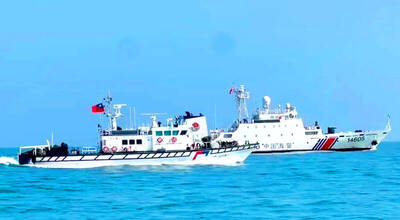
Instead of focusing solely on the threat of a full-scale military invasion, the US and its allies must prepare for a potential Chinese “quarantine” of Taiwan enforced through customs inspections, Stanford University Hoover fellow Eyck Freymann said in a Foreign Affairs article published on Wednesday. China could use various “gray zone” tactics in “reconfiguring the regional and ultimately the global economic order without a war,” said Freymann, who is also a nonresident research fellow at the US Naval War College. China might seize control of Taiwan’s links to the outside world by requiring all flights and ships entering or leaving Taiwan
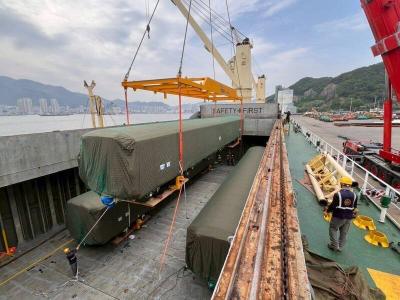
The first of 10 new high-capacity trains purchased from South Korea’s Hyundai Rotem arrived at the Port of Taipei yesterday to meet the demands of an expanding metro network, Taipei Rapid Transit Corp (TRTC) said yesterday. The train completed a three-day, 1,200km voyage from the Port of Masan in South Korea, the company said. Costing NT$590 million (US$18.79 million) each, the new six-carriage trains feature a redesigned interior based on "human-centric" transportation concepts, TRTC said. The design utilizes continuous longitudinal seating to widen the aisles and optimize passenger flow, while also upgrading passenger information displays and driving control systems for a more comfortable
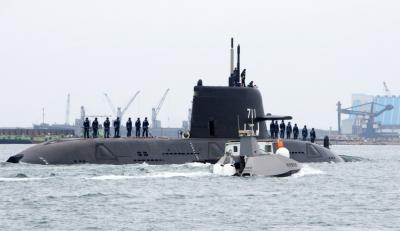
Taiwan's first indigenous defense submarine, the SS-711 Hai Kun (海鯤, or Narwhal), departed for its 13th sea trial at 7am today, marking its seventh submerged test, with delivery to the navy scheduled for July. The outing also marked its first sea deployment since President William Lai (賴清德) boarded the submarine for an inspection on March 19, drawing a crowd of military enthusiasts who gathered to show support. The submarine this morning departed port accompanied by CSBC Corp’s Endeavor Manta (奮進魔鬼魚號) uncrewed surface vessel and a navy M109 assault boat. Amid public interest in key milestones such as torpedo-launching operations and overnight submerged trials,


 RSS
RSS