


Taiwan is likely to eliminate hepatitis C by next year, renowned hepatologist Yu Ming-lung (余明隆) said.
Yu, who is vice president of National Sun Yat-sen University, made the remarks in a recent interview with the Chinese-language Liberty Times (the sister paper of the Taipei Times).
The WHO’s global hepatitis elimination goal is to by 2030 diagnose 90 percent of people with active hepatitis C infections and treat at least 80 percent of them with the aim of curing them.
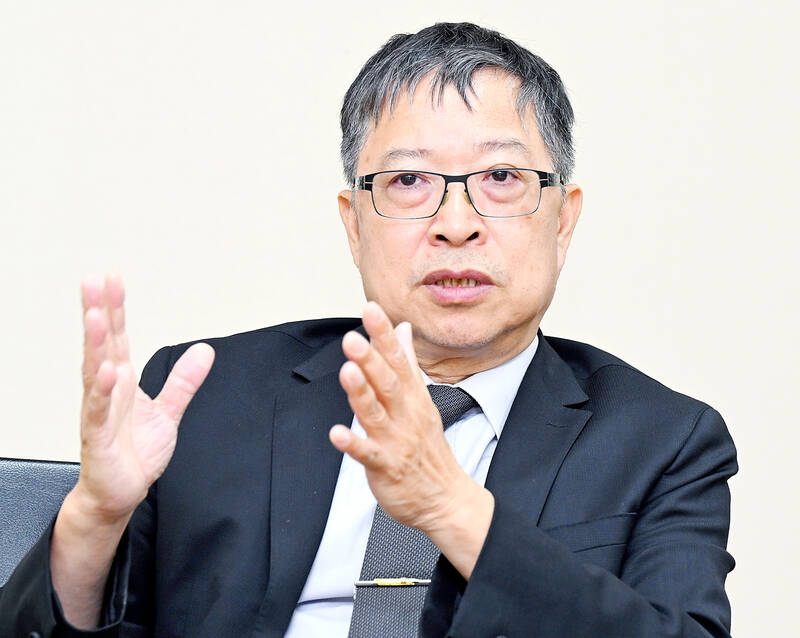
Photo: Liao Chen-huei, Taipei Times
Taiwan has been accelerating its efforts to eliminate hepatitis C and is on track to reach the WHO’s goal by next year.
Last year, the WHO updated its hepatitis C elimination target, using the 2015 level as a basis for comparison, Yu said.
Under the new target formula, it would only consider those taking direct-acting antivirals as undergoing treatment and would no longer include those taking interferons.
As a result the Health Promotion Administration (HPA) has to recalculate and revise its data, but a preliminary calculation shows that Taiwan is “very likely” to achieve the goal by next year, although some details need to be addressed, Yu said.
The HPA would invite WHO official and experts on hepatitis C to Taiwan toward the end of the year for discussions on changes in the prevalence rate of the virus and the agency’s data processing method, he said.
If the discussions confirm that the government’s direction is correct, it would stay the course, run a statistical analysis in 2026 and officially announce that it had reached its goal, he said.
In the next year and a half, Taiwan needs to achieve two goals, Yu said.
First, it must accelerate screenings of prisoners, with at least 90 percent of inmates receiving a hepatitis C test, he said.
Second, it must increase screenings of people born before 1980, who are eligible for government-funded free health examinations, he said.
Taiwan has about 45,000 to 50,000 prisoners, 30,000 to 40,000 of whom are long-term prisoners, while more than half of all inmates have at one time been a drug addict, which increases their risk of hepatitis C infection, he said.
The most effective method of hepatitis C prevention is to cure those with infections to prevent transmission, so the screening and treatment of prisoners should not be ignored, he said.
If Taiwan can eliminate hepatitis C, the government’s liver disease prevention efforts should then focus on hepatitis B and metabolic dysfunction-associated steatohepatitis (MASH), Yu said.
Regarding hepatitis B, Taiwanese aged 40 and younger were likely vaccinated during infancy and have lower infection risk, so the target group for hepatitis B prevention should be people older than 40, he said.
However, the National Health Insurance-covered drug payment standard for hepatitis B treatment is complicated, making it difficult for patients to access the drug, he said.
The government should simplify the process to prevent people from delaying treatment due to long waits or because they find it too troublesome, he said.
MASH more often occurs in people with obesity, Yu said.
The condition has become one of the main causes of cirrhosis and liver cancer in some European countries and the US, and that as Western diets have become popular, the same situation could be expected to develop in Taiwan in the next 10 years, he said.
Obesity and metabolic syndrome prevention are crucial to avoiding MASH, he said.
If Taiwan can eliminate hepatitis C by next year, it would be the first “non-hepatitis C country” in the world, but it would not be the end of Taiwan’s fight against liver diseases, Yu said.
The challenge of hepatitis B and MASH elimination is also likely to become a decades-long battle, so the HPA’s hepatitis B and hepatitis C prevention office, cross-ministerial collaboration and other government resources would be needed to win that fight, he said.

FUKUOKA SITUATION: Japanese media reported that the pathogen is expected to be identified by the summer, while the CDC downplayed the idea that it was hMPV A “mysterious cold-like illness” reported in Japan’s Fukuoka Prefecture does not seem to be a new disease, but Japanese authorities have been asked about the situation, the Centers for Disease Control (CDC) said yesterday. The Fukuoka Prefectural Medical Association on Wednesday told a news conference that a “mystery cold” that has become a hot topic on social media is “highly likely to be caused by some kind of viral infection,” Japan’s KBC News reported. “Many people are experiencing symptoms starting with a sore throat, followed by a runny nose, phlegm and a severe cough,” KBC News reported, citing association officials. Health authorities are

Nvidia Corp CEO Jensen Huang (黃仁勳) arrived in Taiwan yesterday ahead of upcoming AI and technology events, saying he plans to meet with clients and Taiwan Semiconductor Manufacturing Co Chairman C.C. Wei (魏哲家) during his visit. After landing at Taipei Songshan Airport, Huang posed for photos with fans and handed out Yakult drinks to reporters and supporters waiting at the scene, saying he has “a lot to do” during the trip. Asked about reports that Nvidia’s planned headquarters site in Taipei’s Beitou Shilin Technology Park could break ground on May 27, Huang said that if the company holds an event, he would

The Ministry of Finance this afternoon announced the winning numbers for the March-April uniform invoice lottery. The winning number for the NT$10 million (US$318,060) special prize is 19531471, and the winning number for the NT$2 million grand prize is 85941329. Three numbers were drawn for the NT$200,000 first prize: 07225810, 20231230 and 83518781. Those with receipts matching the last seven digits of any of the first-prize numbers will win the NT$40,000 second prize, while those matching the last six digits will win the NT$10,000 third prize. Those whose receipts match the last five digits of the first-prize numbers can claim the NT$4,000 fourth prize,

SIX SUBSIDIES: The monthly allowance for older farmers is to increase to NT$10,000, and NT$5,000 is to be given to homemakers under the national pension system, Lai said The government is to implement major welfare policies for disadvantaged groups, including raising the monthly allowance for older farmers to NT$10,000 and providing homemakers with NT$5,000 per month, President William Lai (賴清德) said yesterday. Lai made the remarks during a visit to Wangling Temple in Chiayi County, saying that the planned increases were being introduced amid economic growth and an increase in tax revenue. Touting a policy, in which the government plans to provide a monthly allowance of NT$5,000 for every child under the age of 18 in a bid to address Taiwan’s low birthrate, Lai said that if received for the


 RSS
RSS