


Advocacy groups and academics focused on children’s rights at the second public hearing about amending the Assisted Reproduction Act (人工生殖法) on Thursday, amid heated debate over surrogacy, assisted reproductive services and expanding the law to include single women and lesbian couples.
Li Shing (李欣), a Taiwan LGBT Rights Advocacy representative, said many people presume children’s rights conflict with women’s reproductive autonomy.
However, the assessment of children’s rights should not be directly linked to the number of family members, their gender or sexual orientation, Li said, adding that Taiwan’s laws regarding who qualifies as a parent and who could become a parent should adopt a more inclusive definition.
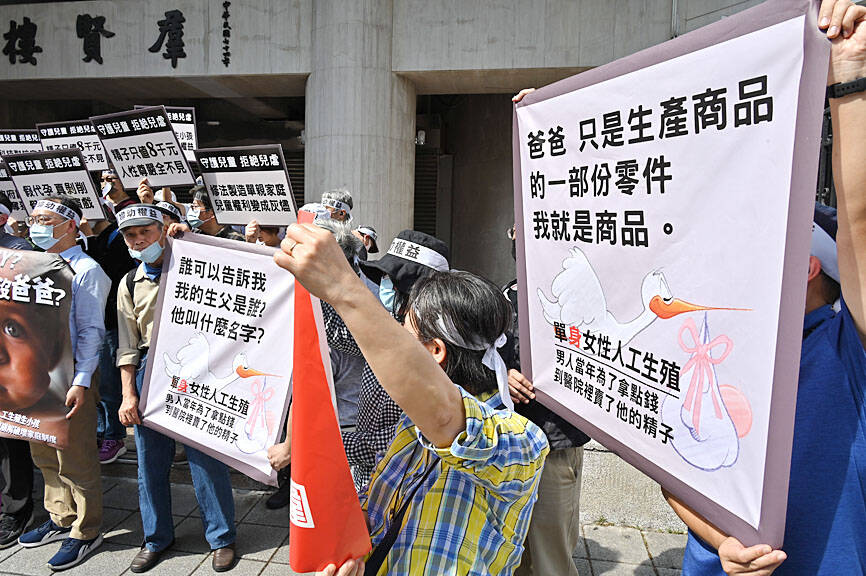
Photo: Tu Chien-jung, Taipei Times
“When people insist on a specific family structure as being best for children, we harm unborn children by fostering a discriminatory society,” she said.
Awakening Foundation director of research and development Chen Cheng-lung (陳政隆) said the law should ensure children in different families receive the best care, instead of limiting the right of people to become parents.
He added that informing children of their background is also crucial, as it helps mitigate potential doubts and harm.
National Yang Ming Chiao Tung University Master of Public Health Program professor Rei Wen-may (雷文玫) said that children born through assisted reproduction should be informed of their genetic lineage to help them understand and assess their health better.
She said the legislative amendment should focus more on the rights of children born through assisted reproduction.
At the hearing, participants also emphasized the importance of addressing the reproductive rights of single women and lesbian couples separately from surrogacy issues, as stated in the first public hearing.
Democratic Progressive Party Legislator Hung Sun-han (洪申翰) said that as society focuses more on women’s reproductive autonomy, it is important to amend laws to allow single women and lesbian couples to access assisted reproductive services.
Hung added that he hopes a special law is drafted to address the issue of surrogacy, which is illegal in Taiwan, as it is a significantly larger and more complex issue than simply expanding the law to include more people.
Also at the hearing, surrogacy issues drew attention and divided opinion.
A Taiwanese woman identified only as Lily said she worked as a surrogate mother in the US last year when she was 30 years old.
Lily said that after having two children with her American husband, she wanted to help others by “lending” her uterus because she experienced no problems during her previous two pregnancies.
“During my time as a surrogate mother, I never felt exploited or objectified,” Lily said. “I am also a mother of two, and I am glad to have the chance to help others fulfill their dream of having a child.”
Chinese Nationalist Party (KMT) Legislator Chen Ching-huei (陳菁徽) said that as a gynecologist, she believes that surrogate mothers should not face the stigma of being considered to have low intelligence and low socioeconomic status, resulting in them being easily deceived, uninformed and exploited.
These women choose to become surrogate mothers out of a motivation to assist others in fulfilling their dreams of parenthood, she added.
However, Taiwan Women’s Link secretary-general Chen Su-fang (陳書芳) said that people should understand that surrogacy could be exploitative against women, and that the health risks do not only come with pregnancy, but also involve more complicated emotional issues.
The public hearing, which was slated to last three hours, ended 15 minutes earlier than scheduled.
Deputy Minister of Health and Welfare Chou Jih-haw (周志浩) said that it is uncertain whether there would be another public hearing on proposed ammendments to the Assisted Reproductive Act, adding that the ministry would strive to draft changes in the first half of this year.
When asked whether it is possible that the government could enact a special law for surrogacy services as proposed by Hung, Chou said the ministry is open to all possibilities, but would leave the decision up to lawmakers.
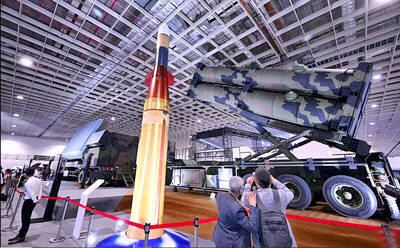
Taiwan is to commence mass production of the Tien Kung (天弓, “Sky Bow”) III, IV and V missiles by the second quarter of this year if the legislature approves the government’s NT$1.25 trillion (US$39.78 billion) special defense budget, an official said yesterday. Commenting on condition of anonymity, a defense official with knowledge of the matter said that the advanced systems are expected to provide crucial capabilities against ballistic and cruise missiles for the proposed “T-Dome,” an advanced, multi-layered air defense network. The Tien Kung III is an air defense missile with a maximum interception altitude of 35km. The Tien Kung IV and V
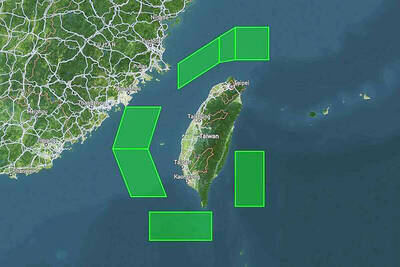
The disruption of 941 flights in and out of Taiwan due to China’s large-scale military exercises was no accident, but rather the result of a “quasi-blockade” used to simulate creating the air and sea routes needed for an amphibious landing, a military expert said. The disruptions occurred on Tuesday and lasted about 10 hours as China conducted live-fire drills in the Taiwan Strait. The Civil Aviation Administration (CAA) said the exercises affected 857 international flights and 84 domestic flights, affecting more than 100,000 travelers. Su Tzu-yun (蘇紫雲), a research fellow at the government-sponsored Institute for National Defense and Security Research, said the air

A strong continental cold air mass is to bring pollutants to Taiwan from tomorrow, the Ministry of Environment said today, as it issued an “orange” air quality alert for most of the country. All of Taiwan except for Hualien and Taitung counties is to be under an “orange” air quality alert tomorrow, indicating air quality that is unhealthy for sensitive groups. In China, areas from Shandong to Shanghai have been enveloped in haze since Saturday, the ministry said in a news release. Yesterday, hourly concentrations of PM2.5 in these areas ranged from 65 to 160 micrograms per cubic meter (mg/m³), and pollutants were
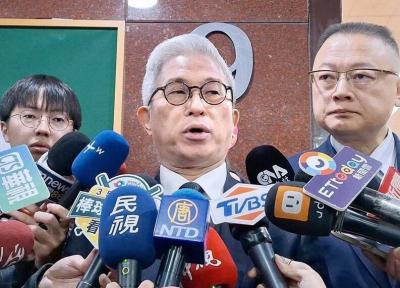
Taiwan’s armed forces have established response protocols for a wide range of sudden contingencies, including the “Wan Chun Plan” to protect the head of state, the Ministry of Defense (MND) said today. After US President Donald Trump on Saturday launched a series of airstrikes in Venezuela and kidnapped Venezuelan President Nicolas Maduro, concerns have been raised as to whether China would launch a similar “decapitation strike” on Taiwan. The armed forces regularly coordinate with relevant agencies and practice drills to ensure preparedness for a wide range of scenarios, Vice Minister of National Defense Hsu Szu-chien (徐斯儉) told reporters before a


 RSS
RSS