


Environmental groups yesterday voiced qualified support for an increase in electricity rates, saying that a price hike could boost the energy efficiency of Taiwanese industries and help them achieve net zero carbon emissions by 2050.
Electricity rates must reflect real energy costs, a coalition of 12 groups — including the Green Citizens’ Action Alliance, Citizens of the Earth, Taiwan, and the Taiwan Climate Action Network — said in a joint statement before the government announced rate hikes later in the day.
Taiwan Power Co (Taipower) earlier that day started the review process for a proposed 15 percent increase in industrial electricity prices and a 10 percent increase in residential electricity prices.
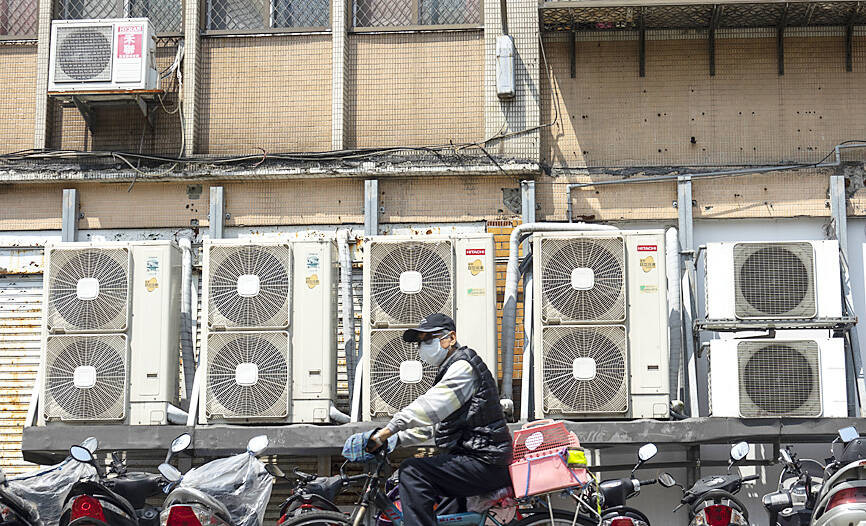
Photo: CNA
Taipower has incurred accumulated losses of NT$380 billion (US$11.89 billion) in the past two years, due largely to soaring gas and oil prices amid Russia’s ongoing invasion of Ukraine, they said.
The International Energy Agency in 2022 reported that the various forms of subsidies Taiwan provided related to fossil energy were worth five times more than the previous year.
A continued failure to adjust electricity prices in these circumstances would negatively affect Taiwan’s push to reach net zero emmissions, its fight against air pollution and the financial viability of Taipower, the groups added.
“Certain individuals have repeatedly made misleading statements that blame the anti-nuclear power movement and renewables for the [proposed] electricity rate hike,” they said. “These statements misguide the public and prevent constructive policy discussions.”
Claims from Taiwanese industries that increased electricity rates would cause them to relocate are exaggerated, as Taiwan boasted the world’s third-lowest industrial electricity prices in 2022, behind South Korea and China, they said.
Electric bills account for just 2.1 percent of the Taiwanese manufacturing sector’s total business expenditures, meaning the proposed hike would increase production costs by 0.9 percent, the groups added.
“We urge large enterprises to review and improve the energy efficiency of their operations instead of obsessing over electricity prices, which would contribute to Taiwan’s transformation to a net zero economy,” they said.
The government should be prepared to deal with the effects of higher residential electricity costs on low-income families and the price of necessities, and strengthen progressive electricity purchasing to counter inequality, the groups said.
Subsidies for energy-efficient household appliances, smart electricity meters and heat-regulating architecture should be utilized to change the public’s energy consumption patterns, they added.

SECURITY: Starlink owner Elon Musk has taken pro-Beijing positions, and allowing pro-China companies to control Taiwan’s critical infrastructure is risky, a legislator said Starlink was reluctant to offer services in Taiwan because of the nation’s extremely high penetration rates in 4G and 5G services, the Ministry of Digital Affairs said yesterday. The ministry made the comments at a meeting of the legislature’s Transportation Committee, which reviewed amendments to Article 36 of the Telecommunications Management Act (電信管理法). Article 36 bans foreigners from holding more than 49 percent of shares in public telecommunications networks, while shares foreigners directly and indirectly hold are also capped at 60 percent of the total, unless specified otherwise by law. The amendments, sponsored by Chinese Nationalist Party (KMT) Legislator Ko
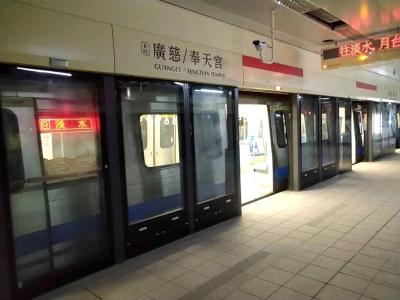
The eastern extension of the Taipei MRT Red Line could begin operations as early as late June, the Taipei Department of Rapid Transit Systems said yesterday. Taipei Rapid Transit Corp said it is considering offering one month of free rides on the new section to mark its opening. Construction progress on the 1.4km extension, which is to run from the current terminal Xiangshan Station to a new eastern terminal, Guangci/Fengtian Temple Station, was 90.6 percent complete by the end of last month, the department said in a report to the Taipei City Council's Transportation Committee. While construction began in October 2016 with an
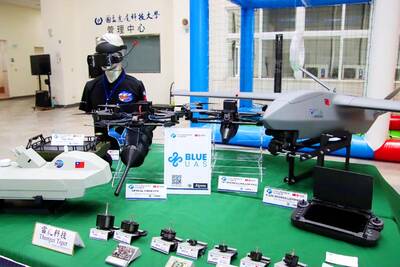
NON-RED SUPPLY: Boosting the nation’s drone industry is becoming increasingly urgent as China’s UAV dominance could become an issue in a crisis, an analyst said Taiwan’s drone exports to Europe grew 41.7-fold from 2024 to last year, with demand from Ukraine’s fight against Russian aggression the most likely driver of growth, a study showed. The Institute for Democracy, Society and Emerging Technology (DSET) in a statement on Wednesday said it found that many of Taiwan’s uncrewed aerial vehicle (UAV) sales were from Poland and the Czech Republic. These countries likely transferred the drones to Ukraine to aid it in its fight against the Russian invasion that started in 2022, it said. Despite the gains, Taiwan is not the dominant drone exporter to these markets, ranking second and fourth

Japanese Prime Minister Sanae Takaichi’s comment last year on Tokyo’s potential reaction to a Taiwan-China conflict has forced Beijing to rewrite its invasion plans, a retired Japanese general said. Takaichi told the Diet on Nov. 7 last year that a Chinese naval blockade or military attack on Taiwan could constitute a “survival-threatening situation” for Japan, potentially allowing Tokyo to exercise its right to collective self-defense. Former Japan Ground Self-Defense Force general Kiyofumi Ogawa said in a recent speech that the remark has been interpreted as meaning Japan could intervene in the early stages of a Taiwan Strait conflict, undermining China’s previous assumptions


 RSS
RSS