


Plans to open Taiwan further to migrant workers from India would meet the needs of local industries and could be done without labor brokerage firms, the Ministry of Labor said in a press release yesterday, adding that it would work closely with stakeholders to make regulatory changes as needed.
Ministry officials said the press release was to refute comments by some politicians claiming that the ministry would allow 100,000 migrant workers from India to enter Taiwan, opening to door to huge financial benefits for labor brokerage firms that have close relationships with government officials in the pan-green camp.
“Taiwanese industries are facing a labor shortage and there are too few source countries to meet demand,” the statement said. “A memorandum of understanding signed recently would make India a new source of workers, providing additional choices for companies with such needs.”
Photo: Lee Ching-hui, Taipei Times
The program has three main ways to bring in workers, it said.
Companies can recruit on their own, hire through public-sector service centers or go through labor brokerage firms, it said.
This is how firms hire migrant workers from Vietnam, Indonesia, Thailand and the Philippines, the ministry said.
“There is no compulsion to use labor brokerage firms,” it said.
Former Chinese Nationalist Party (KMT) legislator Alex Tsai (蔡正元) on Monday told a talk show that “the Democratic Progressive Party has close relationships with several labor brokerage firms ... so they can gain huge financial benefits through reciprocation in the form of political donations.”
“When Indian workers go through the process, they would have to pay a large amount up front before traveling to Taiwan, with most of the money going to politicians in Taiwan and India or labor brokerages,” Tsai said.
He also repeated allegations that the ministry has agreed to allow 100,000 Indian workers into Taiwan.
Ministry officials warned the public not to repeat “disinformation” about cashflows and the “100,000” figure.
“Indian workers have qualities that fit the needs of Taiwan’s labor market, being diligent, resilient and highly rated by many employers,” the ministry said.
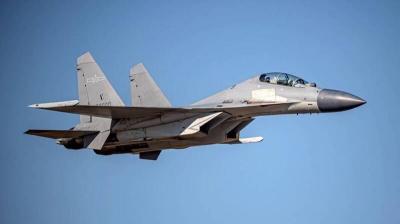
Eight Chinese naval vessels and 24 military aircraft were detected crossing the median line of the Taiwan Strait between 6am yesterday and 6am today, the Ministry of National Defense said this morning. The aircraft entered Taiwan’s northern, central, southwestern and eastern air defense identification zones, the ministry said. The armed forces responded with mission aircraft, naval vessels and shore-based missile systems to closely monitor the situation, it added. Eight naval vessels, one official ship and 36 aircraft sorties were spotted in total, the ministry said.
The Ministry of Foreign Affairs (MOFA) today said that if South Korea does not reply appropriately to its request to correct Taiwan’s name on its e-Arrival card system before March 31, it would take corresponding measures to alter how South Korea is labeled on the online Taiwan Arrival Card system. South Korea’s e-Arrival card system lists Taiwan as “China (Taiwan)” in the “point of departure” and “next destination” fields. The ministry said that it changed the nationality for South Koreans on Taiwan’s Alien Resident Certificates from “Korea” to “South Korea” on March 1, in a gesture of goodwill and based on the

Taiwanese officials were shown the first of 66 F-16V fighter jets purchased by Taiwan from the United States, the Ministry of National Defense said yesterday, adding the aircraft has completed an initial flight test and is expected to be delivered later this year. A delegation led by Deputy Minister of National Defense Hsu Szu-chien (徐斯儉) visited Lockheed Martin’s F-16 C/D Block 70 (also known as F-16V) assembly line in South Carolina on March 16 to view the aircraft. The jet will undergo a final acceptance flight in the US before being delivered to Taiwan, the
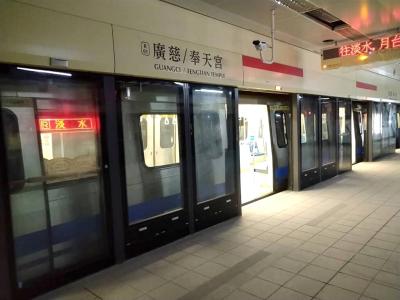
The New Taipei Metro's Sanyin Line and the eastern extension of the Taipei Metro's Tamsui-Xinyi Line (Red Line) are scheduled to begin operations in June, the National Development Council said today. The Red Line, which terminates at Xiangshan Station, would be connected by the 1.4km extension to a new eastern terminal, Guangci/Fengtian Temple Station, while the Sanyin Line would link New Taipei City's Tucheng and Yingge stations via Sanxia District (三峽). The council gave the updates at a council meeting reviewing progress on public construction projects for this year. Taiwan's annual public infrastructure budget would remain at NT$800 billion (US$25.08 billion), with NT$97.3


 RSS
RSS