


US lawmakers are planning to visit Taiwan to show support for president-elect William Lai (賴清德), as well as potentially meet with members of opposition parties, the Nikkei Asia reported on Sunday.
The Financial Times on Friday reported that US representatives Ami Bera, Andy Barr and Mario Diaz-Balart are to visit Taiwan in the coming weeks.
The delegation is to congratulate Lai on leading the Democratic Progressive Party (DPP) to a third consecutive presidential term “and continue to emphasize that the future of Taiwan really is up to the people of Taiwan,” the Nikkei Asia cited Bera as saying in an interview on Friday, adding that “the visit will demonstrate US support for [the] island’s democracy.”
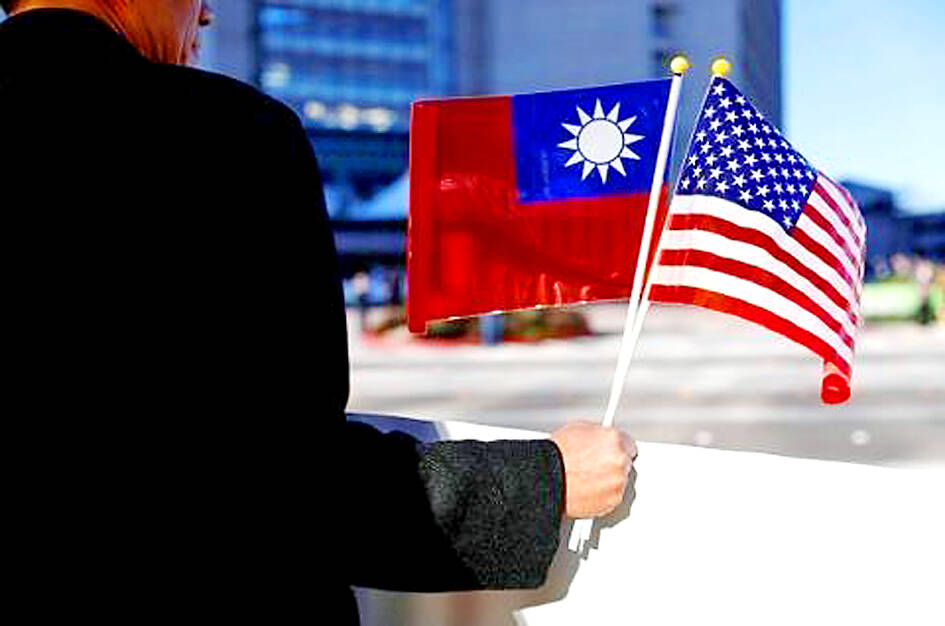
Photo: Reuters
While the Financial Times said the congressional delegation would not meet with the other two candidates that ran in the presidential election — New Taipei City Mayor Hou You-yi (侯友宜) of the Chinese Nationalist Party (KMT) and Taiwan People’s Party (TPP) Chairman Ko Wen-je (柯文哲) — the Nikkei Asia said that the delegation plans to meet with senior members of the two parties.
“I would expect us to have meetings with all parties,” Bera said. “It’s a parliamentary system, so we should be talking to all legislators.”
The cochair of the Congressional Taiwan Caucus said “there probably aren’t deep relations” with the TPP, hinting at the need for the US Congress to forge stronger ties with the party to bolster cooperation between Washington and Taipei, the Japanese weekly news magazine said.
The intention to deepen congressional ties with the TPP “reflects the future political landscape in Taiwan,” it said, referring to the first Legislative Yuan since 2004 in which no party holds an absolute majority.
“This could lead to a deadlock, as the DPP is unlikely to cooperate with the KMT,” it said.
In the Jan. 13 legislative elections, the DPP secured 51 of the 113 seats in legislature, the KMT 52 and the TPP eight. Another two seats were won by independents aligned with the KMT.
Although the TPP only holds eight seats in the legislature, it “will play a decisive role in forming a coalition to lead the legislature,” the Center for Strategic and International Studies wrote in a report published on Friday.
The DPP losing its legislative majority “will significantly complicate Lai’s ability to push forward a DPP agenda during his presidency,” the report said.
“It is extremely important for members of [the US] Congress to engage with Taiwan’s opposition parties, both the KMT and the TPP,” the Nikkei Asia quoted German Marshall Fund Indo-Pacific Program managing director Bonnie Glaser as saying.
To advance security policies such as increasing defense spending and weapons purchases, the support of both parties “is essential,” she said.
Patrick Cronin, the Asia-Pacific security chair at the Washington-based Hudson Institute, called on the delegation to build close ties “with influential legislators from all three parties,” as they all “play a role in legislation,” it said.
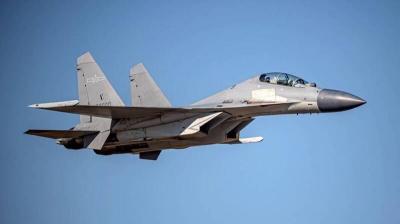
Eight Chinese naval vessels and 24 military aircraft were detected crossing the median line of the Taiwan Strait between 6am yesterday and 6am today, the Ministry of National Defense said this morning. The aircraft entered Taiwan’s northern, central, southwestern and eastern air defense identification zones, the ministry said. The armed forces responded with mission aircraft, naval vessels and shore-based missile systems to closely monitor the situation, it added. Eight naval vessels, one official ship and 36 aircraft sorties were spotted in total, the ministry said.
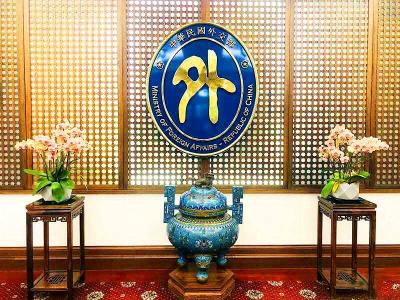
The Ministry of Foreign Affairs (MOFA) today said that if South Korea does not reply appropriately to its request to correct Taiwan’s name on its e-Arrival card system before March 31, it would take corresponding measures to alter how South Korea is labeled on the online Taiwan Arrival Card system. South Korea’s e-Arrival card system lists Taiwan as “China (Taiwan)” in the “point of departure” and “next destination” fields. The ministry said that it changed the nationality for South Koreans on Taiwan’s Alien Resident Certificates from “Korea” to “South Korea” on March 1, in a gesture of goodwill and based on the
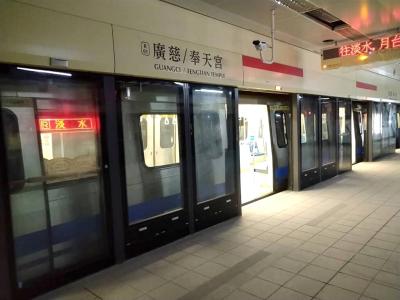
The New Taipei Metro's Sanyin Line and the eastern extension of the Taipei Metro's Tamsui-Xinyi Line (Red Line) are scheduled to begin operations in June, the National Development Council said today. The Red Line, which terminates at Xiangshan Station, would be connected by the 1.4km extension to a new eastern terminal, Guangci/Fengtian Temple Station, while the Sanyin Line would link New Taipei City's Tucheng and Yingge stations via Sanxia District (三峽). The council gave the updates at a council meeting reviewing progress on public construction projects for this year. Taiwan's annual public infrastructure budget would remain at NT$800 billion (US$25.08 billion), with NT$97.3

Taiwanese officials were shown the first of 66 F-16V fighter jets purchased by Taiwan from the United States, the Ministry of National Defense said yesterday, adding the aircraft has completed an initial flight test and is expected to be delivered later this year. A delegation led by Deputy Minister of National Defense Hsu Szu-chien (徐斯儉) visited Lockheed Martin’s F-16 C/D Block 70 (also known as F-16V) assembly line in South Carolina on March 16 to view the aircraft. The jet will undergo a final acceptance flight in the US before being delivered to Taiwan, the


 RSS
RSS